(For Harlan Kane)

See as well the Pearl Jam song in posts tagged Enigma Keys.
"Damning revelations" — Marie Claire yesterday
|
"Imagine a powerful man as a ship, like the Titanic. That ship is a huge enterprise. When it strikes an iceberg, there are a lot of people on board desperate to patch up holes — not because they believe in or even care about the ship, but because their own fates depend on the enterprise."
— Op-ed attributed to Amber Heard by The Washington Post , |


"Nor mouth had, no nor mind, expressed
What heart heard of, ghost guessed:"
— Two lines from a Gerard Manley Hopkins poem
as quoted by Caleb Murdock at . . .
https://www.ablemuse.com/erato/showthread.php?t=5356 .
From that same URL —
"And, Caleb, yes, 'sprung rhythm' has made it into dictionaries,
though even there, the association is with Hopkins."
For guess-ghosts —
"Spring is sprung, the grass is riz,
I wonder where the flowers is."
And for an able muse —


Translated by Google as . . .
The Truchet Tiles and the Diamond Puzzle and
The Art of the Simple Truchet Tile.
About the author:
Raúl Ibáñez is a professor in the Department of Mathematics
at the UPV/EHU and collaborator with the Chair of Scientific Culture.
About his school:
The University of the Basque Country
(Basque: Euskal Herriko Unibertsitatea, EHU ;
Spanish: Universidad del País Vasco, UPV ; UPV/EHU)
is a Spanish public university of the Basque Autonomous Community.
— Wikipedia

Illustration by Nicholas Konrad / The New Yorker April 28, 2022
Some related material from Harvard —

From The New York Times on May 5, 2011 —
"… What Paris says to me is love story, awash with painters,
shots of the Seine, Champagne. Thank God I have a
can’t-miss notion to sell you. I call it ‘Midnight in Paris.’ ”
“Romantic title,” I had to admit. “Is there a script?”
“Actually, there’s nothing on paper yet, but I can spitball
the main points,” he said, slipping on his tap shoes.
“Maybe some other time,” I said, mindful of Cubbage’s
unbroken string of theatrical Hiroshimas.
— Woody Allen
The above passage is in memory of a French film director
who, like the reporter in yesterday's post Primary Colors,
reportedly died on April 21, 2022.
See also Aitchison at Hiroshima and Easter for Aitchison.

"It was a bright cold day in April . . ."

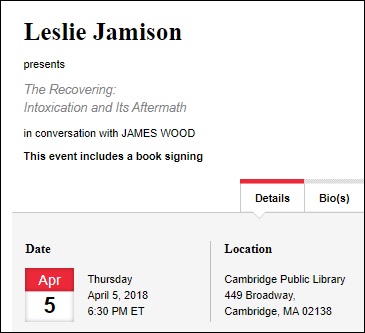
"Leslie Jamison has written an honest and important book….
All in all, vivid writing and required reading." ―Stephen King
Meanwhile, also on April 5, 2018… See posts tagged D8.
More recently, in a conspicuously un-dated new literary magazine …
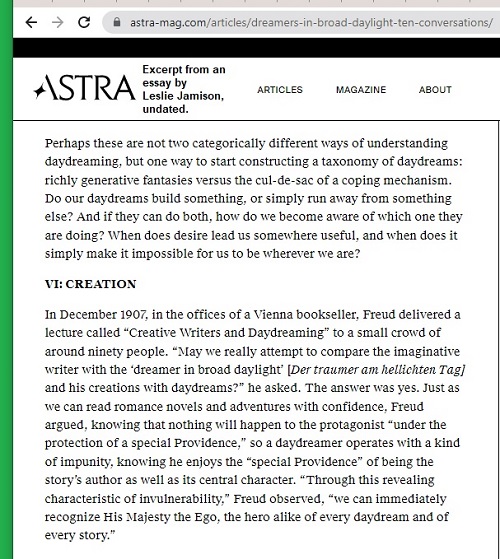
See as well Freud on the Tummelplatz .

Putting the graphic in lexicographic —


Some related remarks —
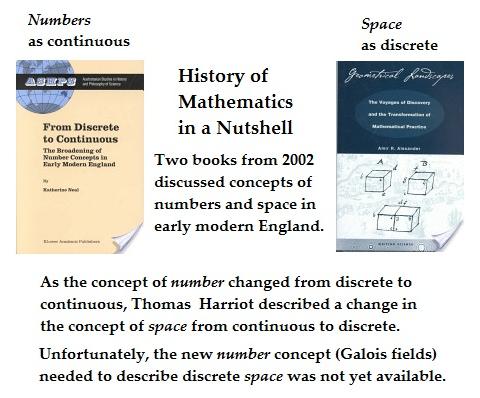
From a post of October 25, 2002 —
"A work of art has an author and yet,
when it is perfect, it has something
which is essentially anonymous about it."
— Simone Weil, Gravity and Grace
This flashback was suggested by a quotation
in today's previous post —
"Go back to the darkest roots of civilisation
and you will find them knotted round
some sacred stone or encircling
some sacred well."
— G. K. Chesterton, Orthodoxy , Ch. 5 —
"The Flag of the World."
"Go back to the darkest roots of civilisation
and you will find them knotted round
some sacred stone or encircling
some sacred well."
— G. K. Chesterton, Orthodoxy , Ch. 5 —
"The Flag of the World."
See also . . .
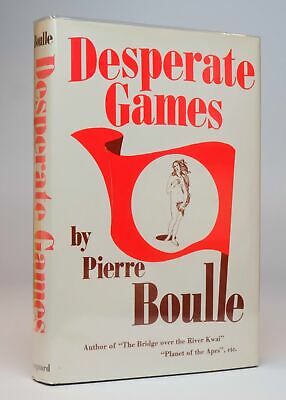
|
Tuesday, November 3, 2009 Filed under: General,Geometry — Tags: Glasperlenspiel, Solomon Marcus — m759 @ 10:10 PM Book review by Jadran Mimica in Oceania, Vol. 74, 2003: "In his classic essay of 1955 'The Structural Study of Myth' Levi-Strauss came up with a universal formula of mythopoeic dynamics [fx(a) : fy(b) :: fx(b) : fa-1(y)] that he called canonical 'for it can represent any mythic transformation'. This formulation received its consummation in the four massive Mythologiques volumes, the last of which crystallises the fundamental dialectics of mythopoeic thought: that there is 'one myth only' and the primal ground of this 'one' is 'nothing'. The elucidation of the generative matrix of the myth-work is thus completed as is the self-totalisation of both the thinker and his object." So there. At least one mathematician has claimed that the Levi-Strauss formula makes sense. (Jack Morava, arXiv pdf, 2003.) I prefer the earlier (1943) remarks of Hermann Hesse on transformations of myth: "…in the spirit of the Glass Bead Game, everything actually was all-meaningful, that every symbol and combination of symbols led not hither and yon, not to single examples, experiments, and proofs, but into the center, the mystery and innermost heart of the world, into primal knowledge. Every transition from major to minor in a sonata, every transformation of a myth or a religious cult, every classical or artistic formulation was, I realized in that flashing moment, if seen with a truly meditative mind, nothing but a direct route into the interior of the cosmic mystery, where in the alternation between inhaling and exhaling, between heaven and earth, between Yin and Yang, holiness is forever being created." |
The previous post suggests two quotes by Elizabeth Janeway
from her review of the second volume of The Human Predicament ,
an unfinished trilogy by Richard Hughes.
"The Human Predicament poses a universal question, and Hughes
is grappling with it really as a structuralist philosopher."
"Hughes's style is kaleidoscopic , the shaking of vivid moments together
until a pattern emerges."
— The New York Times Book Review , Sunday, August 19, 1973, page 2
For a less literary example of kaleidoscopic structuralism, see
a Log24 post from the first anniversary of Janeway's reported death.
Related vocabulary —


See as well "Plato and Shakespeare" in this journal.
|
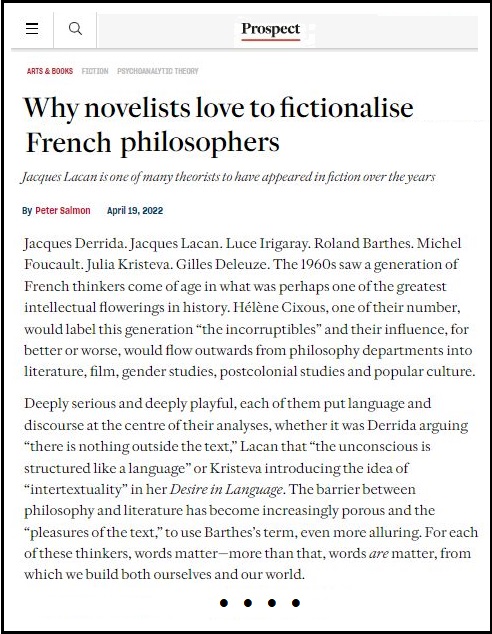
Derrida was the final speaker on the final day. He remained a silent observer for much of the symposium. He looked on as Lacan rose to his feet with obscure questions at the end of each lecture, and as Barthes gently asked for clarification on various moot points. Eventually, however, Derrida, unused to speaking to large audiences, took to the stage, quietly shuffled his notes, and began, ‘Perhaps something has occurred in the history of the concept of structure that could be called an “event”…’ He spoke for less than half an hour. But by the time he was finished the entire structuralist project was in doubt, if not dead. An event had occurred: the birth of deconstruction.
Salmon, Peter. An Event, Perhaps (pp. 2-3). |
Salmon today at Arts & Letters Daily —


* Vide "pleasantly discursive" in this journal.
October 2, 2016, was, in the Catholic sense, the dies natalis
of a philosopher of science, Mary Hesse.

October 2 was also the day of birth, in the non-Catholic sense,
of philosopher-poet Wallace Stevens.
Cf. remarks in this journal on October 2, 2016.

See as well Morse in Log24 posts on the Go chip.
Excerpt from a long poem by Eliza Griswold —


The square array above does not contain Arfken's variant
labels for ρ1, ρ2, and ρ3, although those variant labels were
included in Arfken's 1985 square array and in Arfken's 1985
list of six anticommuting sets, copied at MathWorld as above.
The omission of variant labels prevents a revised list of the
six anticommuting sets from containing more distinct symbols
than there are matrices.
Revised list of anticommuting sets:
α1 α2 α3 ρ2 ρ3
γ1 γ2 γ3 ρ1 ρ3
δ1 δ2 δ3 ρ1 ρ2
α1 γ1 δ1 σ2 σ3
α2 γ2 δ2 σ1 σ3
α3 γ3 δ3 σ1 σ2 .
Context for the poem: Quark Rock.
Context for the physics: Dirac Matrices.
For a weblog post today on an auction item from
the collection of the late Pierre Le-Tan.
A search for information on Le-Tan reveals that his
dies natalis (in the Catholic sense) was Sept. 17, 2019.
See a poem quoted here on that date in posts tagged Quark Rock.
"Spirits rise . . . ." — Streisand
Related material —
A 1920 play by J. M. Barrie, recreated on stage and now in film.
https://blacklistdeclassified.net/2022/04/15/
%f0%9f%94%b4-script-916-helen-maghi/ —
Red: If I may offer some counsel –
“Do not go where the path may lead.
Go instead where there is no path
and leave a trail.”
In the spirit of that, I bring an unusual case….
This post is in honor of Thandiwe Newton,
who left a Westworld trail —
Vide Bulk Apperception.
* Cf. a post from Day 3 of 2022.
From yesterday's post "Annals of Iconic Simplicity" —
On the founding of Princeton Architectural Press:
"'There was a space between the academic,
theory-heavy M.I.T. Press and the coffeetableism
of Rizzoli,' Mr. Lamster wrote, adding that
Princeton Architectural Press would fill the gap
with 'the voice of the young practitioner.'"
Some context —
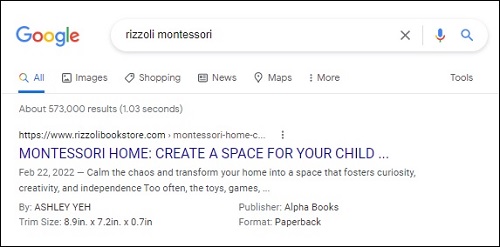

The New York Times today has an obituary for
Kevin Lippert, the founder and publisher of
Princeton Architectural Press, who reportedly
died at 63 on March 29, 2022.
“'There was a space between the academic,
theory-heavy M.I.T. Press and the coffeetableism
of Rizzoli,' Mr. Lamster wrote, adding that
Princeton Architectural Press would fill the gap
with 'the voice of the young practitioner.'
Mr. Lippert championed emerging architects.
He published Steven Holl’s seminal architectural
manifesto, 'Anchoring,' in 1989, and wrote the
introduction to the book of the same name.
Mr. Holl, in a tribute to Mr. Lippert on his website,
called him 'a committed intellectual and impresario
for the culture of architecture.'”
— Katharine Q. Seelye, April 17, 2022, 2:21 p.m. ET
From the cited tribute to Lippert on Holl's website —
"An excerpt from his publisher’s foreword to Anchoring :
In its iconic simplicity, his work seems to be about
the language of architecture, not in the allusive sense
used by postmodernists nor in the paradigmatic sense
used by so-called 'deconstructivists' but at the level of
essences of tropes and morphs… He is the only
American architect of his generation to be directly
influenced by the main lines in modern philosophy and
music, that is to say, by the line leading from Husserl
through to Heidegger and by separate achievements
of Bartok and Schonberg ."
Actually, although the above "iconic simplicity" passage,
up to the ellipsis after "morphs," is from the foreword
by Lippert, the references that follow the ellipsis — to
Husserl, Heidegger, Bartok, and Schonberg — are not
from Lippert's foreword, but from the introduction by
one Kenneth Frampton —
From Google Books:

Bibliographic data —

Another architectural memorial, from the reported date of Lippert's death —


* See other posts tagged Aitchison in this journal.

For the De las Cuevas above, see …
https://www.gemmadelascuevas.com/ —
"I am an Assistant Professor at the Institute for Theoretical Physics
at the University of Innsbruck (Austria) . . . ."
— and a tweet from Thursday, April 14, 2022, that indicates
an interest in philosophy as well as physics —

Related vocabulary —
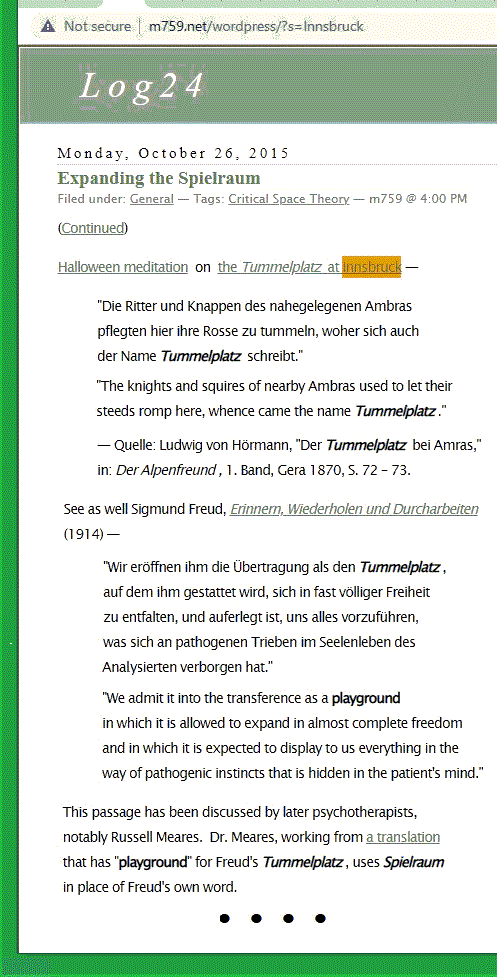
Related drama —

Draft of a letter to FDR written by Leo Szilard
and signed by Albert Einstein —

For the letter as sent , see a webpage on the Manhattan Project.
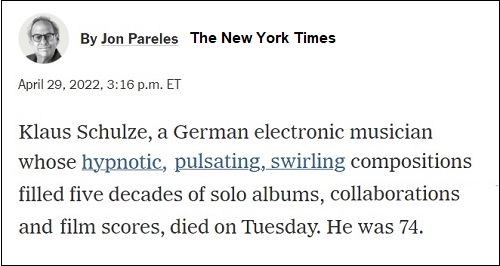
This post was suggested by a New York Times obituary today that
contained the following misleading description —
"a 1939 letter from Albert Einstein to President Franklin D. Roosevelt
encouraging the American effort to build the atomic bomb."
There was apparently no such effort until after the letter was received.
From the 2019 post Spring Loaded —

A more recent image, from Carroll's wife Jennifer Ouellette —

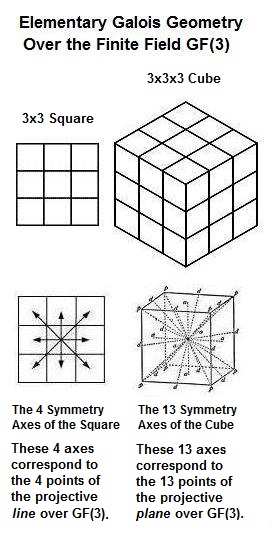
For a more sophisticated approach to the 4x4x4 cube,
see a page at finitegeometry.org.
From the previous post —

Many will prefer snazzier potions —

These were available as NFTs recently . . .

See some.place. And then there is nine.place.
"It’s important, as art historian Reinhard Spieler has noted,
that after a brief, unproductive stay in Paris, circa 1907,
Kandinsky chose to paint in Munich. That’s where he formed
the Expressionist art group Der Blaue Reiter (The Blue Rider) —
and where he avoided having to deal with cubism."
— David Carrier,

Images from an earlier Christmas Day, in 2005 —


"Jesus Christ, Adam. I need you to play it cool."
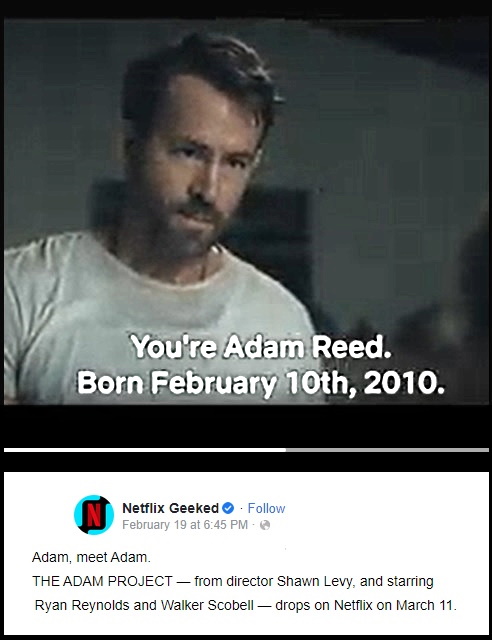
See as well this journal on February 10, 2010 —
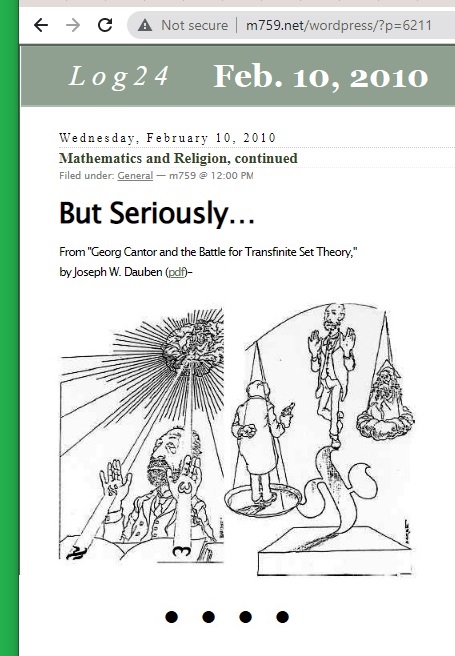
A Midrash for Levy —


That was then, this is now —

Be careful what you wish for.

For the Unicorn School —
<time class="_1o9PC"
datetime="2022-04-10T06:41:25.000Z"
title="Apr 10, 2022">4 hours ago
</time>

From posts tagged Unicorn Language —

Some will prefer the Dragon School . . .
of Tom Hiddleston, Emma Watson, and Humphrey Carpenter.
"National Unicorn Day" was yesterday . Today's mythical creature —
the villainous spymaster of The Eiger Sanction , Yurasis Dragon.
The previous post was in memory of one Eleanor Munro.
A different literary Munro —
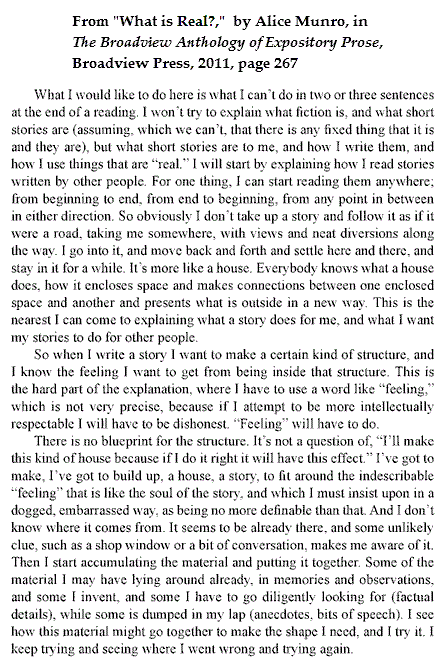
And then there is Hector Hugh Munro, pen name Saki . . .
See lumber room in this journal (Nov. 30 – Dec. 3, 2016), and
later Ghost Ship tales in a post of December 22, 2016.
The author of the above title is featured in
a New York Times obituary today. Another
book by the same author, On Glory Roads,
appears in some related readings here .

Also on the above publication date —


Conrad K. Die beginnende Schizophrenie.
Stuttgart, Germany: Thieme Verlag; 1958.
Conrad K. Gestaltanalyse und Daseinsanalytik.
Nervenarzt. 1959; 30: 405–410.
"Reviewing Ms. Allen’s staging of Ibsen’s
'When We Dead Awaken'
at Stage West in 1977, Mr. Barnes wrote that
it had 'speed, conviction and perception.'"
— Richard Sandomir today reviewing the life of Rae Allen.
From the conclusion of that Ibsen play —
"Pax vobiscum."
See as well the YouTube comments below, on Allen
in the film version (1958) of "Damn Yankees" —


The above out-of-context quotation illustrates the following lesson,
from the Amazon.com page quoted in this moning's Souls at Stanford —

See as well 1949 in the April 7 post
The Usual Suspects.

"Accepting the award, Mr. Logan said, 'I have a hunch
that this is as near to immortality as I'll ever get.'"
— Mel Gussow in The New York Times, March 10, 1975
In memory of a musical that opened on this date —
April 7 — in 1949 . . .

See the same date in The Source , by James Michener (1965):


The date of the above post
was also the date of . . .

Analytic Continuation —

Architectural theorist Jeffrey Kipnis in 1991, recalled here in 2015 —

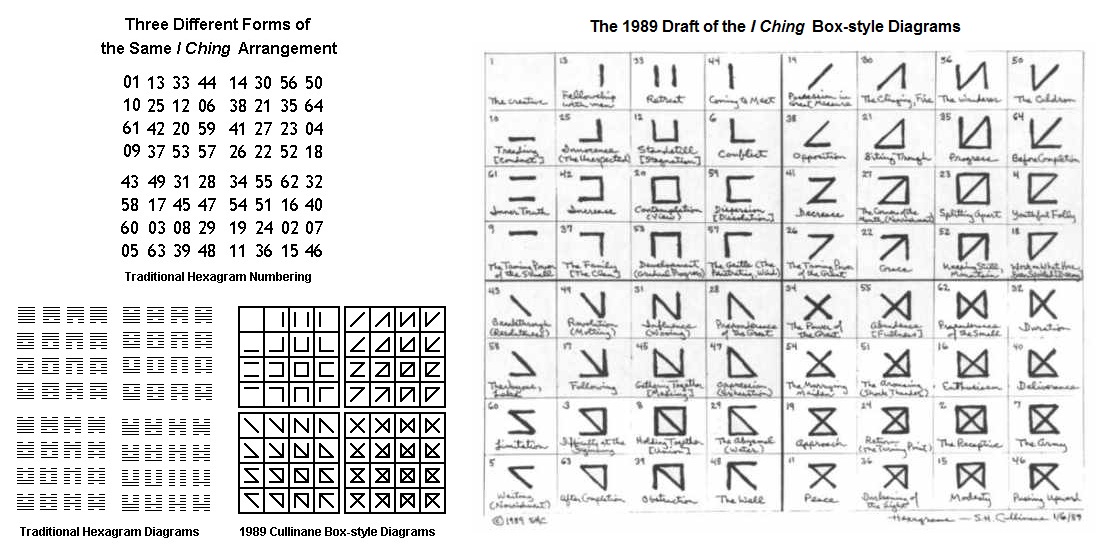
For the source of the illustration, see Hexagram 14.
For the former, see Warburg in this journal.
For the latter, see beadgame.space on the Web.
"Godard, in the final analysis, expands the Warburgian programme
of iconology into that of a cinematographic iconology of the interstice."
— The author of the essay quoted in the previous post.

Related material: Blue Guitar.
From a post of April 1 —

A related post by Terry Tao on September 14, 2007 —

The comments on Tao's post contain a reference to Polya's classic
Induction and Analogy in Mathematics . (See pp. 15-17.) Polya notes
on page 15 —
"Generalization, Specialization, and Analogy often concur
in solving mathematical problems. Let us take as an example
the proof of the best known theorem of elementary geometry,
the theorem of Pythagoras. The proof that we shall discuss is
not new; it is due to Euclid himself (Euclid VI, 31)."


Compare and contrast with the Glass-Bead essay in the previous post —

The Caramello essay is backed up by some impressive technical work:


Some may prefer a different sort of dream . . .

Background for the Stimmung dream, from May 2019 —

For a different type of lifeworld, see May 2019 in this journal.
… From the online New York Times this evening.
* Vide that phrase in this journal.
See also the previous post and . . .
On Sept. 12, 2001, The Washington Post published
an opinion essay by General Boyd in which he wrote,
“While we may feel at the moment as though we are
in a trance, we are, in fact, awakening.”
— Katharine Q. Seelye in the general's obituary.

Update of 11:30 AM ET April 1, 2022 — A simpler version:

The above picture may be used to to introduce the concept of a "shape constant"
in similar figures — like the shape constant pi in a circle or the square root of 2
in a square. In each of the three similar figures at right above, the ratio of the
triangular area to the area of the attached square is a shape constant …
the same, because of their similarity, for each of the three shapes. Since the
areas of the top two triangles at right sum to that of the enclosed triangle at left,
their attached square areas sum to the area of the bottom square, Q.E.D.
The source of the proof —


Powered by WordPress