260101-Google-New_Year_Resolutions-doodle.jpg —

Other meanings of "resolution" —
260101-Google-New_Year_Resolutions-doodle.jpg —
Other meanings of "resolution" —

A Chronicle of Higher Education website, "Arts & Letters Daily,"
links as above to an American Scholar article of Dec. 18, 2025,
"The Enigma of Ur," by Joseph Horowitz.
That article concludes with a blurb for Horowitz himself:
|
Joseph Horowitz’s forthcoming book is a novel about |
There are, of course, less academic approaches to cultural memory.
Straight Outta Akeley . . .
Swamp Lotus
starring
Adriana Barbo


See as well a People Magazine tale from yesterday . . .
https://people.com/kate-hudson-hugh-jackman-slammed-
by-son-of-musician-portrayed-in-song-sung-blue-11877734
Update . . . Related Art . . .

From posts tagged Dunne Memorial —
“Have the gates of death
been opened unto thee?
Or hast thou seen the doors
of the shadow of death?”
From a December 31, 2003, post:
In memory of
John Gregory Dunne,
who died on
Dec. 30, 2003:

For further details, click
on the black monolith.
Another December 30 dies natalis —


"Feed them on your dreams" . . . Or nightmares . . . Whatever.
Related reading — "Where entertainment is God."
For the bricks of the title, see other posts tagged Brick Space.
For some cubes* and flowers, see below.

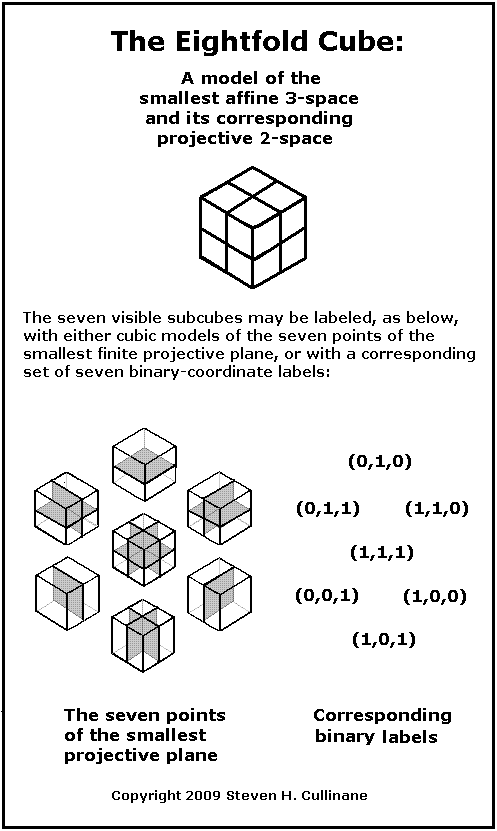
Combining features of the above two images, one might picture the 24
cells of the 4×6 array underlying the Curtis Miracle Octad Generator
(MOG) as each containing an eightfold cube, pictured as above with seven
of its subcubes showing and an eighth subcube hidden behind them.
The seven visible subcubes may be colored, as in the Curtis image of
the Klein map, with seven distinct colors… corresponding to the seven
edge-colors used in the Curtis-Klein map. Each of the seven visible
subcubes in a cell may also be labeled, on its visible faces, with a symbol
denoting one of the 24 points of the projective line over GF(23), just as the
faces in the Curtis-Klein map are labeled. The hidden subcube in each cell
may be regarded as also so labeled, by the MOG label of the cell's position.
There is then enough information in the array's eightfold cubes' colors and
labels to construct the seven generating permutations of M24 described by
Curtis, and the 24 array cells may be regarded as now containing 24 distinct
entities — which perhaps might be called "octoids."
Those desiring a more decorative approach may replace the 24 labeled cubes
with 24 labeled "flowers." Each flower — like the map's symmetric seven
"petals" and the central "infinity heptagon" they surround — forms an octad.
Related Illustrations . . .


* See as well posts tagged Mathieu Cube . . .
Related material —
The 56 triangles of the eightfold cube . . .
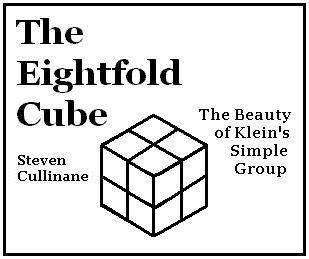
Image from Christmas Day 2005.
Post last revised: December 30, 2025 @ 21:30 E.S.T.
The former book partly inspired work leading to the latter abstract.
AI giveth, and AI taketh away.


More in the spirit of Alpha than of Omega . . .
Images related to work I began in the 1970s, from
a 1960s design classic by Karl Gerstner.


A rival model of the Fano space, also in the
"Mathematics/History of Science" category —

There are of course other, more serious,
modes of misalignment . . .


For a less biblical "locked box" overview, see
all other posts now tagged Kummerhenge.
For those who might guess that the name Hirzebruch in German
means "heartbreak" . . .

251225-Reporter's-obit-NYT-ghostwrote-for-Brando-and-Reagan.jpg —

This journal on December 19, the reported dies natalis
of the above reporter-ghostwriter —
Dec. 19 screenshot from https://m759.net/wordpress/?p=130765 —


This journal on the above YouTube date . . .
"See as well Gödel and the Afterlife and a
post from Dec. 6, 2022 (St. Nicholas Day)."
"¿Quién nos recordará cuando dejemos este mundo?
Acaso importará cuando seamos ya polvo de estrellas,
me respondo."
"Now he believed that where there was a key,
there must also be a lock…."
|
From The Golden Key by George MacDonald "We must find the country from which the shadows come," said Mossy. "We must, dear Mossy," responded Tangle. "What if your golden key should be the key to it?" "Ah! that would be grand," returned Mossy. |


Also on the "Industry" premiere date, November 9, 2020,
in this journal … An alternate Barbie:
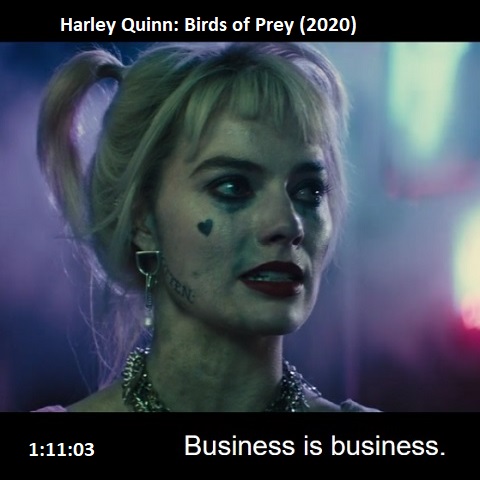
For aspiring dancing clowns . . .
You can make this stuff up! —


"Here's looking at you, kid." — The Dancing Clown

The above dies natalis — Dec. 19, 2025 — suggests a flashback . . .


Related image from a Log24 search for "On the Rocks" —

For those who prefer comedy . . . The Heartbreak Kid .
For those who prefer reality . . .

"On such a winter's day . . . " — Song lyric


From a post yesterday afternoon —


Midrash for Stephen King fans —

♫ "How strange the change from minor to major" — Adapted song lyric


"Holding space for everyone" — Sandra Bernhard


Excerpts from this journal on the dies natalis weekend of the author's late husband,
a UC Berkeley "environmental design" professor —
Saturday, October 8, 2022
|


Related media note
from The Daily Beast . . .
"The Story Behind the Plot Twists on Netflix’s Best Drama:
The creator and showrunner of 'The Diplomat' talks to Obsessed
about the biggest twists in the new season."
By Sophie Brookover
Published Oct. 27 2025 11:12 AM EDT

Suggested by the August 22, 2010, Francis X. Clines article
Deep in Rural Appalachia — (New York Times ) —
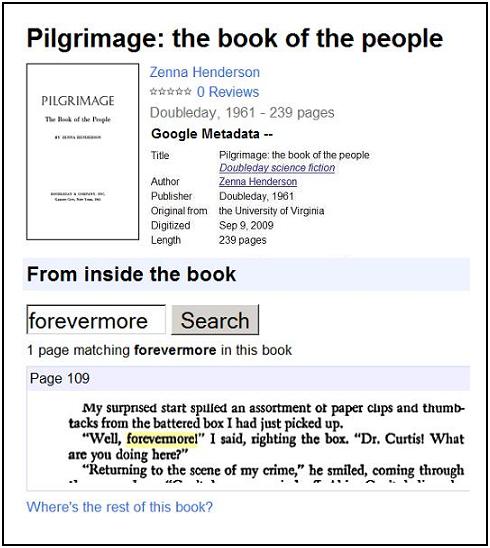
The above image is from this journal on the following day. Meanwhile . . .

From a post of January 16, 2005 —
|
Now it was Avril's turn to understand and he was frightened out of his wits. "The Science of Luck," he said cautiously. "You watch, do you? That takes a lot of self-discipline." "Of course it does, but it's worth it. I watch everything, all the time. I'm one of the lucky ones. I've got the gift. I knew it when I was a kid, but I didn't grasp it." The murmur had intensified. "This last time, when I was alone so long, I got it right. I watch for every opportunity and I never do the soft thing. That's why I succeed." Avril was silent for a long time. "It is the fashion," he said at last. "You've been reading the Frenchmen, I suppose? Or no, no, perhaps you haven't. How absurd of me." "Don't blether." The voice, stripped of all its disguises, was harsh and naive. "You always blethered. You never said anything straight. What do you know about the Science of Luck? Go on, tell me. You're the only one who's understood at all. Have you ever heard of it before?" "Not under that name." "I don't suppose you have. That's my name for it. What's its real name?" "The Pursuit of Death." |


ARTIST: Suzanne Vega
TITLE: Tom's Diner
ALBUM: Solitude Standing

LYRICS EXCERPT:
Do do do do... There's a woman on the outside Looking inside, does she see me No she does not really see me 'Cause she sees her own reflection Do do do do... |

The above image appeared here on May Day, 2016, the reported date
of death (and end of story) for mathematician Solomon W. Golomb.
But if you go chasing rabbits and you know you're going to fall . . .
There is deep blue (Hurray, Hurray, the First of May!) . . .

Some may prefer Watson's Wonderland to Golomb's Science Maze.


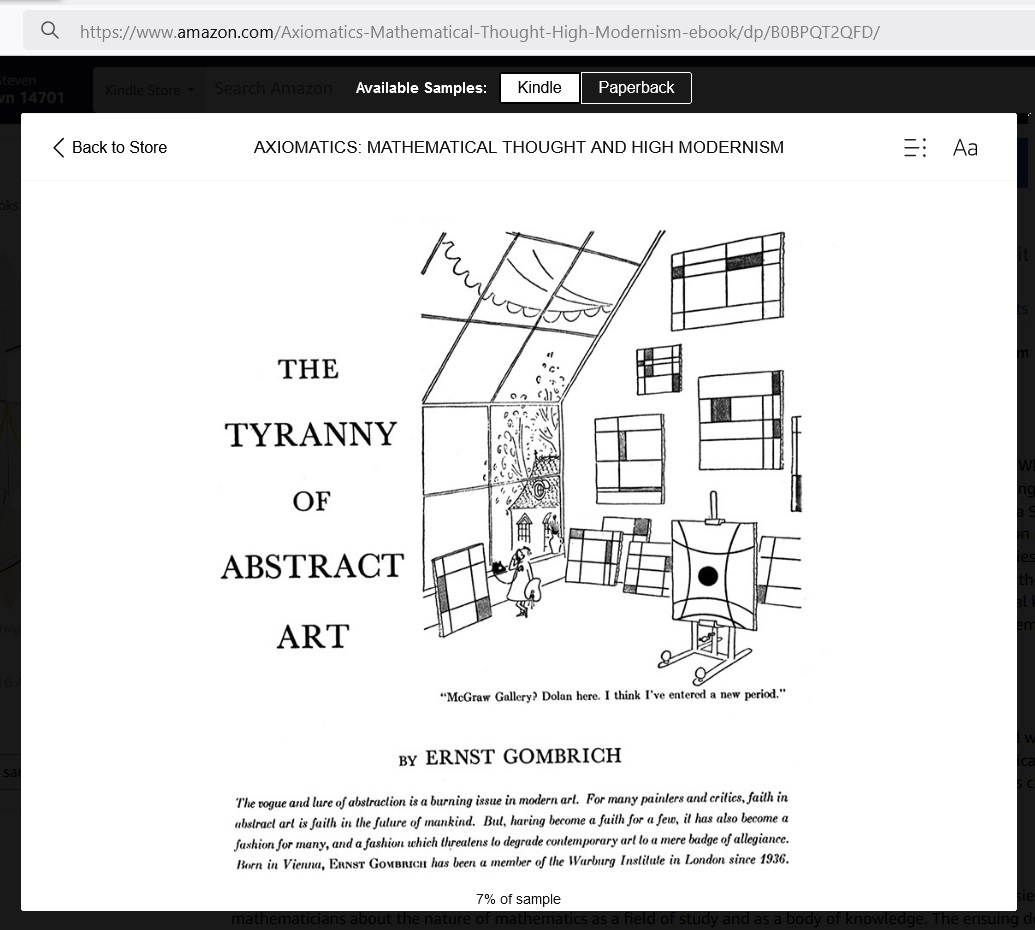
A screenshot of a Gemini 3 summary . . .


|
When?
Going to dark bed there was a square round Where?
— Ulysses , conclusion of Chapter 17. |
Two images, each bearing the date January 8, 2021 —


Backstory for the second image . . .


|
When?
Going to dark bed there was a square round Where?
— Ulysses , conclusion of Chapter 17. |


Exhibit A: https://m759.net/wordpress/?p=96280

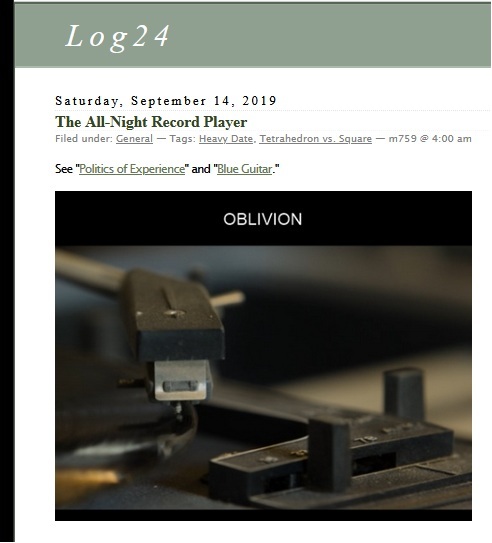

The above image suggested a related color search . . .

For those who prefer art that is less tightly structured
than that of today's previous post . . .

"Un cofre de gran riqueza
Hallaron dentro un pilar,
Dentro del, nuevas banderas
Con figuras de espantar."

"A pivotal application" —


Perhaps we should start at National Comedy Center . . .

*

Related pivotal meditation —


Wednesday, November 19, 2025
|
A recent visual echo . . .

Some may prefer more explicit fashion modeling.
♫ "And the waitress is practising politics . . ." — Song lyric

From this journal on the above arXiv date . . .
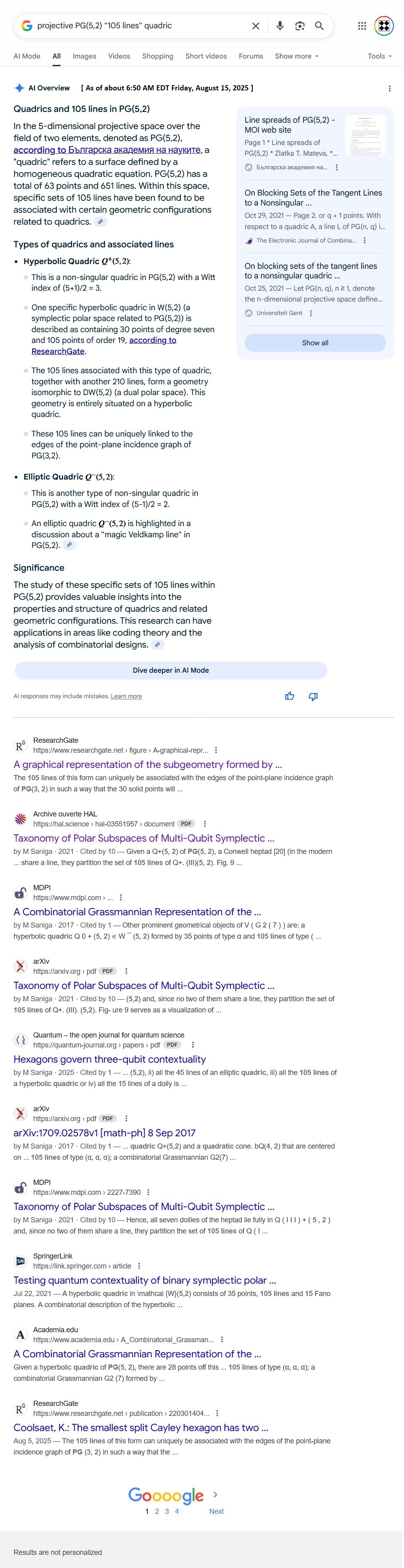
A search from August 15, 2025 —
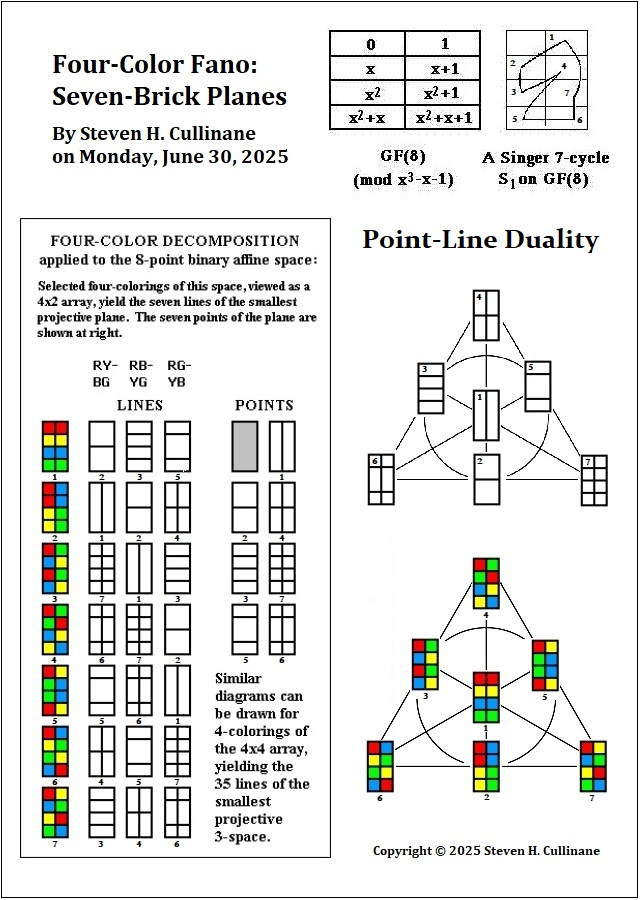
Note: Partitions of an 8-set into four 2-sets are related to
lines in projective geometry as follows . . .


Whatever.

The View from Broken Hill
|
The View from Manhattan —

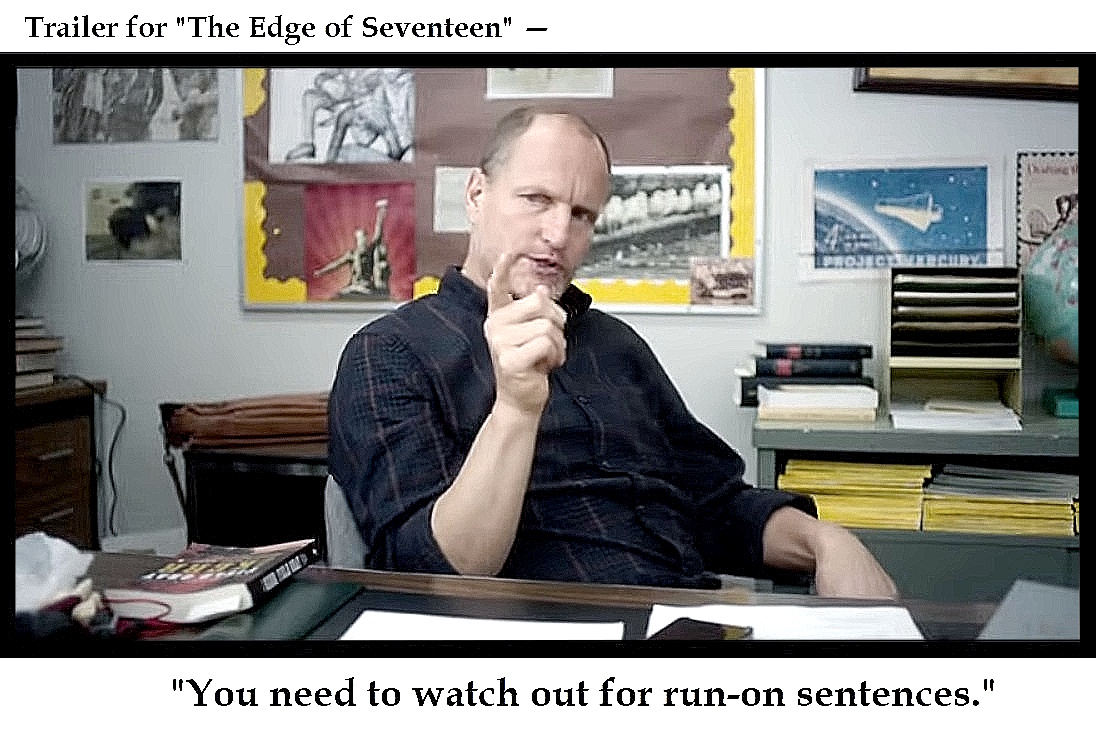
The View from a Trailer —
Oh, the red leaf looks to the hard gray stone
To each other, they know what they mean
— Suzanne Vega, “Songs in Red and Gray“

From this journal on 4/01, 2009:
The Cruelest Month

"Langdon sensed she was toying with him…."
The New York Times today (Dec. 6. 2025) . . .

See as well the espaces inauguration date in this journal.


* Compare and contrast . . . the previous post's title.
A possibly related Onion story from June 30, 2016 . . .

Click for a June 30, 2016, synchronology check.
From yesterday morning's "Defining Form" post —

Threesomes are nice . . . Recall Hirsch in "Stand Up Guys."

|
Diamond Theory by NotebookLM 92 sources The collected sources discuss the intricate confluence of finite geometry and abstract combinatorics, focusing heavily on the smallest three-dimensional projective space, PG(3,2), which acts as the geometric model for structures derived from the 6-set and 8-set. A primary focus is the Cullinane Diamond Theorem and the visual representation of abstract symmetries using 4×4 arrays, whose enormous automorphism group, the Affine group AGL(4,2), relates combinatorial design to geometric transformations. These connections are formalized using the Miracle Octad Generator (MOG) and the Klein Correspondence, which map partitions of an 8-set onto geometric objects like the lines of PG(3,2) and the points of the Klein quadric in PG(5,2). Furthermore, this framework bridges pure mathematics to applied fields, establishing relationships between geometric concepts like Conwell's Heptads and spreads (line partitions) and applications in algebraic ring theory, error-correcting codes, and the study of the sporadic simple group M24. Ultimately, the sources highlight how the symmetry inherent in these designs offers essential geometric insight into complex algebraic and combinatorial problems. |

Also on November 4, 2025, a Log24 update . . .

|
Diamond Theory by NotebookLM 92 sources The documents provide a comprehensive overview of advanced abstract algebra and combinatorics, centered on the finite projective space PG(3,2), which models the geometry of the 6-set. A primary focus is the Diamond Theorem, which uses the symmetries of 4×4 array patterns to establish deep connections between the visual arts, group theory, and geometry. The vast transformation set known as the Affine Group AGL(4,2), possessing an order of 322,560, is shown to preserve the structural relations of these arrays, which in turn are linked to the properties of lines and planes in PG(3,2). These geometric and combinatorial linkages are essential for understanding the Miracle Octad Generator (MOG) of R. T. Curtis and its relationship to the sporadic simple group Mathieu group M24. Additionally, the sources examine complex geometric partitions, such as Conwell’s Heptads and isotropic spreads within spaces like PG(5,2), demonstrating how group actions classify these objects and relate to applications in error-correcting codes. Ultimately, this body of work illustrates a powerful mathematical unity, presenting geometry, algebra, and combinatorics as tightly interwoven disciplines. |
|
Diamond Theory by NotebookLM 92 sources The sources detail the profound mathematical correspondences linking visual, combinatorial, and abstract algebraic structures, primarily focusing on the finite projective space PG(3,2) and the affine group AGL(4,2). A central component is the Cullinane diamond theorem, which uses highly symmetric 4×4 grid patterns to model the AGL(4,2) transformation group, whose large order of 322,560 governs the symmetry of the arrangements. These geometric models are tied directly to deep combinatorial structures, specifically the Miracle Octad Generator (MOG) and the sporadic simple group Mathieu group M24, offering a unified framework for understanding octads and partitions like Conwell's Heptads. Further discussion establishes how geometric entities such as spreads, packings, and the Klein correspondence provide solutions for classic problems like the "schoolgirl problem" and inform contemporary areas like error-correcting codes and the classification of group orbits. This interplay extends even to physics, connecting the geometries to quantum space-time and two-qubit observables, demonstrating how abstract finite geometry underlies sophisticated concepts across various scientific and artistic disciplines. |
|
Diamond Theory by NotebookLM 92 sources This collection of texts examines the profound mathematical unity connecting finite geometry, group theory, and visual combinatorics, centered largely on the projective space PG(3,2) and the associated Affine Group AGL(4,2). The geometry is often modeled using structures like the 4×4 array or "Brick Space," where the action of the group AGL(4,2) (order 322,560) explains the symmetries of abstract diamond patterns. Central to this framework are classical structures like Conwell's Heptads and the Klein Quadric, which are shown to be crucial in partitioning spaces like PG(5,2) and constructing spreads used in coding theory. The material extensively links these geometric models, including the Miracle Octad Generator (MOG), to the exceptional symmetries of the Mathieu group M24 through stabilizer subgroups. Furthermore, these abstract concepts find applications in diverse fields, providing geometric insights into Mutually Orthogonal Latin Squares (MOLS), algebraic ring structures, and analogies within quantum physics related to qubit observables. The overarching theme demonstrates how symmetry, whether in abstract geometric configurations or visual quilt designs, is rooted in the deep logic of finite algebraic structure. |
NotebookLM — Dec. 1, 2025 — "A Unifying Framework"
|
Diamond Theory by NotebookLM 92 sources These documents comprehensively examine the tight relationships among abstract algebra, combinatorics, and finite geometry, primarily through the lens of the projective spaces PG(3,2) and PG(5,2). A central focus is the Cullinane Diamond Theory, which utilizes highly symmetric 4×4 arrays over the Galois field GF(2) to model affine space, whose transformation group is the extensive Affine Group AGL(4,2). This visual and geometric structure connects directly to classic combinatorial objects, such as Conwell's Heptads and Dye's Partitions, which define specific sets and orbits within the geometry. Critically, these underlying symmetries are fundamental to the operation of the Miracle Octad Generator (MOG), establishing a direct link between the patterns of the 4×4 arrays and the intricate structure of the sporadic simple Mathieu group M24. The established correspondence provides crucial geometric interpretations for abstract algebraic problems, including the classification of reguli and the construction of Mutually Orthogonal Latin Squares. Collectively, the material demonstrates a unifying mathematical framework that spans theoretical geometry, error-correcting codes, quantum information science, and visual art. |


"When the men on the chessboard
get up and tell you where to go . . ."

* https://www.nytimes.com/2025/11/30/obituaries/daniel-woodrell-dead.html.
From the NotebookLM notebook "Diamond Theory" today —
"Crucially, the underlying geometric symmetry
ties directly into the functionality of the
Miracle Octad Generator (MOG),
which models the highly exceptional properties of
the sporadic simple group M24."
The above geometric symmetry is based on properties of
the unique even prime number 2. For an introduction to
symmetry propeties of odd primes, see the previous post.
"If it's a seamless whole you want, pray to Apollo."
Powered by WordPress