"A satellite image captures an unknown object
sitting on the Antarctic snow. Cryptologist
Julian Rome, a teacher at the University of
California, Berkeley, is invited to investigate
the mystery." — Wikipedia
"Tony Rome is an ex-cop turned private investigator
who lives on a powerboat in Miami, Florida, called
‘Straight Pass’. This is a reference to the fact that
Tony also has a gambling problem." — Wikipedia
To some, more interesting narratives might include
"Mission: Impossible — The Final Reckoning" as a
narrative elaboration of a Howard Hughes favorite,
"Ice Station Zebra."
For fans of the "story theory of truth" —
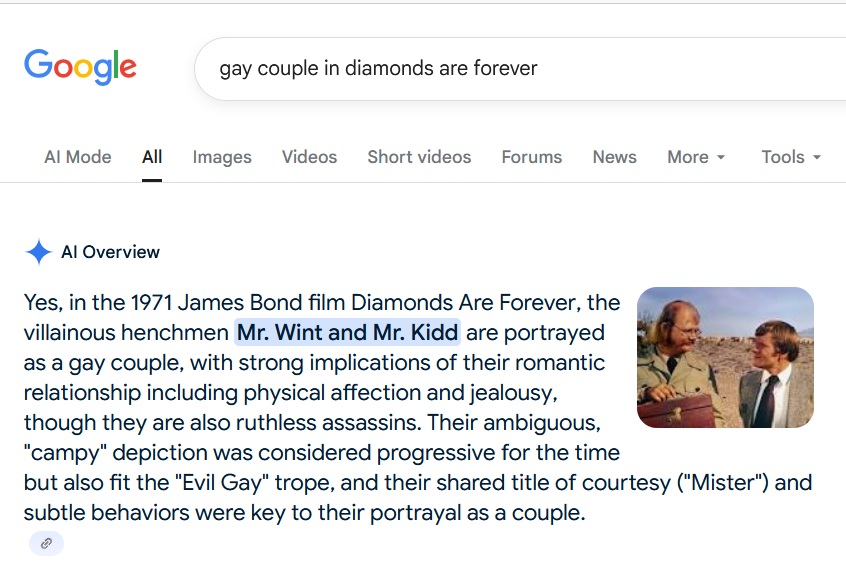
An example of artificial stupidity:
The phrases "midpoints of opposite faces" and "essentially
creating a smaller cube" are hallucinated bullshit.
The above AI description was created by inanely parroting
verbiage from the Wikipedia article "Diamond cubic" —
which it credits as a source. (See wider view of search.)
That article contains neither the word "theorem" nor the
phrase "unit cube " from the search-request prompt.
AI, like humans, is likely to fall victim to the notorious
"story theory of truth" purveyed by Richard J. Trudeau.
A real "diamond shape formed within a unit cube" is the
octahedron, one of the five classical Platonic solids.
Fans of the opposing "diamond theory of truth" rejected by
Trudeau may prefer . . .
(Log24, July 1, 2019).
|
Cullinane Diamond Theorem Research Report by https://you.com/?chatMode=research on March 3, 2024 Overview of the Cullinane Diamond Theorem The Cullinane Diamond Theorem is a mathematical concept developed by Steven H. Cullinane that explores the symmetrical properties of certain geometric patterns. It is particularly concerned with the structure of finite projective geometry as it relates to the 35 square patterns found in R. T. Curtis's Miracle Octad Generator (MOG). The theorem asserts that every G-image of a diamond figure D possesses some form of ordinary or color-interchange symmetry. Symmetry and Group Theory The theorem is deeply rooted in group theory, with G being isomorphic to the affine group A on the linear 4-space over the finite field GF(2). This group has a significant order of 322,560 and underlies the symmetry of both the diamond-theorem figures and the square patterns of the MOG . The 35 structures of the 840 G-images of D are isomorphic to the 35 lines in the 3-dimensional projective space over GF(2), which explains the symmetry of the line diagrams and the two-color patterns. The Diamond Theorem in Various Dimensions The diamond theorem can be applied to different cases, such as the 4×4, 2×2, and even 3-dimensional cubes like the 2x2x2 and 4x4x4 cubes. The generalized statement of the theorem involves inscribing a white diamond in a black square and dividing it into four quadrants, each with a diagonal split into black and white halves. Algebraic Implications The theorem has algebraic implications, such as the ability to express every 4-coloring as a sum of three 2-colorings. This algebraic formulation is useful for demonstrating that certain four-colored graphic images can form a ring under multiplication. There is also an infinite family of such 'diamond' rings, isomorphic to rings of matrices over GF(4). Philosophical and Cultural Context Steven H. Cullinane has also explored the philosophical implications of the diamond theorem, referring to it in the context of Plato's Meno dialogue and opposing it to the 'Story Theory of truth' as discussed by Richard J. Trudeau. The theorem is seen as a correct statement of the relation between geometry and the physical universe. Clarification on Cullinan Diamonds It is important to note that the Cullinane Diamond Theorem is unrelated to the Cullinan diamond, which is a famous large gemstone discovered in South Africa and now part of the British Crown Jewels. The Cullinan diamond has its own historical and cultural significance, with its various cut shapes and ownership history. In summary, the Cullinane Diamond Theorem is a mathematical concept that reveals the symmetrical properties of certain geometric patterns, with applications in group theory and algebra. It also has philosophical implications, drawing connections to classical ideas about truth and geometry. |
Instagram ad for You.com AI in research mode
"Show me ALL your sources, babe."
— Line adapted from Leonardo DiCaprio
The previous post linked to a review by David Ehrlich of the film
"Dog Years," starring Burt Reynolds. The review was dated April 26, 2017.
Also on that date . . .
This post from 2017 deals with the mathematics of "diamond theory,"
an approach to models of finite geometry.
Related philosophy —
The "diamond theory" of truth, as opposed to the "story theory."
(See Richard Trudeau, The Non-Euclidean Revolution.)
For those who prefer the story theory, there is, for instance,
the novel City of God by E. L. Doctorow —
"In the Garden of Adding
Live Even and Odd…."
Previously in Log24: Trudeau and the Story Theory of Truth.
More-recent remarks by Trudeau —
|
Bible Stories for Skeptics
Review
About the Author
Product details |
Log24 on the above publication date — July 6, 2014 —
The previous post suggests . . .
|
Jim Holt reviewing Edward Rothstein's Emblems of Mind: The Inner Life of Music and Mathematics in The New Yorker of June 5, 1995: "The fugues of Bach, the symphonies of Haydn, the sonatas of Mozart: these were explorations of ideal form, unprofaned by extramusical associations. Such 'absolute music,' as it came to be called, had sloughed off its motley cultural trappings. It had got in touch with its essence. Which is why, as Walter Pater famously put it, 'all art constantly aspires towards the condition of music.' The only art that can rival music for sheer etheriality is mathematics. A century or so after the advent of absolute music, mathematics also succeeded in detaching itself from the world. The decisive event was the invention of strange, non-Euclidean geometries, which put paid to the notion that the mathematician was exclusively, or even primarily, concerned with the scientific universe. 'Pure' mathematics came to be seen by those who practiced it as a free invention of the imagination, gloriously indifferent to practical affairs– a quest for beauty as well as truth." [Links added.] |
A line for James McAvoy —
"Pardon me boy, is this the Transylvania Station?"
See as well Worlds Out of Nothing , by Jeremy Gray.
Earlier posts have discussed the "story theory of truth"
versus the "diamond theory of truth," as defined by
Richard Trudeau in his 1987 book The Non-Euclidean Revolution.
In a New York Times opinion piece for tomorrow's print edition,*
novelist Dara Horn touched on what might be called
"the space theory of truth."
When they return to synagogue, mourners will be greeted
with more ancient words: “May God comfort you
among the mourners of Zion and Jerusalem.”
In that verse, the word used for God is hamakom —
literally, “the place.” May the place comfort you.
[Link added.]
The Source —
See Dara Horn in this journal, as well as Makom.
* "A version of this article appears in print on ,
on Page A23 of the New York edition with the headline:
American Jews Know This Story."
"When times are mysterious
Serious numbers
Will always be heard."
— Paul Simon,
"When Numbers Get Serious"
"There is a pleasantly discursive treatment of
Pontius Pilate's unanswered question 'What is truth?'"
— H. S. M. Coxeter, introduction to Richard J. Trudeau's remarks
on the "story theory" of truth as opposed to the "diamond theory"
of truth in The Non-Euclidean Revolution (1987)
The deaths of Roth and Grünbaum on September 14th,
The Feast of the Holy Cross, along with Douthat's column
today titled "Only the Truth Can Save Us Now," suggest a
review of …
Background for the remarks of Koen Thas in the previous post —
Schumacher and Westmoreland, "Modal Quantum Theory" (2010).
Related material —
" There is a pleasantly discursive treatment
of Pontius Pilate’s unanswered question
‘What is truth?’ "
— Coxeter, 1987, introduction to Trudeau’s
The Non-Euclidean Revolution
The whole truth may require an unpleasantly discursive treatment.
Example —
1. The reported death on Friday, Jan. 5, 2018, of a dancer
closely associated with George Balanchine
2. This journal on Friday, Jan. 5, 2018:
3. Illustration from a search related to the above dancer:
4. "Per Mare Per Terras" — Clan slogan above, illustrated with
what looks like a cross-dagger.
"Unsheathe your dagger definitions." — James Joyce.
5. Discursive remarks on quantum theory by the above
Schumacher and Westmoreland:
6. "How much story do you want?" — George Balanchine
Yesterday's online LA Times had an obituary for a
traveling salesman:
"Besides writing and teaching, Borg was a frequent speaker,
usually racking up 100,000 frequent flier miles a year.
He and Crossan, along with their wives, led annual tours
to Turkey to follow the path of the Apostle Paul and to give
a sense of his world. They also led tours to Ireland to
showcase a different brand of Christianity."
Borg and Crossan were members of the Jesus Seminar.
For Crossan, see remarks on "The Story Theory of Truth."
See also, from the date of Borg's death, a different salesman joke.
Some backstory —
"What we do may be small, but it has
a certain character of permanence."
— G. H. Hardy in A Mathematician's Apology
New! Improved!
"Euclid's edifice loomed in my consciousness
as a marvel among sciences, unique in its
clarity and unquestionable validity."
—Richard J. Trudeau in
The Non-Euclidean Revolution (First published in 1986)
Readers of this journal will be aware that Springer's new page
advertising Trudeau's book, pictured above, is a bait-and-switch
operation. In the chapter advertised, Trudeau promotes what he
calls "the Diamond Theory of Truth" as a setup for his real goal,
which he calls "the Story Theory of Truth."
For an earlier use of the phrase "Diamond Theory" in
connection with geometry, see a publication from 1977.
For those who prefer Trudeau's
"Story Theory" of truth to his "Diamond Theory"
Related material: Click images below for the original posts.
See as well the novel "Lexicon" at Amazon.com
and the word "lexicon" in this journal.
For clergymen who embrace Trudeau's
"Story Theory of Truth" (see last evening's
7:20 PM post on geometry and A Wrinkle in Time )…
Here are two meditations suggested by
yesterday evening's New York Lottery :
1. Page 141 in Philosophies of India—
2. Post 4658 in this journal— A Wrinkle in Dimensions.
A review of two theories of truth described
by a clergyman, Richard J. Trudeau, in
The Non-Euclidean Revolution—
"But, I asked, is there a difference
between fiction and nonfiction?
'Not much,' she said, shrugging."
— New Yorker profile of tesseract
author Madeleine L'Engle
(Click image for some background.)
See also the links on a webpage at finitegeometry.org.
An 1978 counterexample to Richard J. Trudeau's
1987 "Story Theory of truth" is now online.
From math16.com—
Quotations on Realism
|
The story of the diamond mine continues
(see Coordinated Steps and Organizing the Mine Workers)—
From The Search for Invariants (June 20, 2011):
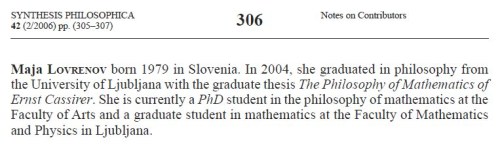
The conclusion of Maja Lovrenov's
"The Role of Invariance in Cassirer’s Interpretation of the Theory of Relativity"—
"… physical theories prove to be theories of invariants
with regard to certain groups of transformations and
it is exactly the invariance that secures the objectivity
of a physical theory."
— SYNTHESIS PHILOSOPHICA 42 (2/2006), pp. 233–241

Related material from Sunday's New York Times travel section—
Richard J. Trudeau, a mathematics professor and Unitarian minister, published in 1987 a book, The Non-Euclidean Revolution , that opposes what he calls the Story Theory of truth [i.e., Quine, nominalism, postmodernism] to what he calls the traditional Diamond Theory of truth [i.e., Plato, realism, the Roman Catholic Church]. This opposition goes back to the medieval "problem of universals" debated by scholastic philosophers.
(Trudeau may never have heard of, and at any rate did not mention, an earlier 1976 monograph on geometry, "Diamond Theory," whose subject and title are relevant.)
From yesterday's Sunday morning New York Times—
"Stories were the primary way our ancestors transmitted knowledge and values. Today we seek movies, novels and 'news stories' that put the events of the day in a form that our brains evolved to find compelling and memorable. Children crave bedtime stories…."
— Drew Westen, professor at Emory University
From May 22, 2009—
|
The above ad is by Diamond from last night’s
|
|
For further details, see Saturday's correspondences |
Truth, Geometry, Algebra
The following notes are related to A Simple Reflection Group of Order 168.
1. According to H.S.M. Coxeter and Richard J. Trudeau
“There is a pleasantly discursive treatment of Pontius Pilate’s unanswered question ‘What is truth?’.”
— Coxeter, 1987, introduction to Trudeau’s The Non-Euclidean Revolution
1.1 Trudeau’s Diamond Theory of Truth
1.2 Trudeau’s Story Theory of Truth
2. According to Alexandre Borovik and Steven H. Cullinane
2.1 Coxeter Theory according to Borovik
2.1.1 The Geometry–
Mirror Systems in Coxeter Theory
2.1.2 The Algebra–
Coxeter Languages in Coxeter Theory
2.2 Diamond Theory according to Cullinane
2.2.1 The Geometry–
Examples: Eightfold Cube and Solomon’s Cube
2.2.2 The Algebra–
Examples: Cullinane and (rather indirectly related) Gerhard Grams
Summary of the story thus far:
Diamond theory and Coxeter theory are to some extent analogous– both deal with reflection groups and both have a visual (i.e., geometric) side and a verbal (i.e., algebraic) side. Coxeter theory is of course highly developed on both sides. Diamond theory is, on the geometric side, currently restricted to examples in at most three Euclidean (and six binary) dimensions. On the algebraic side, it is woefully underdeveloped. For material related to the algebraic side, search the Web for generators+relations+”characteristic two” (or “2“) and for generators+relations+”GF(2)”. (This last search is the source of the Grams reference in 2.2.2 above.)
Unitarian Universalist Origins: Our Historic Faith—
"In sixteenth-century Transylvania, Unitarian congregations were established for the first time in history."
Gravity's Rainbow–
"For every kind of vampire, there is a kind of cross."
Unitarian minister Richard Trudeau—
"… I called the belief that
(1) Diamonds– informative, certain truths about the world– exist
the 'Diamond Theory' of truth. I said that for 2200 years the strongest evidence for the Diamond Theory was the widespread perception that
(2) The theorems of Euclidean geometry are diamonds….
As the news about non-Euclidean geometry spread– first among mathematicians, then among scientists and philosophers– the Diamond Theory began a long decline that continues today.
Factors outside mathematics have contributed to this decline. Euclidean geometry had never been the Diamond Theory's only ally. In the eighteenth century other fields had seemed to possess diamonds, too; when many of these turned out to be man-made, the Diamond Theory was undercut. And unlike earlier periods in history, when intellectual shocks came only occasionally, received truths have, since the eighteenth century, been found wanting at a dizzying rate, creating an impression that perhaps no knowledge is stable.
Other factors notwithstanding, non-Euclidean geometry remains, I think, for those who have heard of it, the single most powerful argument against the Diamond Theory*– first, because it overthrows what had always been the strongest argument in favor of the Diamond Theory, the objective truth of Euclidean geometry; and second, because it does so not by showing Euclidean geometry to be false, but by showing it to be merely uncertain." —The Non-Euclidean Revolution, p. 255
H. S. M. Coxeter, 1987, introduction to Trudeau's book—
"There is a pleasantly discursive treatment of Pontius Pilate's unanswered question 'What is truth?'."
As noted here on Oct. 8, 2008 (A Yom Kippur Meditation), Coxeter was aware in 1987 of a more technical use of the phrase "diamond theory" that is closely related to…

Pilate Goes
to Kindergarten
“There is a pleasantly discursive
treatment of Pontius Pilate’s
unanswered question
‘What is truth?’.”
— H. S. M. Coxeter, 1987,
introduction to Trudeau’s
remarks on the “Story Theory“
of truth as opposed to the
“Diamond Theory” of truth in
The Non-Euclidean Revolution
Consider the following question in a paper cited by V. S. Varadarajan:
E. G. Beltrametti, “Can a finite geometry describe physical space-time?” Universita degli studi di Perugia, Atti del convegno di geometria combinatoria e sue applicazioni, Perugia 1971, 57–62.
Simplifying:
“Can a finite geometry describe physical space?”
Simplifying further:
“Yes. Vide ‘The Eightfold Cube.'”

| This journal on October 8, 2008, at noon: “There is a pleasantly discursive treatment of Pontius Pilate’s unanswered question ‘What is truth?'” Trudeau’s 1987 book uses the phrase “diamond theory” to denote the philosophical theory, common since Plato and Euclid, that there exist truths (which Trudeau calls “diamonds”) that are certain and eternal– for instance, the truth in Euclidean geometry that the sum of a triangle’s angles is 180 degrees. Insidehighered.com onthe same day, October 8, 2008, at 12:45 PM EDT “Future readers may consider Updike our era’s Mozart; Mozart was once written off as a too-prolific composer of ‘charming nothings,’ and some speak of Updike that way.” — Comment by BPJ |
Updike died on January 27.
On the same date,
Mozart was born.
Requiem
| Mr. Best entered, tall, young, mild, light. He bore in his hand with grace a notebook, new, large, clean, bright. — James Joyce, Ulysses, |
Serious Numbers
A Yom Kippur
Meditation
"When times are mysterious
Serious numbers
Will always be heard."
— Paul Simon,
"When Numbers Get Serious"
"There is a pleasantly discursive treatment of Pontius Pilate's unanswered question 'What is truth?'"
— H. S. M. Coxeter, introduction to Richard J. Trudeau's remarks on the "story theory" of truth as opposed to the "diamond theory" of truth in The Non-Euclidean Revolution
Trudeau's 1987 book uses the phrase "diamond theory" to denote the philosophical theory, common since Plato and Euclid, that there exist truths (which Trudeau calls "diamonds") that are certain and eternal– for instance, the truth in Euclidean geometry that the sum of a triangle's angles is 180 degrees. As the excerpt below shows, Trudeau prefers what he calls the "story theory" of truth–
"There are no diamonds. People make up stories about what they experience. Stories that catch on are called 'true.'"
(By the way, the phrase "diamond theory" was used earlier, in 1976, as the title of a monograph on geometry of which Coxeter was aware.)

What does this have to do with numbers?
Pilate's skeptical tone suggests he may have shared a certain confusion about geometric truth with thinkers like Trudeau and the slave boy in Plato's Meno. Truth in a different part of mathematics– elementary arithmetic– is perhaps more easily understood, although even there, the existence of what might be called "non-Euclidean number theory"– i.e., arithmetic over finite fields, in which 1+1 can equal zero– might prove baffling to thinkers like Trudeau.
Trudeau's book exhibits, though it does not discuss, a less confusing use of numbers– to mark the location of pages. For some philosophical background on this version of numerical truth that may be of interest to devotees of the Semitic religions on this evening's High Holiday, see Zen and Language Games.
For uses of numbers that are more confusing, see– for instance– the new website The Daily Beast and the old website Story Theory and the Number of the Beast.
This note is prompted by the March 4 death of Richard D. Anderson, writer on geometry, President (1981-82) of the Mathematical Association of America (MAA), and member of the MAA's Icosahedron Society.
"The historical road
from the Platonic solids
to the finite simple groups
is well known."
— Steven H. Cullinane,
November 2000,
Symmetry from Plato to
the Four-Color Conjecture
"By far the most important structure in design theory is the Steiner system S(5, 8, 24)."
This Steiner system is closely connected to M24 and to the extended binary Golay code. Brouwer gives an elegant construction of that code (and therefore of M24):
"Let N be the adjacency matrix of the icosahedron (points: 12 vertices, adjacent: joined by an edge). Then the rows of the 12×24 matrix
— Op. cit., p. 719
Finite Geometry of
the Square and Cube
and
Jewel in the Crown
"There is a pleasantly discursive
treatment of Pontius Pilate's
unanswered question
'What is truth?'"
— H. S. M. Coxeter, 1987,
introduction to Trudeau's
"story theory" of truth
Those who prefer stories to truth
may consult the Log24 entries
of March 1, 2, 3, 4, and 5.
They may also consult
the poet Rubén Darío:
… Todo lo sé por el lucero puro
que brilla en la diadema de la Muerte.
"An acute study of the links
between word and fact"
— Nina daVinci Nichols
| Virginia | /391062427/item.html? | 2/22/2008 7:37 PM |
Johnny Cash:
"And behold,
a white horse."

Chess Knight
(in German, Springer)
"Liebe Frau vBayern,
mich würde interessieren wie man
mit diesem Hintergrund
(vonbayern.de/german/anna.html)
zu Springer kommt?"
Background of "Frau vBayern" from thePeerage.com:
Anna-Natascha Prinzessin zu Sayn-Wittgenstein-Berleburg
F, #64640, b. 15 March 1978Last Edited=20 Oct 2005
Anna-Natascha Prinzessin zu Sayn-Wittgenstein-Berleburg was born on 15 March 1978. She is the daughter of Ludwig Ferdinand Prinz zu Sayn-Wittgenstein-Berleburg and Countess Yvonne Wachtmeister af Johannishus. She married Manuel Maria Alexander Leopold Jerg Prinz von Bayern, son of Leopold Prinz von Bayern and Ursula Mohlenkamp, on 6 August 2005 at Nykøping, Södermanland, Sweden.
The date of the above "Liebe Frau vBayern" inquiry, Feb. 1, 2007, suggests the following:
From Log24 on
St. Bridget's Day, 2007:
The quotation
"Science is a Faustian bargain"
and the following figure–
Change
From a short story by
the above Princess:
"'I don't even think she would have wanted to change you. But she for sure did not want to change herself. And her values were simply a part of her.' It was true, too. I would even go so far as to say that they were her basis, if you think about her as a geometrical body. That's what they couldn't understand, because in this age of the full understanding for stretches of values in favor of self-realization of any kind, it was a completely foreign concept."
To make this excellent metaphor mathematically correct,
change "geometrical body" to "space"… as in
"For Princeton's Class of 2007"—
Review of a 2004 production of a 1972 Tom Stoppard play, "Jumpers"–
Related material:
Knight Moves (Log24, Jan. 16),
Kindergarten Theology (St. Bridget's Day, 2008),
and
“There is a pleasantly discursive treatment
of Pontius Pilate’s unanswered question
‘What is truth?'”
— H. S. M. Coxeter, 1987, introduction to
Richard J. Trudeau’s remarks on
the “Story Theory” of truth
as opposed to
the “Diamond Theory” of truth
in The Non-Euclidean Revolution
A Serious Position
“‘Teitelbaum,’ in German,
is ‘date palm.'”
— Generations, Jan. 2003
“In Hasidism, a mystical brand
of Orthodox Judaism, the grand rabbi
is revered as a kinglike link to God….”
— Today’s New York Times obituary
of Rabbi Moses Teitelbaum,
who died on April 24, 2006
(Easter Monday in the
Orthodox Church)
From Wikipedia, an unsigned story:
“In 1923 Alfred Teitelbaum and his brother Wacław changed their surnames to Tarski, a name they invented because it sounded very Polish, was simple to spell and pronounce, and was unused. (Years later, he met another Alfred Tarski in northern California.) The Tarski brothers also converted to Roman Catholicism, the national religion of the Poles. Alfred did so, even though he was an avowed atheist, because he was about to finish his Ph.D. and correctly anticipated that it would be difficult for a Jew to obtain a serious position in the new Polish university system.”

“There is a pleasantly discursive treatment of Pontius Pilate’s unanswered question ‘What is truth?'”
— H. S. M. Coxeter, 1987, introduction to Richard J. Trudeau’s remarks on the “Story Theory” of truth as opposed to the “Diamond Theory” of truth in The Non-Euclidean Revolution
“A new epistemology is emerging to replace the Diamond Theory of truth. I will call it the ‘Story Theory’ of truth: There are no diamonds. People make up stories about what they experience. Stories that catch on are called ‘true.’ The Story Theory of truth is itself a story that is catching on. It is being told and retold, with increasing frequency, by thinkers of many stripes*….”
— Richard J. Trudeau in
The Non-Euclidean Revolution
“‘Deniers’ of truth… insist that each of us is trapped in his own point of view; we make up stories about the world and, in an exercise of power, try to impose them on others.”
— Jim Holt in The New Yorker.
(Click on the box below.)
Exercise of Power:
Show that a white horse–

a figure not unlike the
symbol of the mathematics
publisher Springer–
is traced, within a naturally
arranged rectangular array of
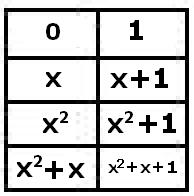
polynomials, by the powers of x
modulo a polynomial
irreducible over a Galois field.
This horse, or chess knight–
“Springer,” in German–
plays a role in “Diamond Theory”
(a phrase used in finite geometry
in 1976, some years before its use
by Trudeau in the above book).
Related material
On this date:
In 1490, The White Knight
(Tirant lo Blanc
)–
a major influence on Cervantes–
was published, and in 1910

the Mexican Revolution began.
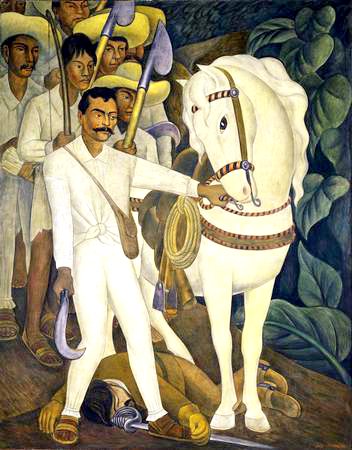
Illustration:
Zapata by Diego Rivera,
Museum of Modern Art,
New York
“First published in the Catalan language in Valencia in 1490…. Reviewing the first modern Spanish translation in 1969 (Franco had ruthlessly suppressed the Catalan language and literature), Mario Vargas Llosa hailed the epic’s author as ‘the first of that lineage of God-supplanters– Fielding, Balzac, Dickens, Flaubert, Tolstoy, Joyce, Faulkner– who try to create in their novels an all-encompassing reality.'”
— H. S. M. Coxeter, introduction to
Richard J. Trudeau’s
The Non-Euclidean Revolution
“People have always longed for truths about the world — not logical truths, for all their utility; or even probable truths, without which daily life would be impossible; but informative, certain truths, the only ‘truths’ strictly worthy of the name. Such truths I will call ‘diamonds’; they are highly desirable but hard to find….The happy metaphor is Morris Kline’s in Mathematics in Western Culture (Oxford, 1953), p. 430.”
— Richard J. Trudeau,
The Non-Euclidean Revolution,
Birkhauser Boston,
1987, pages 114 and 117
“A new epistemology is emerging to replace the Diamond Theory of truth. I will call it the ‘Story Theory’ of truth: There are no diamonds. People make up stories about what they experience. Stories that catch on are called ‘true.’ The Story Theory of truth is itself a story that is catching on. It is being told and retold, with increasing frequency, by thinkers of many stripes…. My own viewpoint is the Story Theory…. I concluded long ago that each enterprise contains only stories (which the scientists call ‘models of reality’). I had started by hunting diamonds; I did find dazzlingly beautiful jewels, but always of human manufacture.”
— Richard J. Trudeau,
The Non-Euclidean Revolution,
Birkhauser Boston,
1987, pages 256 and 259
An example of
the story theory of truth:
Actress Gwyneth Paltrow (“Proof”) was apparently born on either Sept. 27, 1972, or Sept. 28, 1972. Google searches yield “about 193” results for the 27th and “about 610” for the 28th.
Those who believe in the “story theory” of truth may therefore want to wish her a happy birthday today. Those who do not may prefer the contents of yesterday’s entry, from Paltrow’s other birthday.
Mathematics and Narrative
continued
"There is a pleasantly discursive treatment of Pontius Pilate's unanswered question 'What is truth?'"
— H. S. M. Coxeter, 1987, introduction to Richard J. Trudeau's remarks on the "Story Theory" of truth as opposed to the "Diamond Theory" of truth " in The Non-Euclidean Revolution
"I had an epiphany: I thought 'Oh my God, this is it! People are talking about elliptic curves and of course they think they are talking mathematics. But are they really? Or are they talking about stories?'"
— An organizer of last month's "Mathematics and Narrative" conference
"A new epistemology is emerging to replace the Diamond Theory of truth. I will call it the 'Story Theory' of truth: There are no diamonds. People make up stories about what they experience. Stories that catch on are called 'true.' The Story Theory of truth is itself a story that is catching on. It is being told and retold, with increasing frequency, by thinkers of many stripes*…."
— Richard J. Trudeau in The Non-Euclidean Revolution
"'Deniers' of truth… insist that each of us is trapped in his own point of view; we make up stories about the world and, in an exercise of power, try to impose them on others."
— Jim Holt in this week's New Yorker magazine. Click on the box below.
* Many stripes —
"What disciplines were represented at the meeting?"
"Apart from historians, you mean? Oh, many: writers, artists, philosophers, semioticians, cognitive psychologists – you name it."
— An organizer of last month's "Mathematics and Narrative" conference
Powered by WordPress