The title refers to a Log24 search that was suggested
by . . .
- The "back 10" symbol in the previous post
- The posts of April 27. 2015
- The Five Ninths search in a post on that date.
The title refers to a Log24 search that was suggested
by . . .
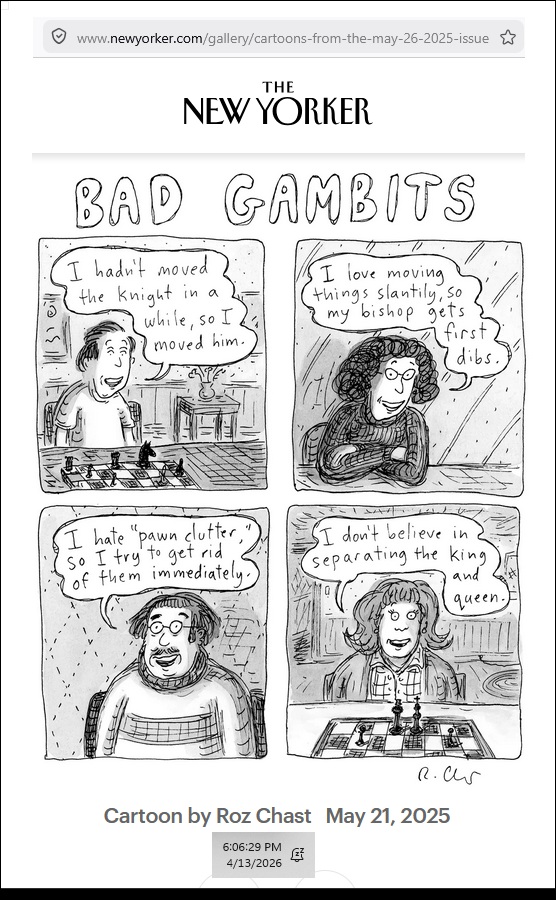
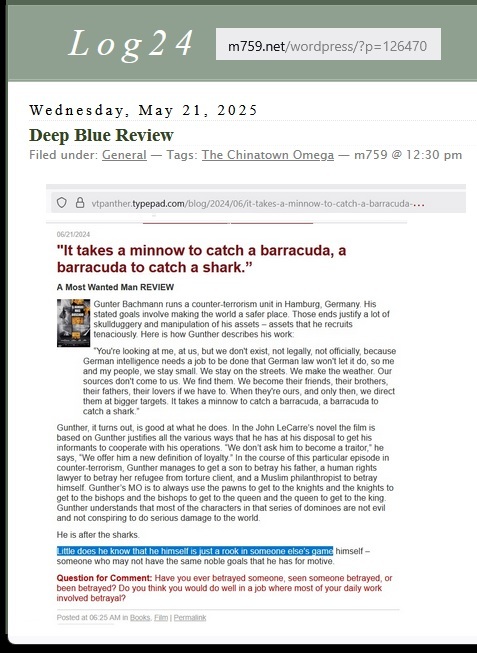

* Cat tale, not cocktail
† Beth Harmon of Queen's Gambit . . .
"She was on her own. She would have to bridge the gap
herself that separated American chess from Russian.
At Toby’s the headwaiter knew her and put her at
a good table near the front. She ordered asperges vinaigrette
for an appetizer and told the waiter she would have that
before ordering a main course. 'Would you care for a cocktail?'
he asked pleasantly."
Brian Harley in Mate in Two Moves:
“It is quite true that variation play is, in ninety-nine cases
out of a hundred, the soul of a problem, or
(to put it more materially) the main course of
the solver’s banquet, but the Key is the cocktail
that begins the proceedings, and if it fails in piquancy
the following dinner is not so satisfactory as it should be.”
(London, Bell & Sons. First edition, 1931.)
Latest revision . . .
 m759, June 28, 2026 @ 00:21:16
|
G. H. Hardy in A Mathematician’s Apology: “We do not want many ‘variations’ in the proof of a mathematical theorem: ‘enumeration of cases,’ indeed, is one of the duller forms of mathematical argument. A mathematical proof should resemble a simple and clear-cut constellation, not a scattered cluster in the Milky Way. A chess problem also has unexpectedness, and a certain economy; it is essential that the moves should be surprising, and that every piece on the board should play its part. But the aesthetic effect is cumulative. It is essential also (unless the problem is too simple to be really amusing) that the key-move should be followed by a good many variations, each requiring its own individual answer. ‘If P-B5 then Kt-R6; if …. then …. ; if …. then ….’ — the effect would be spoilt if there were not a good many different replies. All this is quite genuine mathematics, and has its merits; but it just that ‘proof by enumeration of cases’ (and of cases which do not, at bottom, differ at all profoundly*) which a real mathematician tends to despise. * I believe that is now regarded as a merit in a problem that there should be many variations of the same type.” (Cambridge at the University Press. First edition, 1940.)
Brian Harley in Mate in Two Moves:
“It is quite true that variation play is, in ninety-nine cases (London, Bell & Sons. First edition, 1931.) |
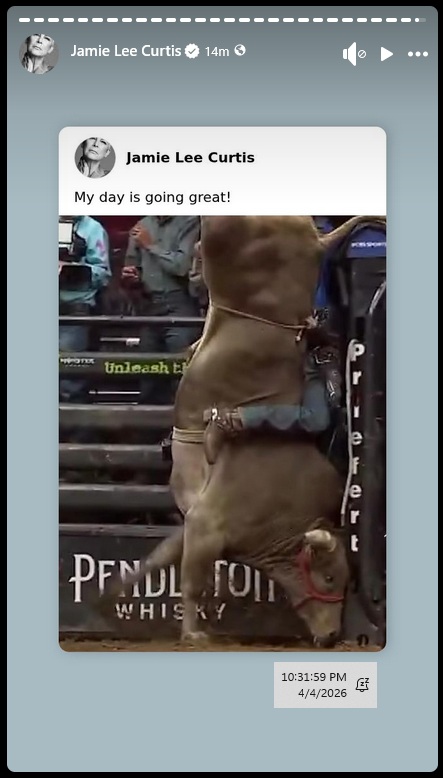
This post was suggested by a recent screenshot timestamp —
"I look at the name first. The manner of the crime betrayed the touch of
Professor Moriarty to Sherlock Holmes; in chess problems, on the contrary,
the composer's identity tells us, more or less, what to expect."
— Brian Harley, Mate in Two Moves: The Two-Move Chess Problem Made Easy,
1931, commentary on problem 162
This is from a webpage of March 20, 2001.
For a video vignette that may or may not serve to illustrate the Harley remark,
see http://log24.com/log/pix25/250423-Miapensa-black-dog-vignette.jpg.
“Chess problems are the
hymn-tunes of mathematics.”
— G. H. Hardy,
A Mathematician’s Apology

|

|

“The key is the cocktail that begins the proceedings.”
– Brian Harley, Mate in Two Moves

"I named this script ocode and chmod 755'd it to make it executable…"
— Software forum post on the OCR program Tesseract

|
From the author of
The Pearly Gates of Cyberspace:
"Like so many other heroes
who have seen the light
of a higher order…."
Brian Harley in Mate in Two Moves:
“It is quite true that variation play is, in ninety-nine cases
out of a hundred, the soul of a problem, or (to put it more
materially) the main course of the solver’s banquet, but
the Key is the cocktail that begins the proceedings, and
if it fails in piquancy the following dinner is not so
satisfactory as it should be.”
(London, Bell & Sons. First edition, 1931.)

Related art from the 9/25 Log24 post Harvardwood Suggests —

The musical accompaniment to the TikTok cock is by Village People.
Related news from yesterday —

The Village Voice founder reportedly died on Wednesday, September 27, 2023.
With apologies to those readers unable to follow knight moves .
The Queen's Gambit , by Walter Tevis,
published Feb. 1983 —
“Would you care for a cocktail?” he asked pleasantly.
She looked around her at the quiet restaurant,
at the people eating lunch, at the table with desserts
near the velvet rope at the entrance to the dining room.
“A Gibson,” she said. “On the rocks.”
"A silver tide of phosphenes boiled across my field of vision
as the matrix began to unfold in my head, a 3-D chessboard,
infinite and perfectly transparent."
"'Rikki Don't Lose That Number' is a single
released in 1974 by rock/jazz rock group Steely Dan
and the opening track of their third album Pretzel Logic .
It was the most successful single of the group's career,
peaking at number 4 on the Billboard Hot 100 in
the summer of 1974." — Wikipedia
Brian Harley, Mate in Two Moves , 1931—
“The key is the cocktail that begins the proceedings.”
See as well my post "Introduction to Cyberspace" (May 26, 2020).
An image from the opening of the Netflix series “Locke & Key” —

See also Omega in this journal.

“The key is the cocktail that begins the proceedings.”
– Brian Harley, Mate in Two Moves

“The key is the cocktail that begins the proceedings.”
– Brian Harley, Mate in Two Moves

“Just as these lines that merge to form a key
Are as chess squares . . . .” — Katherine Neville, The Eight
“The complete projective group of collineations and dualities of the
[projective] 3-space is shown to be of order [in modern notation] 8! ….
To every transformation of the 3-space there corresponds
a transformation of the [projective] 5-space. In the 5-space, there are
determined 8 sets of 7 points each, ‘heptads’ ….”
— George M. Conwell, “The 3-space PG (3, 2) and Its Group,”
The Annals of Mathematics , Second Series, Vol. 11, No. 2 (Jan., 1910),
pp. 60-76.
“It must be remarked that these 8 heptads are the key to an elegant proof….”
— Philippe Cara, “RWPRI Geometries for the Alternating Group A8,” in
Finite Geometries: Proceedings of the Fourth Isle of Thorns Conference
(July 16-21, 2000), Kluwer Academic Publishers, 2001, ed. Aart Blokhuis,
James W. P. Hirschfeld, Dieter Jungnickel, and Joseph A. Thas, pp. 61-97.
“The key is the cocktail that begins the proceedings.”
– Brian Harley, Mate in Two Moves
See also yesterday's Endgame , as well as Play and Interplay
from April 28… and, as a key, the following passage from
an earlier April 28 post—
| Euclidean geometry has long been applied to physics; Galois geometry has not. The cited webpage describes the interplay of both sorts of geometry— Euclidean and Galois, continuous and discrete— within physical space— if not within the space of physics . |

|
"The only wealth he bestowed on his subjects lay in the richness of his descriptive language, the detailed fineness of which won him comparisons with painters like Vermeer and Andrew Wyeth."
— Christopher Lehmann-Haupt in today's International Herald Tribune |
|
"These people have discovered how to turn dreams into reality. They know how to enter their dream realities. They can stay there, live there, perhaps forever."
— Alfred Bester on the inmates of Ward T in his 1953 short story, "Disappearing Act"
Related material:
"Is Nothing Sacred?" |
|
When? Going to dark bed there was a square round Sinbad the Sailor roc's auk's egg in the night of the bed of all the auks of the rocs of Darkinbad the Brightdayler. Where?
— Ulysses, conclusion of Episode 17 |

Happy Feast of
St. Thomas Aquinas.
For Mary Gaitskill,
continued from
June 21, 2008:

This minimal art
is the basis of the
chess set image
from Tuesday:

Related images:

“The key is the
cocktail that begins
the proceedings.”
— Brian Harley,
Mate in Two Moves
(A Mathematician's Apology, Cambridge at the University Press, first edition, 1940)
Brian Harley on chess problems–
"It is quite true that variation play is, in ninety-nine cases out of a hundred, the soul of a problem, or (to put it more materially) the main course of the solver's banquet, but the Key is the cocktail that begins the proceedings, and if it fails in piquancy the following dinner is not so satisfactory as it should be."
(Mate in Two Moves, London, Bell & Sons, first edition, 1931)
Introduction to Aesthetics
“Chess problems are the
hymn-tunes of mathematics.”
— G. H. Hardy,
A Mathematician’s Apology
|
|
|
“We do not want many ‘variations’ in the proof of a mathematical theorem: ‘enumeration of cases,’ indeed, is one of the duller forms of mathematical argument. A mathematical proof should resemble a simple and clear-cut constellation, not a scattered cluster in the Milky Way.
A chess problem also has unexpectedness, and a certain economy; it is essential that the moves should be surprising, and that every piece on the board should play its part. But the aesthetic effect is cumulative. It is essential also (unless the problem is too simple to be really amusing) that the key-move should be followed by a good many variations, each requiring its own individual answer. ‘If P-B5 then Kt-R6; if …. then …. ; if …. then ….’ — the effect would be spoilt if there were not a good many different replies. All this is quite genuine mathematics, and has its merits; but it just that ‘proof by enumeration of cases’ (and of cases which do not, at bottom, differ at all profoundly*) which a real mathematician tends to despise.
* I believe that is now regarded as a merit in a problem that there should be many variations of the same type.”
(Cambridge at the University Press. First edition, 1940.)
Brian Harley in
Mate in Two Moves:
“It is quite true that variation play is, in ninety-nine cases out of a hundred, the soul of a problem, or (to put it more materially) the main course of the solver’s banquet, but the Key is the cocktail that begins the proceedings, and if it fails in piquancy the following dinner is not so satisfactory as it should be.”
(London, Bell & Sons. First edition, 1931.)
Before and After
From Understanding the (Net) Wake:
| 24 A.
Joyce shows an understanding of the problems that an intertextual book like the Wake poses for the notion of authorship. |
G. H. Hardy in A Mathematician’s Apology:
“We do not want many ‘variations’ in the proof of a mathematical theorem: ‘enumeration of cases,’ indeed, is one of the duller forms of mathematical argument. A mathematical proof should resemble a simple and clear-cut constellation, not a scattered cluster in the Milky Way.
A chess problem also has unexpectedness, and a certain economy; it is essential that the moves should be surprising, and that every piece on the board should play its part. But the aesthetic effect is cumulative. It is essential also (unless the problem is too simple to be really amusing) that the key-move should be followed by a good many variations, each requiring its own individual answer. ‘If P-B5 then Kt-R6; if …. then …. ; if …. then ….’ — the effect would be spoilt if there were not a good many different replies. All this is quite genuine mathematics, and has its merits; but it just that ‘proof by enumeration of cases’ (and of cases which do not, at bottom, differ at all profoundly*) which a real mathematician tends to despise.
* I believe that is now regarded as a merit in a problem that there should be many variations of the same type.”
(Cambridge at the University Press. First edition, 1940.)
Brian Harley in Mate in Two Moves:
“It is quite true that variation play is, in ninety-nine cases out of a hundred, the soul of a problem, or (to put it more materially) the main course of the solver’s banquet, but the Key is the cocktail that begins the proceedings, and if it fails in piquancy the following dinner is not so satisfactory as it should be.”
(London, Bell & Sons. First edition, 1931.)
Powered by WordPress

