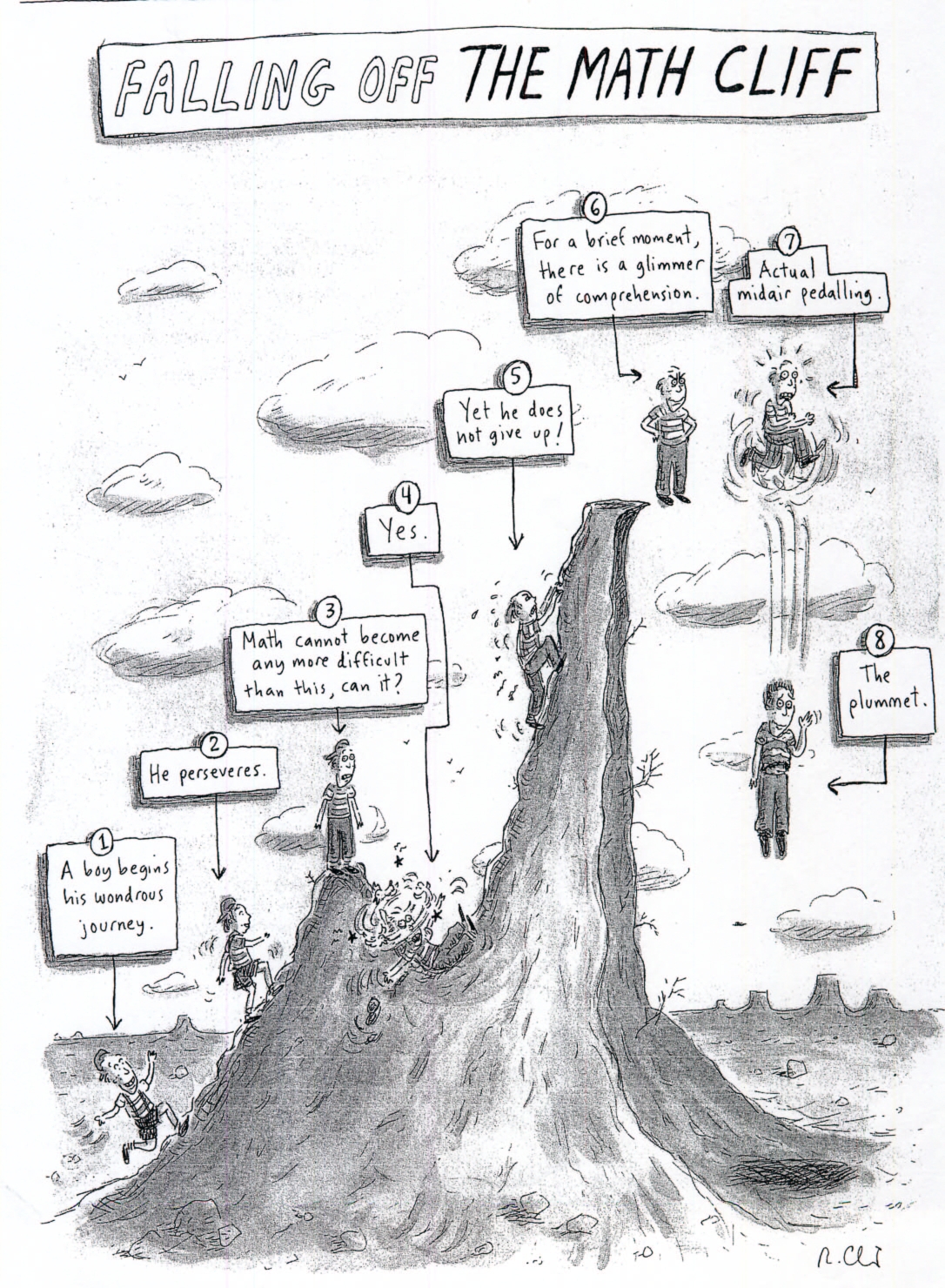
* Cf. Anselm, De Veritate .

* Vide "pleasantly discursive" in this journal.
The structure in the previous post (three trios), though historically significant,
offers less opportunity for contrapuntal variation than . . .

Related remarks for Pleasantly Discursive Day —

See “Pleasantly Discursive” in this journal.

” There is a pleasantly discursive treatment
of Pontius Pilate’s unanswered question
‘What is truth?’ ”
— Coxeter, 1987, introduction to Trudeau’s
The Non-Euclidean Revolution

From this journal on December 13th, 2016 —
" There is a pleasantly discursive treatment
of Pontius Pilate’s unanswered question
‘What is truth?’ "
— Coxeter, 1987, introduction to Trudeau’s
The Non-Euclidean Revolution
Also on December 13th, 2016 —

Background for the remarks of Koen Thas in the previous post —
Schumacher and Westmoreland, "Modal Quantum Theory" (2010).
Related material —
" There is a pleasantly discursive treatment
of Pontius Pilate’s unanswered question
‘What is truth?’ "
— Coxeter, 1987, introduction to Trudeau’s
The Non-Euclidean Revolution
The whole truth may require an unpleasantly discursive treatment.
Example —
1. The reported death on Friday, Jan. 5, 2018, of a dancer
closely associated with George Balanchine
2. This journal on Friday, Jan. 5, 2018:

3. Illustration from a search related to the above dancer:

4. "Per Mare Per Terras" — Clan slogan above, illustrated with
what looks like a cross-dagger.
"Unsheathe your dagger definitions." — James Joyce.
5. Discursive remarks on quantum theory by the above
Schumacher and Westmoreland:

6. "How much story do you want?" — George Balanchine
These are Rothko's Swamps .
See a Log24 search for related meditations.
For all three topics combined, see Coxeter —
" There is a pleasantly discursive treatment
of Pontius Pilate’s unanswered question
‘What is truth?’ "
— Coxeter, 1987, introduction to Trudeau’s
The Non-Euclidean Revolution
Update of 10 AM ET — Related material, with an elementary example:
Posts tagged "Defining Form." The example —

John Updike on Don DeLillo's thirteenth novel, Cosmopolis —
" DeLillo’s post-Christian search for 'an order at some deep level'
has brought him to global computerization:
'the zero-oneness of the world, the digital imperative . . . . ' "
— The New Yorker , issue dated March 31, 2003
On that date ….

Related remark —
" There is a pleasantly discursive treatment
of Pontius Pilate’s unanswered question
‘What is truth?’ "
— Coxeter, 1987, introduction to Trudeau’s
The Non-Euclidean Revolution

"Again, in spite of that, we call this Friday good."
— T. S. Eliot, Four Quartets
From this journal on Orthodox Good Friday, 2016,
an image from New Scientist on St. Andrew's Day, 2015 —

From an old Dick Tracy strip —

See also meditations from this year's un -Orthodox Good Friday
in a Tennessee weblog and in this journal —
" There is a pleasantly discursive treatment
of Pontius Pilate’s unanswered question
‘What is truth?’ ”
— Coxeter, 1987, introduction to Trudeau’s
The Non-Euclidean Revolution
Toronto geometer H.S.M. Coxeter, introducing a book by Unitarian minister
Richard J. Trudeau —
"There is a pleasantly discursive treatment of Pontius Pilate’s
unanswered question ‘What is truth?’”
— Coxeter, 1987, introduction to Trudeau’s
The Non-Euclidean Revolution
Another such treatment …
"Of course, it will surprise no one to find low standards
of intellectual honesty on the Tonight Show.
But we find a less trivial example if we enter the
hallowed halls of Harvard University. . . ."
— Neal Koblitz, "Mathematics as Propaganda"
Less pleasantly and less discursively —
"Funny how annoying a little prick can be."
— The late Garry Shandling
For the title, see Palm Sunday.
"There is a pleasantly discursive treatment of
Pontius Pilate's unanswered question 'What is truth?'" — H. S. M. Coxeter, 1987
From this date (April 22) last year—
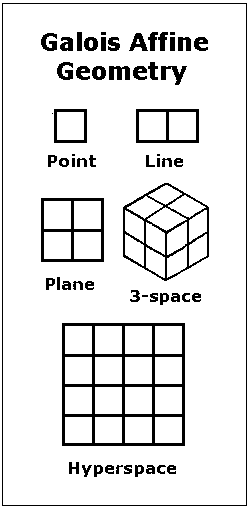 Richard J. Trudeau in The Non-Euclidean Revolution , chapter on "Geometry and the Diamond Theory of Truth"– "… Plato and Kant, and most of the philosophers and scientists in the 2200-year interval between them, did share the following general presumptions: (1) Diamonds– informative, certain truths about the world– exist. Presumption (1) is what I referred to earlier as the 'Diamond Theory' of truth. It is far, far older than deductive geometry." Trudeau's book was published in 1987. The non-Euclidean* figures above illustrate concepts from a 1976 monograph, also called "Diamond Theory." Although non-Euclidean,* the theorems of the 1976 "Diamond Theory" are also, in Trudeau's terminology, diamonds. * "Non-Euclidean" here means merely "other than Euclidean." No violation of Euclid's parallel postulate is implied. |
Trudeau comes to reject what he calls the "Diamond Theory" of truth. The trouble with his argument is the phrase "about the world."
Geometry, a part of pure mathematics, is not about the world. See G. H. Hardy, A Mathematician's Apology .
Powered by WordPress