"Should we arbitrate life and death
at a round table or a square one?"
Vide the geometry in
a post from last summer.
Illustration of a title by George Mackey
"Should we arbitrate life and death
at a round table or a square one?"
Vide the geometry in
a post from last summer.
Illustration of a title by George Mackey
The title is from "Federico Ardila on Math, Music and
the Space of Possibilities," a podcast from Steven Strogatz's
Quanta Magazine series. The transcript is dated March 29, 2021.
Ardila: … in a nutshell, what combinatorics is about is just
the study of possibilities and how do you organize them,
given that there’s too many of them to list them.
Strogatz: So, I love it. Combinatorics is not just
the art of the possible, but the enumeration of the possible,
the counting of the possible and the organizing of the possible.
Strogatz: It’s such a poetic image, actually: the space of possibilities.
This journal on the podcast date, March 29, 2021 —
A more precise approach to the space of possibilities:

These news items suggest a review —
The above “Pynchon’s Paranoid History” page number appeared
in this journal on Groundhog Day, 2015 —
David Justice on a Zeta-related theory —
(A sequel to Expanding the Spielraum (Feb. 3, 2015))
"Knowledge, wisdom even, lies in depth, not extension."
— Tim Parks in The New York Review of Books ,
5 PM ET on June 26, 2015
See also Log24 posts on the following figure —
See Southwest + Furthers in this journal.

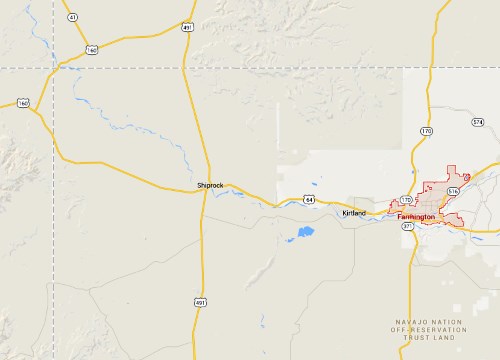
See also today's previous post and the new film "Beyond the Reach,"
filmed in northwest New Mexico —
Kyle Smith on April 15 in the New York Post —
"The ludicrous action thriller 'Beyond the Reach'
fails to achieve the Southwestern noir potency
of 'No Country for Old Men,' but there’s no denying
it brings to mind another Southwestern classic
about malicious pursuit: the Road Runner cartoons."
Related material:
|
Welcome to ACME lab!
Yes, the name is both confusing and has
We call it ACME Creativity Machine Environment – We like recursive ideas. |
This evening's New York Times —
"William Thomas McKinley, a prolific American composer
whose music was infused with the jazz he had performed
since childhood, died on Feb. 3 at his home in Reading,
Mass. He was 76.
He died in his sleep, his son Elliott said."
"William Thomas McKinley: Elegy for Strings (2006)
[Elliott McKinley]
137 views as of 9:45 PM ET Feb. 28, 2015
Published on Feb 11, 2015
Composed as an elegy and tribute for friends and family
that have passed, spurred by the passing of McKinley's
long time friend, drummer Roger Ryan. The performance
heard here is by the Seattle Symphony under the direction
of Gerard Schwarz.
Photos by Elliott McKinley (Rho Ophiuchi nebula complex…
and the Pleiades…) shot at Cherry Springs State Park."
Related material from the date of McKinley's death —
Expanding the Spielraum.
Continued from earlier posts.
|
The Washington Post online yesterday: "Val Logsdon Fitch, the Nebraska rancher’s son who shared the Nobel Prize for detecting a breakdown in the overarching symmetry of physical laws, thus helping explain how the universe evolved after the Big Bang, died Feb. 5 in Princeton, N.J. He was 91. His death was confirmed by Princeton University, where he had been a longtime faculty member and led the physics department for several years. Dr. Fitch and his Princeton colleague James Cronin received the Nobel Prize in physics in 1980 for high-energy experiments conducted in 1964 that overturned fundamental assumptions about symmetries and invariances that are characteristic of the laws of physics." — By Martin Weil |
Fans of synchronicity may prefer some rather
ig -Nobel remarks quoted here on the date
of Fitch's death:
"The Harvard College Events Board presents
Harvard Thinks Big VI, a night of big ideas
and thinking beyond traditional boundaries.
On Thursday February 5th at 8 pm in
Sanders Theatre …."
— Log24 post The Big Spielraum
Comments on two sub-images from yesterday's
The Big Spielraum (image, 1 MB) that may or
may not interest Emma Watson —
The Potter Sub-Image
This is from a link in a July 8, 2011, post:
The above "Childhood's End" link leads to
a midrash on the Harry Potter series:
"After pg. 759 in Harry Potter and the
Deathly Hallows , my childhood ended."
The Carmichael Sub-Image
The number of the last page in the last Harry Potter
book is 759. This number may, for those with
cabalistic tendencies, be interpreted as the
number 3*23*11 from a 1931 mathematics paper:
From the Office for the Arts at Harvard:
|
College Events Board
Location: Sanders Theatre, Memorial Hall,
On Sale Date: 1/29/2015 Thursday 2/5 08:00 PM
Ticket Prices: Free. Harvard ID only. Ticket Availability: Good The Harvard College Events Board presents Harvard Thinks Big VI, a night of big ideas and thinking beyond traditional boundaries. On Thursday February 5th at 8 pm in Sanders Theatre, 7 Harvard professors and lecturers will speak for ten minutes each to discuss a topic that intrigues and excites them. This annual event was first started in order to introduce the Harvard community to the fascinating research and developments from some of the greatest minds on campus. |
See as well The Big Spielraum (1 MB).
A short poem by several authors:
"The role of
the 16 singular points
on the Kummer surface
is now played by
the 64 singular points
on the Kummer threefold."
— From Remark 2.4 on page 9 of
"The Universal Kummer Threefold,"
by Qingchun Ren, Steven V Sam,
Gus Schrader, and Bernd Sturmfels,
http://arxiv.org/abs/1208.1229v3,
August 6, 2012 — June 12, 2013.
See also "Expanded Field" in this journal.
Illustration from "Sunday School," July 20, 2014.
|
From "Origins of the Logical Theory of Probability: von Kries, Wittgenstein, Waismann," by Michael Heidelberger — "Von Kries calls a range of objective possibilities of a hypothesis or event (under given laws) its Spielraum (literally: play space), which can mean ‘room to move’, ‘leeway’, ‘latitude of choice’, ‘degree of freedom’ or ‘free play’ and ‘clearance’ – or even ‘scope’. John Maynard Keynes translated it as ‘field’, but the term ‘range’ has generally been adopted in English. Von Kries now holds that if numerical probability were to make any sense at all it must be through this concept of the Spielraum . Von Kries’s theory is therefore called a ‘Spielraum theory’ or ‘range theory of probability’." — International Studies in the Philosophy of Science , Volume 15, Issue 2, 2001, pp. 177-188 |
See also the tag Points Omega.
(Scroll down to January 11-12, 2015.)
Related material:
"Now, for example, in how far are
the six sides of a symmetric die
'equally possible' upon throwing?"
— From "The Natural-Range Conception
of Probability," by Dr. Jacob Rosenthal,
page 73 in Time, Chance, and
Reduction: Philosophical Aspects of
Statistical Mechanics , ed. by
Gerhard Ernst and Andreas Hüttemann,
Cambridge U. Press, 2010, pp. 71-90
From the concluding paragraph of a new book by
mathematician Michael Harris:
"A team of eminent scholars is completing a definitive
edition of Hausdorff’s collected works—'unique …
in the annals of mathematical publishing'— with the
care befitting the literary figure he undoubtedly was….
… he is honored as, perhaps, the first modern
mathematician to give a name to what we have been
calling the 'relaxed field'— he called it the
'Spielraum of thought'— and as a mathematician
who never lost his sensitivity to his chosen field’s
problematic attractions while remaining fully aware that
every veil lifted only reveals another veil."
— Harris, Michael, Mathematics without Apologies:
Portrait of a Problematic Vocation (2015-01-18)
(pp. 324-325). Princeton U. Press. Kindle Edition.
Related material: Spiel ist nicht Spielerei .
Powered by WordPress