Monday, March 16, 2026
Wednesday, February 1, 2023
Variations in Memory of a Designer
Last updated at 22:46 PM ET on 1 February 2023.
Click for a designer's obituary.
Paraphrase for a road-sign collector:
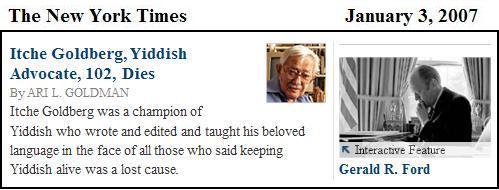
See as well … Today's New York Times obituary
of the Harvard Business School Publishing
Director of Intellectual Property.
Monday, January 25, 2021
Illuminations
For the title, see Illuminations in this journal.
Another approach —

![]()

These images were suggested by Creamy and Sweaty.

Friday, April 17, 2020
Introduction to Quantum Woo
“In his big book, Gravity [sic ], Wheeler puts our space
into what he calls superspace, and speculates on the
most basic physical laws which operate on superspace.
He comes to the (to me) surprising conclusion that the
rock-bottom laws are the laws of the propositional calculus!”
— Martin Gardner, letter to Donald E. Knuth, 8 January 1976,
on cover of Notices of the American Mathematical Society ,
March 2011 issue.
Fact check —

Related reading —

Thursday, April 16, 2020
A Four-Color Epic
"A love story of epic, epic, epic proportion" — Kristen Stewart
See also the following letter to Knuth on four-color enthusiast
Spencer-Brown, as well as Tim Robinson on the same subject
in his book My Time in Space .
Tuesday, December 18, 2018
CV
The title abbreviates* that of a collection of Wittgenstein's remarks:
|
Ludwig Wittgenstein — Culture and Value Showing 20 results for spirit — page 18, rubble & finally a heap of ashes; but spirits will hover over the ashes. MS 107 229: page 18, Page 5 Only something supernatural can expre page 20, contemplating it from above in its†c flight.† page 21, spirit in which it is written.†f This spirit is, I believe, different from that of t page 21, and American civilization. The spirit of this civilization the expression of page 21, day†h fascism & socialism, is a spirit that is alien & uncongenial†i to the au page 21, he Page Break 9 can work in the spirit of the whole, and his strength can with page 21, straight for what is concrete. Which is chara page 22, danger in a long foreword is that the spirit of a book has to be evident in the book page 22, It is all one to me whether the typical weste page 23, a great temptation to want to make the spirit explicit. MS 109 204: 6-7.11.1930 Page page 23, readers that will be clear just from the fact page 28, Foggy day. Grey autumn haunts us. Laughter se page 42, If one wanted to characterize the essence of page 51, attention from what matters.) The Spirit puts what is essential, essential for y page 51, how far all this is exactly in the spirit of Kierkegaard.) MS 119 151: 22.10.1937 page 51, something feminine about this outlook?) MS 11 page 100, comfortable, clearer expression, but cannot b page 106, act otherwise."–Perhaps, though, one might s page 210, Page 7 †b function Page 7 †c from its Page **************************************************************** |
The above "spirit guide" was suggested by yesterday's post
on Knuth as Yoda and by the paper in today's previous post,
"Shadowhunter Tales."
This post's title, "CV," is from . . .
Monday, December 17, 2018
Signs
“When there’s nothing to believe in
Still you’re coming back,
you’re running back
You’re coming back for more
So put me on a highway….”
— Eagles, 1975
See also …
See as well Knuth in this journal.
"Spirit-guide of the algorithmic realm"
— Description of Donald Knuth by Siobhan Roberts, Dec. 17, 2018.
There are spirit guides and spirit guides.
"One of These Nights is the fourth studio album
by the Eagles, released in 1975." — Wikipedia
Wednesday, March 13, 2013
Intersection
… to apprehend
The point of intersection of the timeless
With time, is an occupation for the saint
— Four Quartets
Intersection sign,
courtesy of Donald Knuth
Related material:
The previous post and Fourfold in this journal.
Saturday, June 11, 2011
Baccalaureate–
A Comedy of Manners
Today is Stanford's Baccalaureate.
From Stanford Professor Emeritus Donald E. Knuth—
Tuesday, June 9, 2009
Tuesday June 9, 2009
"I know what
nothing means."
— Joan Didion,
Play It As It Lays
Faust
President Faust of Harvard on Joan Didion:
"She was referring to life as a kind of improvisation: that magical crossroads of rigor and ease, structure and freedom, reason and intuition. What she calls being prepared to 'go with the change.'"
"I think about swimming with him into the cave at Portuguese Bend, about the swell of clear water, the way it changed, the swiftness and power it gained as it narrowed through the rocks at the base of the point. The tide had to be just right. We had to be in the water at the very moment the tide was right. We could only have done this a half dozen times at most during the two years we lived there but it is what I remember. Each time we did it I was afraid of missing the swell, hanging back, timing it wrong. John never was. You had to feel the swell change. You had to go with the change. He told me that. No eye is on the sparrow but he did tell me that."
From the same book:
"The craziness is receding but no clarity is taking its place."
— Joan Didion, The Year of Magical Thinking
For a magical crossroads at another university, see the five Log24 entries ending on November 25, 2005:
This holy icon
appeared at
N37°25.638'
W122°09.574'
on August 22, 2003,
at the Stanford campus.
Also from that date,
an example of clarity
in another holy icon —
|
|
— in honor of better days
at Harvard and of a member
of the Radcliffe Class of 1964.
Wednesday, January 3, 2007
Wednesday January 3, 2007
11:32:56
“What on earth is
a concrete universal?”
— Robert M. Pirsig
From A Shot at Redemption—
Grand Rapids Revisited

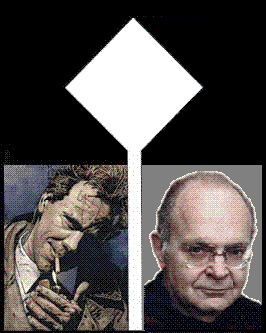
John Constantine,
cartoon character, and
Donald E. Knuth,
Lutheran mathematician
further to Calvin College’s
unparalleled leadership
in the field of
Christian historiography….”
A photo opportunity —

and a recent cartoon:
From Calvin College,
today’s meditation:
Tuesday, August 1, 2006
Tuesday August 1, 2006
Revisited

John Constantine,
cartoon character, and
Donald E. Knuth,
Lutheran mathematician
“I need a photo-opportunity,
I want a shot at redemption.
Don’t want to end up a cartoon
In a cartoon graveyard.”

Mel Gibson,
7/28/06,
photo by
Los Angeles County
Sheriff’s Department
This meditation is prompted by memories of suicidal alcoholics Hunter S. Thompson and Ernest Hemingway, as well as by the title of Mel Gibson’s latest project, “Apocalypto.”
A search on Gibson’s film title leads to this quotation:
“And what does apocalypse mean? It means revelation: apocalypto means to open up and to show the truth. But it also means absolute violence, so the apocalypse is a violent revelation and a revelation of violence and immediately you see the relevance of this.”
— Interview with Rene Girard in the June 1996 issue of UCLA’s Anthropoetics: The Journal of Generative Anthropology
It is by no means clear that “apocalypse” means “violence,” let alone “absolute violence,” except in the Christian tradition.
For apocalyptic Christian violence, see “Apocalypse and Violence: The Evidence from the Reception History of the Book of Revelation” (pdf), by Christopher Rowland of Oxford University.
As for “the relevance of this,” see the definition of “generative anthropology” (GA) at
anthropoetics.ucla.edu/purpose.htm:
“The originary hypothesis of GA is that human language begins as an aborted gesture of appropriation representing–and thereby renouncing as sacred– an object of potential mimetic rivalry. The strength of our mimetic intelligence makes us the only creatures for whom intraspecific violence is a greater threat to survival than the external forces of nature. Human language defers potential conflict by permitting each to possess the sign of the unpossessable object of desire– the deferral of violence through representation.”
Compare with the remarks of Jung on Transformation Symbolism in the Mass:
Antecedents and parallels are found for the ritual of the Christian religious Mass in Aztec, Mithraic and pagan religious practices. “The Aztecs make a dough figure of the god Huitzilopochtli, which is then symbolically killed, divided and consumed….”
Collected Works of C. G. Jung, Vol. 11. 2nd ed., Princeton University Press, 1969. (pp. 222-225)
Mel Gibson’s interest in religion and violence is well known. His film “Apocalypto,” scheduled for release on Dec. 8, 2006, deals with human sacrifice among the Maya, rather than the Aztecs or Jews. (Cf. Abraham and “Highway 61 Revisited.”)
It seems unlikely that Mel will learn more about these issues in his recovery program. Too bad.
Tuesday, June 27, 2006
Tuesday June 27, 2006
Revisited
In memory of
Irving Kaplansky,
who died on
Sunday, June 25, 2006
“Only by the form, the pattern,
Can words or music reach
The stillness, as a Chinese jar still
Moves perpetually in its stillness.”
— T. S. Eliot
Kaplansky received his doctorate in mathematics at Harvard in 1941 as the first Ph.D. student of Saunders Mac Lane.
From the April 25, 2005, Harvard Crimson:
Ex-Math Prof Mac Lane, 95, Dies
Gade University Professor of Mathematics Barry Mazur, a friend of the late Mac Lane, recalled that [a Mac Lane paper of 1945] had at first been rejected from a lower-caliber mathematical journal because the editor thought that it was “more devoid of content” than any other he had read.“Saunders wrote back and said, ‘That’s the point,'” Mazur said. “And in some ways that’s the genius of it. It’s the barest, most Beckett-like vocabulary that incorporates the theory and nothing else.”
He likened it to a sparse grammar of nouns and verbs and a limited vocabulary that is presented “in such a deft way that it will help you understand any language you wish to understand and any language will fit into it.”
A sparse grammar of lines from Charles Sanders Peirce (Harvard College, class of 1859):
Related entry: Binary Geometry.
Friday, June 23, 2006
Friday June 23, 2006
Binary Geometry
There is currently no area of mathematics named “binary geometry.” This is, therefore, a possible name for the geometry of sets with 2n elements (i.e., a sub-topic of Galois geometry and of algebraic geometry over finite fields– part of Weil’s “Rosetta stone” (pdf)).
Examples:
- Charles Sanders Peirce, “The Simplest Mathematics.”
- Donald E. Knuth’s discussion of binary hypercubes in “Boolean Basics,” a draft of section 7.1.1 in The Art of Computer Programming, Volume 4: Combinatorial Algorithms
- My own discussion of a binary hypercube in Geometry of the 4x4x4 Cube
- A more sophisticated example: the geometry of elliptic curves over a binary Galois field. For an excellent introduction, see the Certicom online elliptic curve tutorial. This has an applet illustrating elliptic curves in a space of 256 points (256=16×16, with the x and y variables of a curve each having 16 possible values).
- In summary, apart from the fact that the native language of computers has characteristic 2, “binary” mathematics, i.e. mathematics in characteristic 2, is of special interest both in the study of finite geometry (Finite Geometry of the Square and Cube) and in algebraic geometry (see, for instance, the work of Brian Conrad).
Thursday, November 24, 2005
Thursday November 24, 2005
In memory of Diego Rivera,
who died on this date in 1957
I Paint What I See
[A Ballad of Artistic Integrity]
by E.B. White
The New Yorker, 20 May 1933
"'What do you paint, when you paint on a wall?'
Said John D.'s grandson Nelson.
'Do you paint just anything there at all?
'Will there be any doves, or a tree in fall?
'Or a hunting scene, like an English hall?'
'I paint what I see,' said Rivera.
'What are the colors you use when you paint?'
Said John D.'s grandson Nelson.
'Do you use any red in the beard of a saint?
'If you do, is it terribly red, or faint?
'Do you use any blue? Is it Prussian?'
'I paint what I paint,' said Rivera.
'Whose is that head that I see on the wall?'
Said John D.'s grandson Nelson.
'Is it anyone's head whom we know, at all?
'A Rensselaer, or a Saltonstall?
'Is it Franklin D.? Is it Mordaunt Hall?
Or is it the head of a Russian?
'I paint what I think,' said Rivera.
'I paint what I paint, I paint what I see,
'I paint what I think,' said Rivera,
'And the thing that is dearest in life to me
'In a bourgeois hall is Integrity;
'However . . .
'I'll take out a couple of people drinkin'
'And put in a picture of Abraham Lincoln;
'I could even give you McCormick's reaper
'And still not make my art much cheaper.
'But the head of Lenin has got to stay
'Or my friends will give the bird today,
'The bird, the bird, forever.'
'It's not good taste in a man like me,'
Said John D.'s grandson Nelson,
'To question an artist's integrity
'Or mention a practical thing like a fee,
'But I know what I like to a large degree,
'Though art I hate to hamper;
'For twenty-one thousand conservative bucks
'You painted a radical. I say shucks,
'I never could rent the offices—–
'The capitalistic offices.
'For this, as you know, is a public hall
'And people want doves, or a tree in fall
'And though your art I dislike to hamper,
'I owe a little to God and Gramper,
'And after all,
'It's my wall . . .'
'We'll see if it is,' said Rivera.
Related material:
Pictures of the Rockefeller Center mural,
"Man at the Crossroads," and
Rivera's re-creation of the mural,
"Man, Controller of the Universe."
See also another treatment of the "Man at the Crossroads" theme–
of Donald E. Knuth:
(from Feb. 18),
continued —
This holy icon
appeared at
N37°25.638'
W122°09.574'
on August 22, 2003,
at the Stanford campus.
Saturday, March 12, 2005
Saturday March 12, 2005
See The Meaning of 3:16 (2/28/05),
The Death of George Scott (March 9, 2005),
Is Nothing Sacred? (March 9, 2000), and

The Exorcist Revisited (July 2, 2004).

For the hidden spiritual meaning
of 3:16, see
March First, 2005
and the upcoming
Ides of March album,
Monday, February 28, 2005
Monday February 28, 2005
The Meaning of 3:16
From The New Yorker, issue dated Feb. 28, 2005:
"Time Bandits," by Jim Holt, pages 80-85:
"Wittgenstein once averred that 'there can never be surprises in logic.'"
"Miss Gould," by David Remnick, pages 34-35:
"She was a fiend for problems of sequence and logic…. Her effect on a piece of writing could be like that of a master tailor on a suit; what had once seemed slovenly and overwrought was suddenly trig and handsome."
Suddenly:
See Donald E. Knuth's Diamond Signs, Knuth's 3:16 Bible Texts Illuminated, and the entry of 3:16 PM today.
Trig and handsome:
Remnick on Miss Gould again:
"She shaped the language of the magazine, always striving for a kind of Euclidean clarity– transparent, precise, muscular."
3/16 2004:

Einstein on his
"holy geometry book" —
"Here were assertions, as for example the intersection of the three altitudes of a triangle in one point, which– though by no means evident– could nevertheless be proved with such certainty that any doubt appeared to be out of the question. This lucidity and certainty made an indescribable impression upon me."
"I need a photo opportunity,
I want a shot at redemption…."
Tuesday, February 22, 2005
Tuesday February 22, 2005
Grand Rapids Revisited
Log24 entries of Feb. 18-20, 2005,
which include the following illustration:

John Constantine,
cartoon character, and
Donald E. Knuth,
Lutheran mathematician
“…. recent books testify further to Calvin College’s unparalleled leadership in the field of Christian historiography. More than anyone else, the historians at Calvin (along with their Dutch Reformed publishers at Eerdmans) have led the way in first-rate thinking about the relationship between faith and history. One does not need to be a Calvinist, or a historian for that matter, to appreciate this thinking and its influence on a wide variety of intellectuals. I say this as a Lutheran who must confess in all honesty that his own American Lutheran tradition cannot hold a candle to the Calvinists in Grand Rapids….”
Saturday, February 19, 2005
Saturday February 19, 2005
From previous Log24.net entries:
"There is no highway in the sky."
— Quotation attributed to
Albert Einstein.
(See Gotthard Günther's website
"Achilles and the Tortoise, Part 2".)
"Don't give up until you
Drink from the silver cup
And ride that highway in the sky."
— America, 1974
Stephen Yablo, draft of
"A Paradox of Existence,"
Nov. 8, 1998, section heading:
"III. Quine's way or the highway"
From that section:
"Burgess & Rosen begin their book A Subject with No Object with a relevant fable:
Finally, after years of waiting, it is your turn to put a question to the Oracle of Philosophy…you humbly approach and ask the question that has been consuming you for as long as you can remember: 'Tell me, O Oracle, what there is. What sorts of things exist?' To this the Oracle responds: 'What? You want the whole list? …I will tell you this: everything there is is concrete; nothing there is is abstract….'
Suppose we continue the fable a little. Impressed with what the Oracle has told you, you return to civilization to spread the concrete gospel. Your first stop is at [your school here]…."
of Donald E. Knuth:
In Hoc Signo
(from yesterday),
continued —
This holy icon
appeared at
N37°25.638'
W122°09.574'
on August 22, 2003,
at the Stanford campus.
See also
Cognitive Blending
and the Two Cultures.
Friday, February 18, 2005
Friday February 18, 2005
In Hoc Signo
Sources:
Hellblazer: Highwater,
from a graphic-novel
series that is the source
of Keanu Reeves's latest
spiritual adventure —
Another source…
The home page of Donald E. Knuth.
"When there's nothing to believe in
Still you're coming back,
you're running back
You're coming back for more
So put me on a highway…."
— The Eagles, 1975