For fans of "Meet Joe Black" …
Friday, April 11, 2025
|
That April 11, 2025, post suggests . . .
An image reproduced here on December 11, 2018
("Carried Away") —
|
The new American Mathematical Society logo suggests |
For fans of "Meet Joe Black" …
Friday, April 11, 2025
|
That April 11, 2025, post suggests . . .
An image reproduced here on December 11, 2018
("Carried Away") —
|
The new American Mathematical Society logo suggests |
A search in this journal for "Merton College" yields . . .
|
"Speaking of artificial intelligence, it seems as if the creators of 'Mrs. Davis' have ironically chosen to utilize A.I. in the show's production. During a panel at the film festival South by Southwest, Lindelof mentioned how they used artificial intelligence and said, 'We thought it would be fun to build an A.I. that would title our episodes, and that we just basically said that whatever it comes up with, we have to stick to as long as it is appropriate for whatever barometers of appropriateness exist.' Damon Lindelof continued and explained that in the process of creating the A.I. that would title episodes for the upcoming 'Mrs. Davis,' the artificial intelligence struggled to understand what a title actually was, despite the information that was filtered through the program. Lindelof then said that the entire production crew learned a great deal about algorithms and how A.I. works while attempting to get it to generate episode titles. In the end, Lindelof and the rest of the crew were quite happy with the results, noting that Episode 7 is titled 'Great Gatsby: 2001: A Space Odyssey.' " |
Elsewhere, in the art room . . .
|
"A banana in the hand is worth two in the box." — Plato
This post was suggested by remarks today from a former
Tutorial Fellow at Merton College, Oxford, that included
a memorable phrase by Alan Watts.
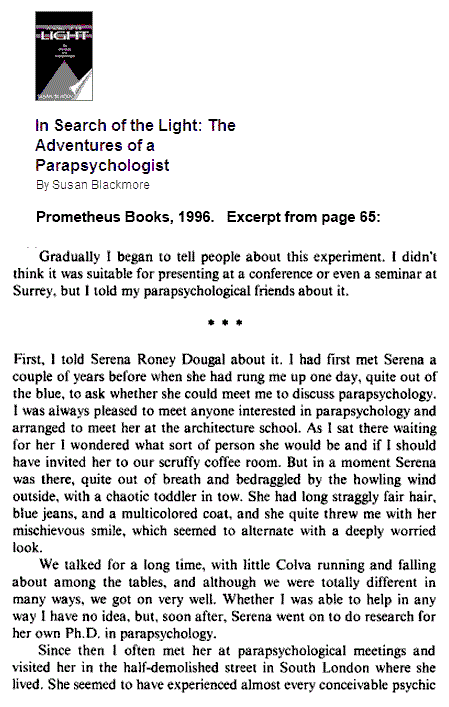
For little Colva … The Mother Ship :
For more light, see "Merton College" + Cameron
in this journal, as well as …
An Education
Leonardo DiCaprio and Carey Mulligan in Baz Luhrmann's
new version of The Great Gatsby :

We're going to Disney World! —

(For a more up-to-date version of little Colva,
see Primitive Groups and Maximal Subgroups.)
Today's New York Times on a current theatrical presentation of The Great Gatsby—
"Throughout the show, the relationship between what is read and its context keeps shifting, with the real world finally giving way entirely to the fictive one."
"This fella's a regular Belasco."

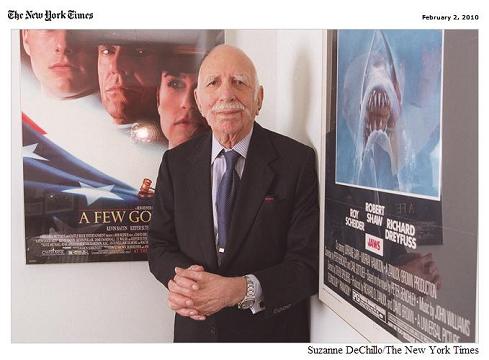
David Brown, producer. Brown died on Monday.
From The Diamond as Big as the Monster in this journal on Dec. 21, 2005–
"At the still point, there the dance is.” –T. S. Eliot, Four Quartets
Eliot was quoted in the epigraph to the chapter on automorphism groups in Parallelisms of Complete Designs, by Peter J. Cameron, published when Cameron was at Merton College, Oxford.
“As Gatsby closed the door of ‘the Merton College Library’ I could have sworn I heard the owl-eyed man break into ghostly laughter.” –F. Scott Fitzgerald
Related material: Yesterday's posts and the jewel in Venn's lotus.
"Through the unknown,
remembered gate…."
(Epigraph to the introduction,
Parallelisms of Complete Designs
by Peter J. Cameron,
Merton College, Oxford)
"It's still the same old story…."
— Song lyric
The Great Gatsby, Chapter 6:
"An instinct toward his future glory had led him, some months before, to the small Lutheran college of St. Olaf in southern Minnesota. He stayed there two weeks, dismayed at its ferocious indifference to the drums of his destiny, to destiny itself, and despising the janitor’s work with which he was to pay his way through."
There is a link to an article on St. Olaf College in Arts & Letters Daily today:
"John Milton, boring? Paradise Lost has a little bit of something for everybody. Hot sex! Hellfire! Some damned good poetry, too…" more»
The "more" link is to The Chronicle of Higher Education.
For related material on Paradise Lost and higher education, see Mathematics and Narrative.
For the feast of
St. Francis Scott Key Fitzgerald
From Fitzgerald’s The Diamond as Big as the Ritz:
“Now,” said John eagerly, “turn out your pocket and let’s see what jewels you brought along. If you made a good selection we three ought to live comfortably all the rest of our lives.”
Obediently Kismine put her hand in her pocket and tossed two handfuls of glittering stones before him.
“Not so bad,” cried John, enthusiastically. “They aren’t very big, but– Hello!” His expression changed as he held one of them up to the declining sun. “Why, these aren’t diamonds! There’s something the matter!”
“By golly!” exclaimed Kismine, with a startled look. “What an idiot I am!”
“Why, these are rhinestones!” cried John.
From The Hawkline Monster, by Richard Brautigan:
“What are we going to do now?” Susan Hawkline said, surveying the lake that had once been their house.
Cameron counted the diamonds in his hand. There were thirty-five diamonds and they were all that was left of the Hawkline Monster.
“We’ll think of something,” Cameron said.
“A disciple of Ezra Pound, he adapts to the short story the ideogrammatic method of The Cantos, where a grammar of images, emblems, and symbols replaces that of logical sequence. This grammar allows for the grafting of particulars into a congeries of implied relation without subordination. In contrast to postmodernists, Davenport does not omit causal connection and linear narrative continuity for the sake of an aleatory play of signification but in order to intimate by combinational logic kinships and correspondences among eras, ideas and forces.”
— When Novelists Become Cubists:
The Prose Ideograms of Guy Davenport,
by Andre Furlani
“T.S. Eliot’s experiments in ideogrammatic method are equally germane to Davenport, who shares with the poet an avant-garde aesthetic and a conservative temperament. Davenport’s text reverberates with echoes of Four Quartets.”
“At the still point,
there the dance is.”
— T. S. Eliot, Four Quartets,
quoted in the epigraph to
the chapter on automorphism groups
in Parallelisms of Complete Designs,
by Peter J. Cameron,
published when Cameron was at
Merton College, Oxford.
“As Gatsby closed the door of
‘the Merton College Library’
I could have sworn I heard
the owl-eyed man
break into ghostly laughter.”
In Memory of
Guy Davenport
From the day Davenport died:

“At Merton College, Oxford,
he wrote the first thesis on Joyce
to be accepted by the university.”
From a very informative essay
on Davenport’s aesthetics:
“T.S. Eliot’s experiments
in ideogrammatic method
are equally germane to Davenport,
who shares with the poet
an avant-garde aesthetic and
a conservative temperament.
Davenport’s text reverberates
with echoes of Four Quartets.”
— Andre Furlani
“At the still point, there the dance is.”
— T. S. Eliot, Four Quartets,
quoted in the epigraph to
the chapter on automorphism groups
in Parallelisms of Complete Designs,
by Peter J. Cameron,
published when Cameron was at
Merton College, Oxford.
See also
Elegance.
Powered by WordPress