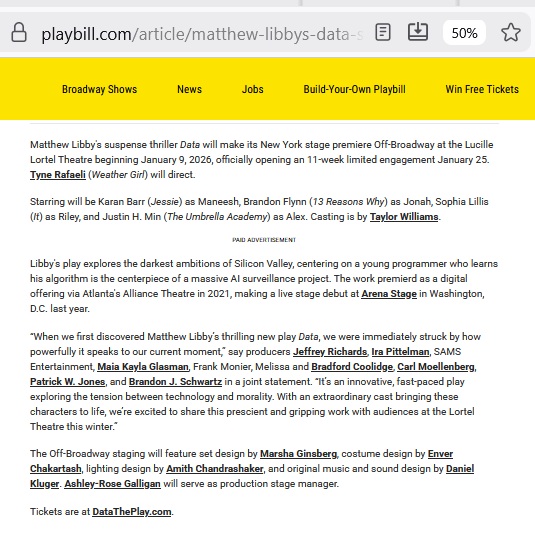
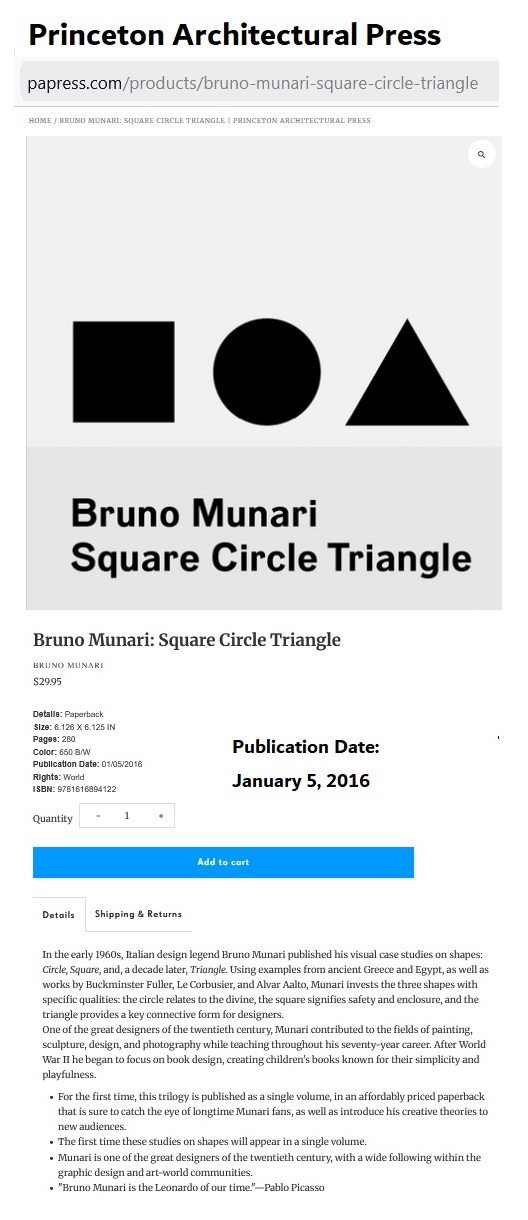
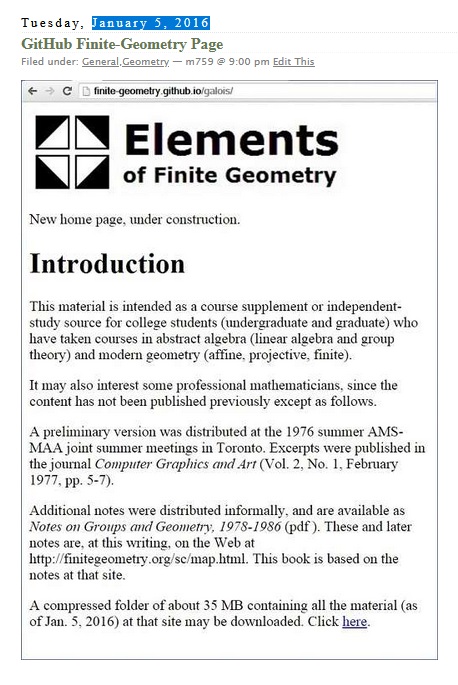
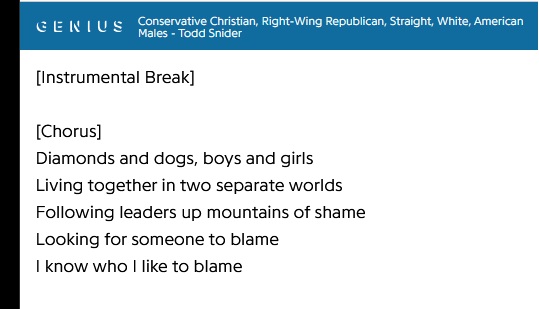
Related song . . .

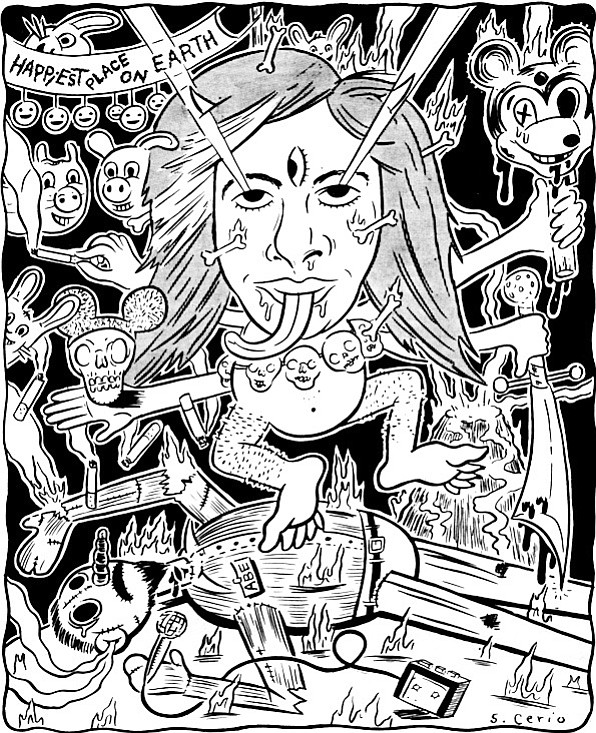
Related images . . .


The View from Broken Hill
|
The View from Manhattan —

The View from a Trailer —
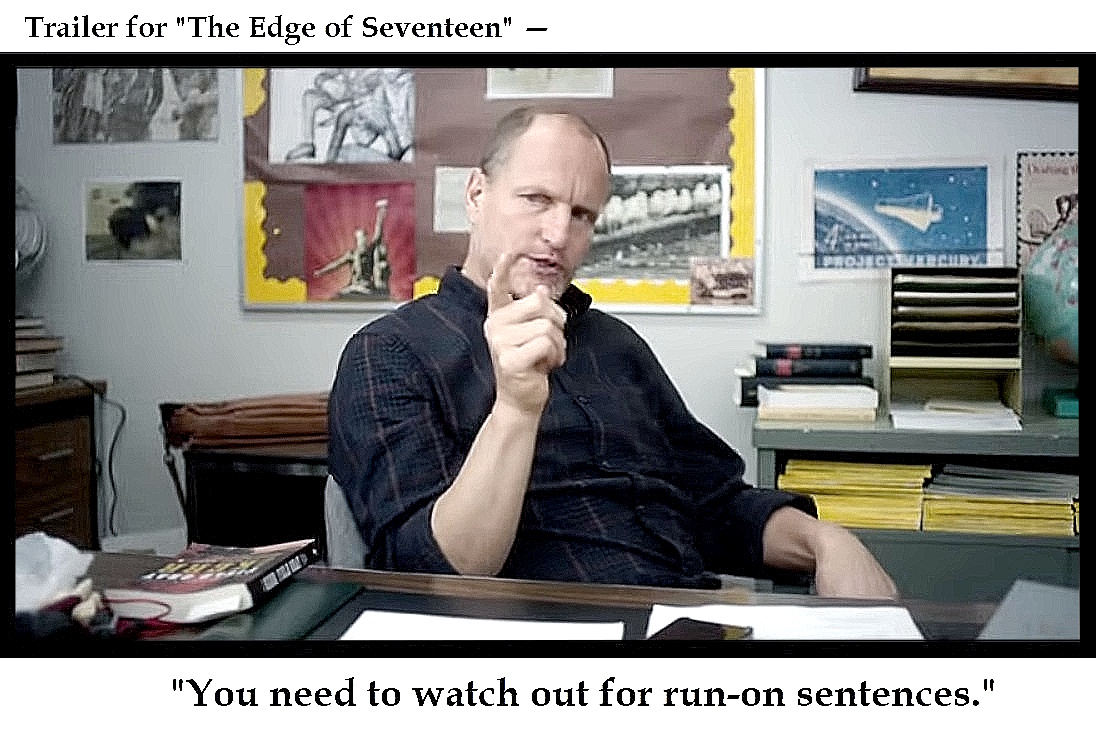
Oh, the red leaf looks to the hard gray stone
To each other, they know what they mean
— Suzanne Vega, “Songs in Red and Gray“

From this journal on 4/01, 2009:
The Cruelest Month

"Langdon sensed she was toying with him…."
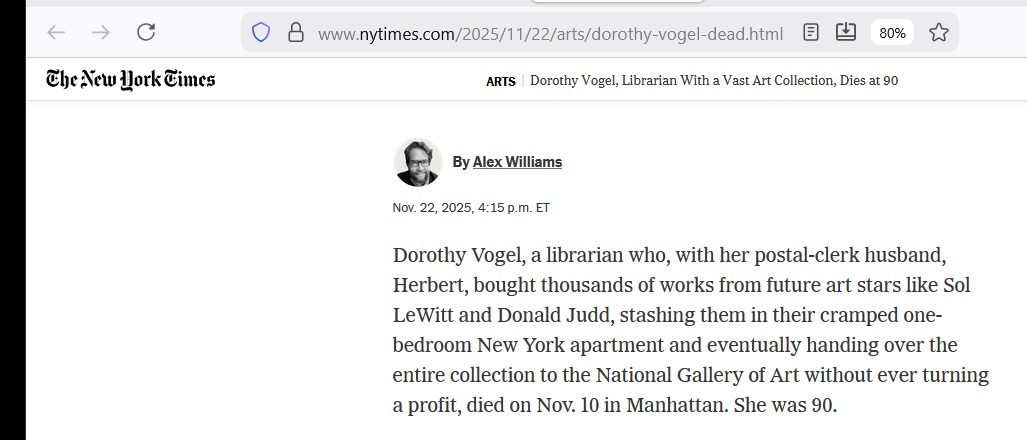
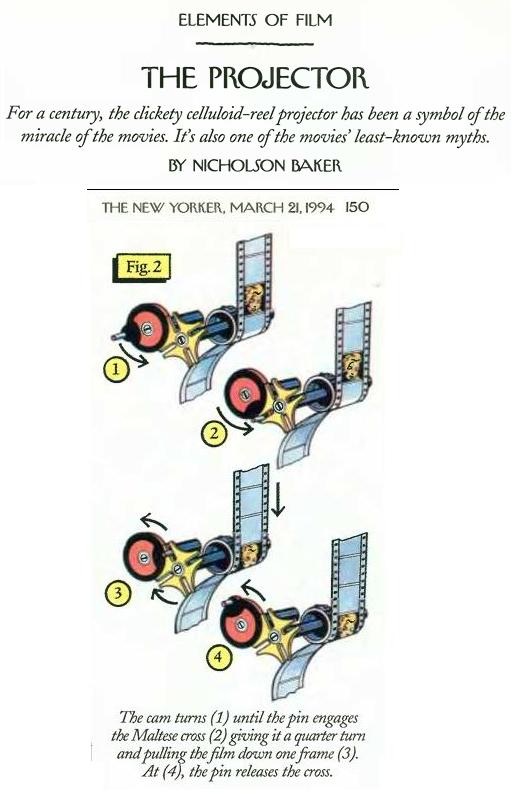
The New York Times today (Dec. 6. 2025) . . .

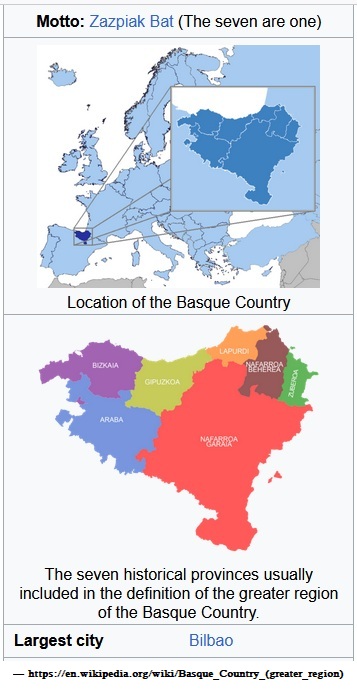
See as well the espaces inauguration date in this journal.


* Compare and contrast . . . the previous post's title.

A possibly related Onion story from June 30, 2016 . . .

Click for a June 30, 2016, synchronology check.
From yesterday morning's "Defining Form" post —

Threesomes are nice . . . Recall Hirsch in "Stand Up Guys."

|
Diamond Theory by NotebookLM 92 sources The collected sources discuss the intricate confluence of finite geometry and abstract combinatorics, focusing heavily on the smallest three-dimensional projective space, PG(3,2), which acts as the geometric model for structures derived from the 6-set and 8-set. A primary focus is the Cullinane Diamond Theorem and the visual representation of abstract symmetries using 4×4 arrays, whose enormous automorphism group, the Affine group AGL(4,2), relates combinatorial design to geometric transformations. These connections are formalized using the Miracle Octad Generator (MOG) and the Klein Correspondence, which map partitions of an 8-set onto geometric objects like the lines of PG(3,2) and the points of the Klein quadric in PG(5,2). Furthermore, this framework bridges pure mathematics to applied fields, establishing relationships between geometric concepts like Conwell's Heptads and spreads (line partitions) and applications in algebraic ring theory, error-correcting codes, and the study of the sporadic simple group M24. Ultimately, the sources highlight how the symmetry inherent in these designs offers essential geometric insight into complex algebraic and combinatorial problems. |

Also on November 4, 2025, a Log24 update . . .

|
Diamond Theory by NotebookLM 92 sources The documents provide a comprehensive overview of advanced abstract algebra and combinatorics, centered on the finite projective space PG(3,2), which models the geometry of the 6-set. A primary focus is the Diamond Theorem, which uses the symmetries of 4×4 array patterns to establish deep connections between the visual arts, group theory, and geometry. The vast transformation set known as the Affine Group AGL(4,2), possessing an order of 322,560, is shown to preserve the structural relations of these arrays, which in turn are linked to the properties of lines and planes in PG(3,2). These geometric and combinatorial linkages are essential for understanding the Miracle Octad Generator (MOG) of R. T. Curtis and its relationship to the sporadic simple group Mathieu group M24. Additionally, the sources examine complex geometric partitions, such as Conwell’s Heptads and isotropic spreads within spaces like PG(5,2), demonstrating how group actions classify these objects and relate to applications in error-correcting codes. Ultimately, this body of work illustrates a powerful mathematical unity, presenting geometry, algebra, and combinatorics as tightly interwoven disciplines. |
|
Diamond Theory by NotebookLM 92 sources The sources detail the profound mathematical correspondences linking visual, combinatorial, and abstract algebraic structures, primarily focusing on the finite projective space PG(3,2) and the affine group AGL(4,2). A central component is the Cullinane diamond theorem, which uses highly symmetric 4×4 grid patterns to model the AGL(4,2) transformation group, whose large order of 322,560 governs the symmetry of the arrangements. These geometric models are tied directly to deep combinatorial structures, specifically the Miracle Octad Generator (MOG) and the sporadic simple group Mathieu group M24, offering a unified framework for understanding octads and partitions like Conwell's Heptads. Further discussion establishes how geometric entities such as spreads, packings, and the Klein correspondence provide solutions for classic problems like the "schoolgirl problem" and inform contemporary areas like error-correcting codes and the classification of group orbits. This interplay extends even to physics, connecting the geometries to quantum space-time and two-qubit observables, demonstrating how abstract finite geometry underlies sophisticated concepts across various scientific and artistic disciplines. |
|
Diamond Theory by NotebookLM 92 sources This collection of texts examines the profound mathematical unity connecting finite geometry, group theory, and visual combinatorics, centered largely on the projective space PG(3,2) and the associated Affine Group AGL(4,2). The geometry is often modeled using structures like the 4×4 array or "Brick Space," where the action of the group AGL(4,2) (order 322,560) explains the symmetries of abstract diamond patterns. Central to this framework are classical structures like Conwell's Heptads and the Klein Quadric, which are shown to be crucial in partitioning spaces like PG(5,2) and constructing spreads used in coding theory. The material extensively links these geometric models, including the Miracle Octad Generator (MOG), to the exceptional symmetries of the Mathieu group M24 through stabilizer subgroups. Furthermore, these abstract concepts find applications in diverse fields, providing geometric insights into Mutually Orthogonal Latin Squares (MOLS), algebraic ring structures, and analogies within quantum physics related to qubit observables. The overarching theme demonstrates how symmetry, whether in abstract geometric configurations or visual quilt designs, is rooted in the deep logic of finite algebraic structure. |
NotebookLM — Dec. 1, 2025 — "A Unifying Framework"
|
Diamond Theory by NotebookLM 92 sources These documents comprehensively examine the tight relationships among abstract algebra, combinatorics, and finite geometry, primarily through the lens of the projective spaces PG(3,2) and PG(5,2). A central focus is the Cullinane Diamond Theory, which utilizes highly symmetric 4×4 arrays over the Galois field GF(2) to model affine space, whose transformation group is the extensive Affine Group AGL(4,2). This visual and geometric structure connects directly to classic combinatorial objects, such as Conwell's Heptads and Dye's Partitions, which define specific sets and orbits within the geometry. Critically, these underlying symmetries are fundamental to the operation of the Miracle Octad Generator (MOG), establishing a direct link between the patterns of the 4×4 arrays and the intricate structure of the sporadic simple Mathieu group M24. The established correspondence provides crucial geometric interpretations for abstract algebraic problems, including the classification of reguli and the construction of Mutually Orthogonal Latin Squares. Collectively, the material demonstrates a unifying mathematical framework that spans theoretical geometry, error-correcting codes, quantum information science, and visual art. |


"When the men on the chessboard
get up and tell you where to go . . ."

* https://www.nytimes.com/2025/11/30/obituaries/daniel-woodrell-dead.html.
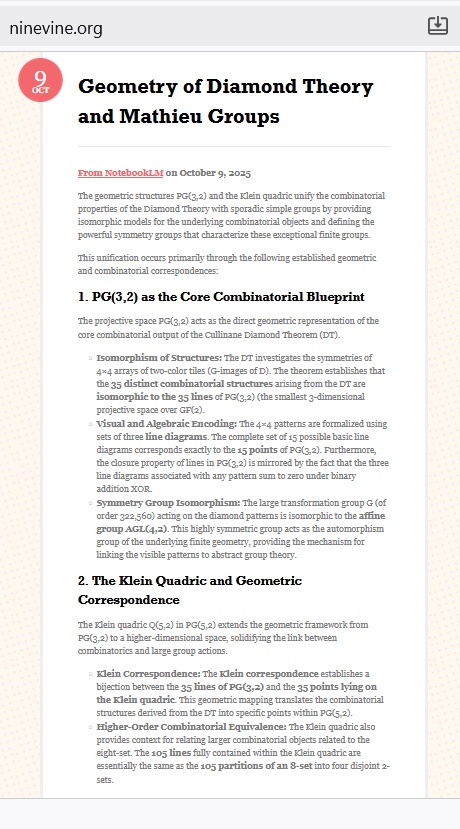
From the NotebookLM notebook "Diamond Theory" today —
"Crucially, the underlying geometric symmetry
ties directly into the functionality of the
Miracle Octad Generator (MOG),
which models the highly exceptional properties of
the sporadic simple group M24."
The above geometric symmetry is based on properties of
the unique even prime number 2. For an introduction to
symmetry propeties of odd primes, see the previous post.
"If it's a seamless whole you want, pray to Apollo."
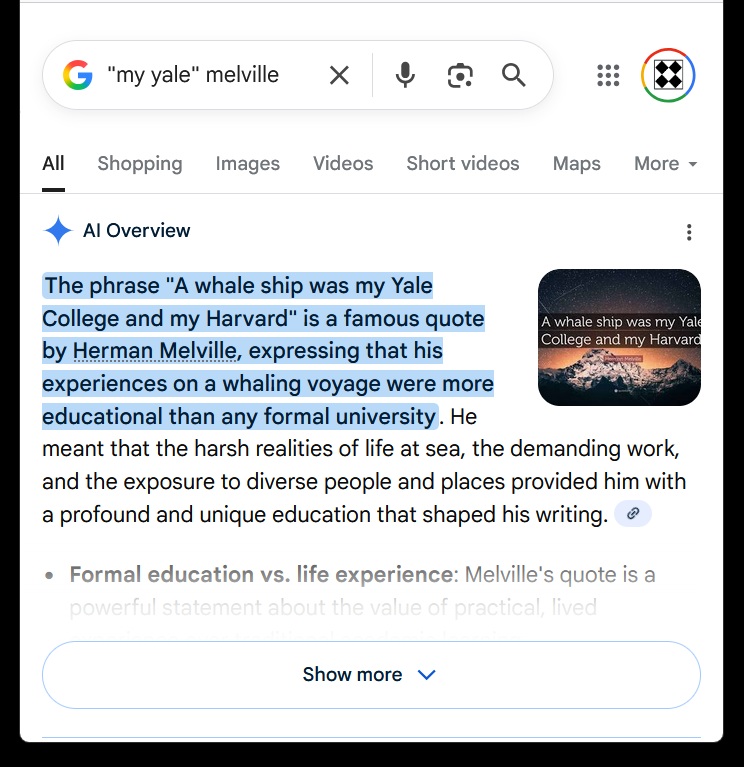
* See other posts tagged Grammaton Cleric.

Illustration by Augustus Burnham Shute
"Victory in war should be received
with funeral ceremonies."
Or vice-versa.

Alex Traub of The New York Times reported this evening (8:11 PM EST)
that New Zealand film director Lee Tamahori died on November 7 —
in Catholic terms, his "dies natalis," or date of birth into heaven.
In memoriam . . .
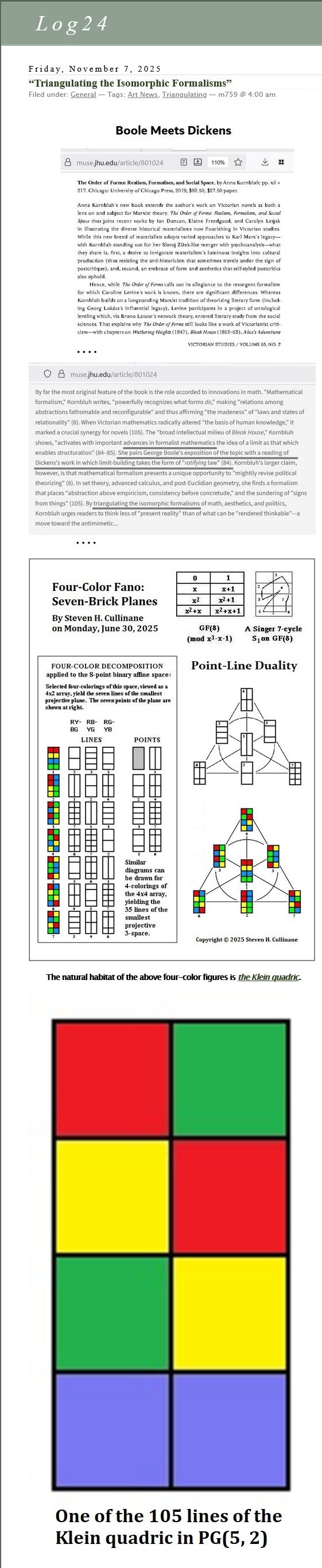
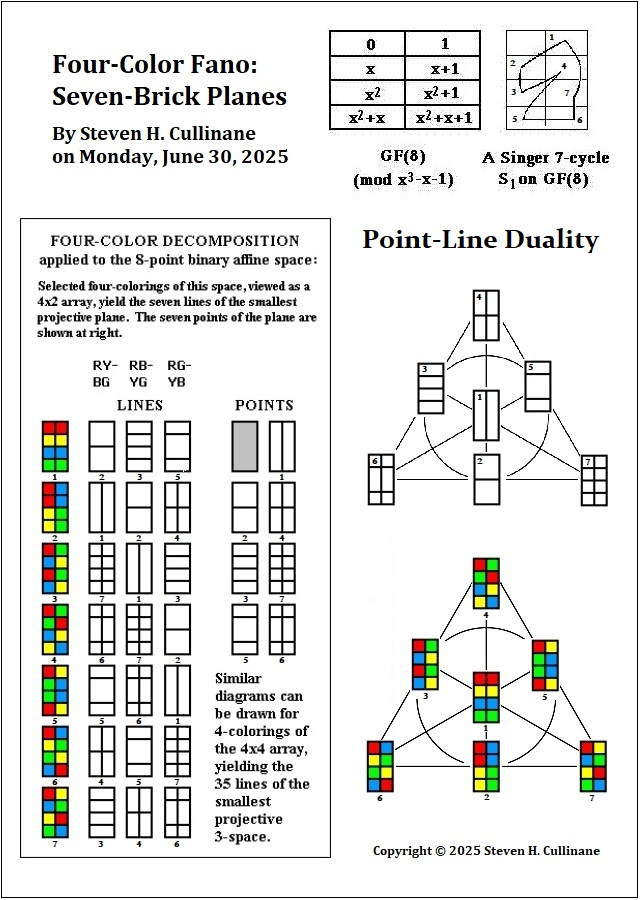
From Log24 on that date, in the post "Triangulating the Isomorphic Formalisms,"
an image from June 30, 2025 —
Related reading for the Royal Society — Japanese Bed and Harvard Miller.
Music for the Damned . . .
Take your choice from the many
successors of Doctor Faustus.
Entertainment news from February 26, 2022 —


Entertainment news from August 9, 2009 —


. . . and "some people say there's a woman
to blame, but I know . . . ." — Adapted song lyric


A question suggested by NotebookLM in the "Diamond Theory" notebook,
and its answer today by NotebookLM —
|
How are algebraic, combinatorial, and geometric structures unified within the Brick Space model? The unification of algebraic, combinatorial, and geometric structures within the Brick Space model is achieved through its role as a graphic, isomorphic representation of key finite geometries, particularly the projective spaces PG(5,2) and PG(3,2), and their fundamental relationship via the Klein correspondence
.
The term "Brick Space" originates from the arrays, or "bricks," coined by R. T. Curtis as component parts of his Miracle Octad Generator (MOG)
. These physical or graphic arrangements serve as a concrete visualization (or model) of highly abstract mathematical structures
.
1. Geometric Unification
The Brick Space model provides a geometric foundation for combinatorial objects through direct visualization of finite geometries defined over the two-element field, GF(2)
.
• Modeling Projective Space: The Brick Space model is the natural geometric setting for the MOG's components, which may be regarded as forming both the 5-dimensional projective space and the 3-dimensional projective space
.
• Visualizing PG(5,2) and the Klein Quadric: The model visually represents the space, which has 63 points, by partitioning these points into 28 points lying off the Klein quadric and 35 points lying on the Klein quadric
. The geometry of is linked to the concept of the 8-set
.
• The Klein Correspondence: The geometric relationship between and is formalized by the Klein correspondence
. The model, developed as a brick space, is analogous to the "line diagrams" construction of found in the Cullinane diamond theorem
.
• Lines and Points: The Brick Space implicitly models how the 35 lines of correspond to the 35 points on the Klein quadric in
.
2. Combinatorial Unification
Combinatorial structures, primarily partitions of sets and block designs, are mapped directly onto geometric entities within the Brick Space framework
.
• Partitions and Lines: The central combinatorial equivalence involves mapping partitions of sets to geometric objects
. The 35 combinatorial structures arising from permutations of diamond tiles (related to the bricks) are isomorphic to the 35 lines of . These 35 structures also mirror the 35 square patterns within the original MOG
.
• Partitions of the 8-Set: The lines correspond to the 35 partitions of an 8-set into two 4-sets
. This same framework connects to the 105 partitions of an 8-set into four 2-sets, which are essentially the same as the 105 lines contained in the Klein quadric
.
• Latin Squares: The combinatorial property of orthogonality of Latin squares (specifically, order-4 Latin squares) is unified geometrically by corresponding exactly to the property of skewness of lines (non-intersecting lines) in
. This provides a geometric dictionary for abstract algebraic combinatorics
.
3. Algebraic Unification
Algebraic structures, rooted in finite field theory and group theory, govern the behavior and symmetries observed in the combinatorial and geometric models
.
• Binary Field : The foundation of the geometry is the Galois field of two elements, (binary arithmetic: )
. The algebraic rules of dictate the structure of the affine and projective spaces represented by the bricks
.
• Binary Addition (XOR): The line diagrams used to formalize the patterns (related to the bricks) can be "added" via component-wise binary addition (XOR)
. The closure property of lines in is represented algebraically by the fact that the three line diagrams corresponding to a pattern always sum to zero ()
.
• Group Theory and Symmetry: The massive permutation group (of order 322,560) that transforms the visual patterns is isomorphic to the affine group
. This group, which explains the pervasive symmetry found in all -images, is the automorphism group of the underlying finite geometry, establishing the algebraic control over the system's geometric and combinatorial properties
.
• Ring Theory: The patterns can be endowed with algebraic structure to generate an ideal within a ring of symmetric patterns, leading to an infinite family of "diamond rings" isomorphic to rings of matrices over
. This links the geometry to the machinery of abstract algebra
.
• M24 Connection: The affine group is identified as the octad stabilizer subgroup of the Mathieu group
, linking the visual patterns and the underlying geometries to the abstract world of sporadic simple groups, coding theory (Golay code), and lattice theory (Leech lattice)
.
The Brick Space model, therefore, functions as a visual tapestry where graphic arrangements (geometry/visualization) encode set partitions (combinatorics) that behave according to the rules of binary algebra ( and affine groups)
. The entire structure is unified by powerful isomorphisms relating these three mathematical domains through finite geometries like and . |


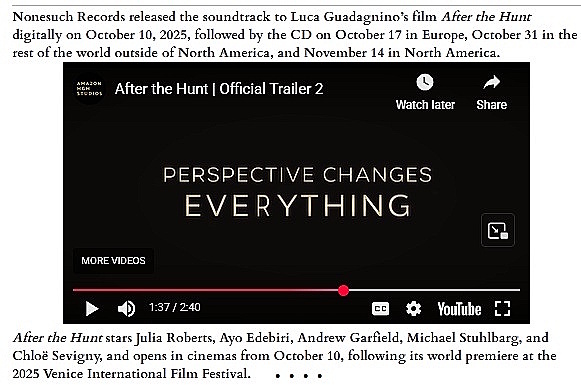
"After the Hunt" Trailer 2: "Perspective changes everything."
Well, perhaps not everything . . .


Design from 1514
"One of those bells that now
and then rings" — Song lyric

* And Royal Holloway University.



Thursday, March 14, 2024
|
“This is the garden of Apollo,
the field of Reason….”
John Outram, architect
— This journal on October 9, 2006.
See also First and Last Things . . . and The Stephen King Version.
♫ "When logic and proportion
Have fallen sloppy dead
And the White Knight is talking backwards…."
Related reading . . .


Compare and contrast Psalm xc, verse 2, with
the words of Optimus Prime — "Before time began . . . ."

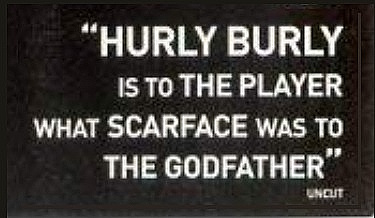

"Say hello to my little friend."
|
https://subslikescript.com/movie/Hurlyburly-119336 — So what do you want to do?
You want to go to your place, You want to go to a sex motel? They got waterbeds.
They got porn I'm hungry. You want a Jack-in-the-Box? I love Jack-in-the-Box. Is that code for something? What? What? Is what code for what? I don't know. I don't know the goddamn code! |
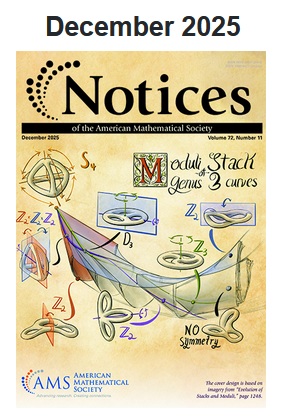
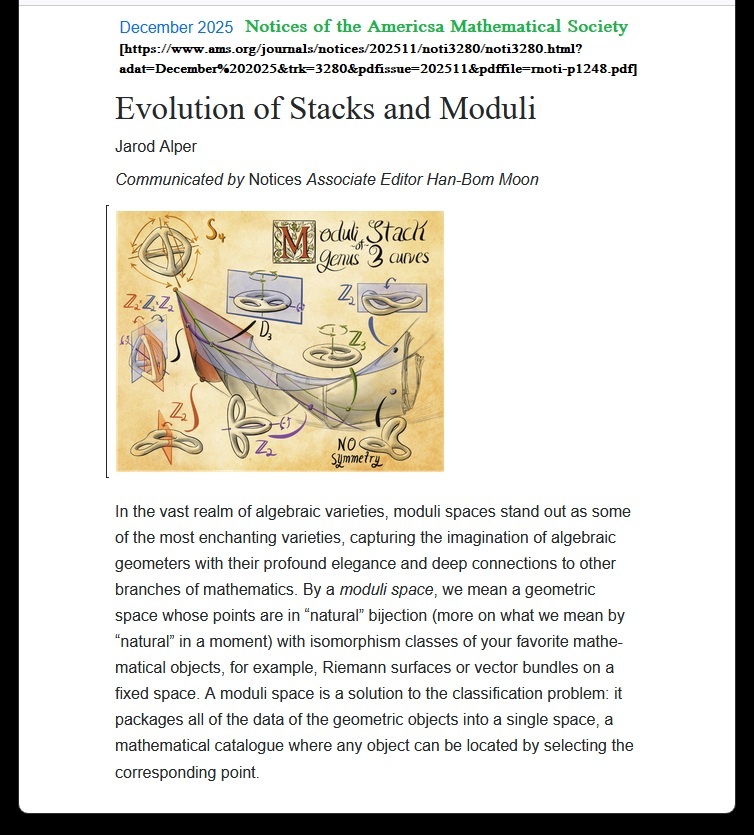
"Vast realm . . . enchanting . . . capturing the imagination . . .
profound elegance . . . deep connections . . . ."
— Jarod Alper in the December 2025
Notices of the American Mathematical Society,
discussing a topic illustrated on the Notices cover.
Sounds to me like he's channeling SID 6.7 (or Mark Helprin).
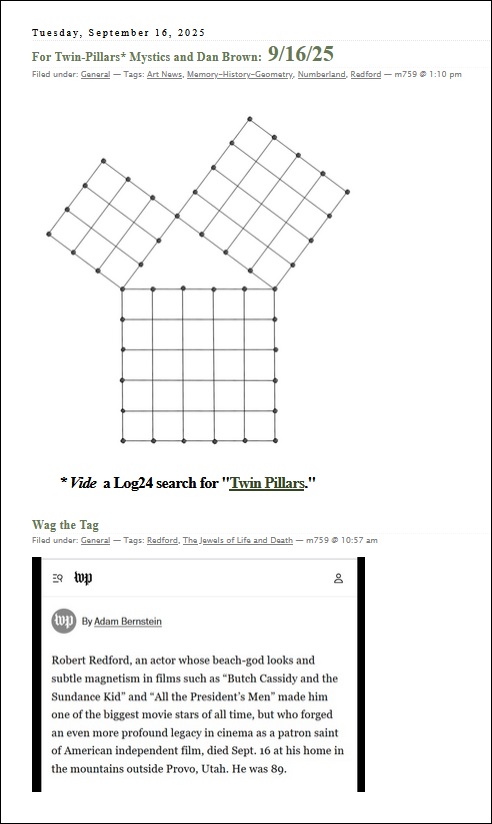
Related reading — "Diamonds and Dogs" and "Wag the Tag."


For philosophy professor Ellie Anderson of Pomona College —
A remark from Claremont Review —
"'Once upon a time' used to be a gateway to
a land that was inviting precisely because
it was timeless, like the stories it introduced
and their ageless lessons about the human condition."
– Dorothea Israel Wolfson,
Claremont Review of Books, Summer 2006
Some backstory —
See also The Word Wizard of Claremont.

Related catchphrase for Saturday Night Live —
Six Seven!
On the Miracle Octad Generator of R. T. Curtis —

|
December 2025 Notices of the American Mathematical Society Jarod Alper, "Evolution of Stacks and Moduli" — "By a moduli space, we mean a geometric space whose points are in 'natural' bijection (more on what we mean by 'natural' in a moment) with isomorphism classes of your favorite mathematical objects, for example, Riemann surfaces or vector bundles on a fixed space. A moduli space is a solution to the classification problem: it packages all of the data of the geometric objects into a single space, a mathematical catalogue where any object can be located by selecting the corresponding point." |
Analogous notions:
Klein Space and Klein Quadric in this journal.
The Source:
Related art from a Log24 post of July 1, 2018 —
Greg Egan’s animated image of the Klein quartic —


. . . And then there is the Squarespace prize —


Pickwick-related material . . .

My own Pickwick Books favorite is a book I first saw there in the 1960s —
Definition,
by Richard Robinson,
Fellow of Oriel College, Oxford,
Oxford U. Press, 1954, reprinted 1962.
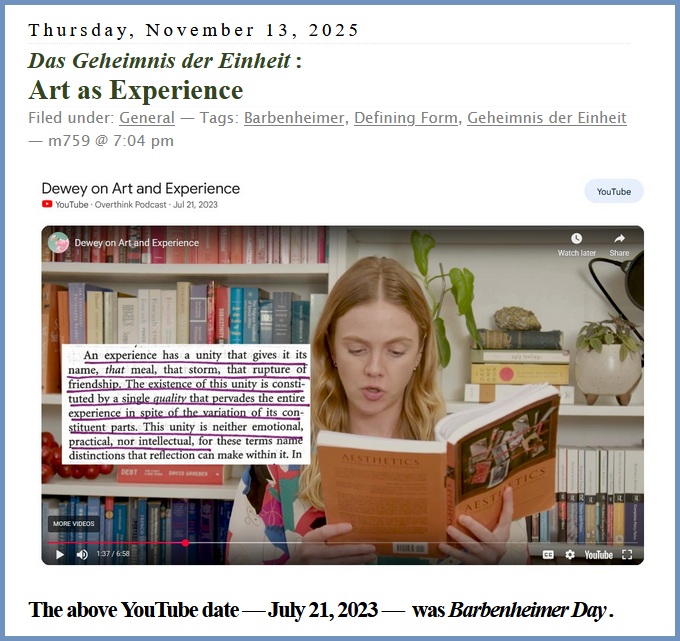
For the Jumbotron display, see yesterday's 7:04 PM EST post.
"If called by a panther, don't anther." — Ogden Nash
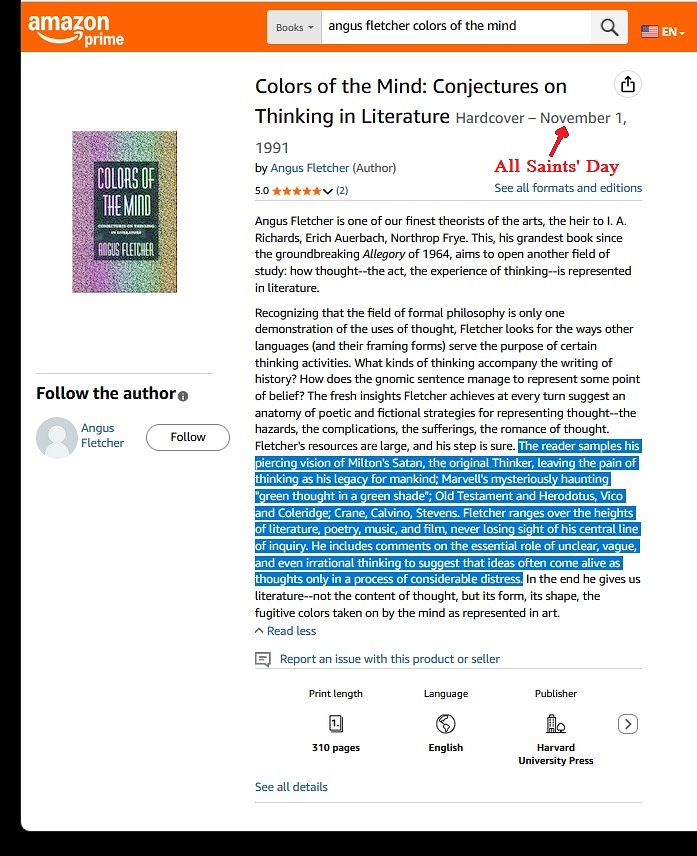
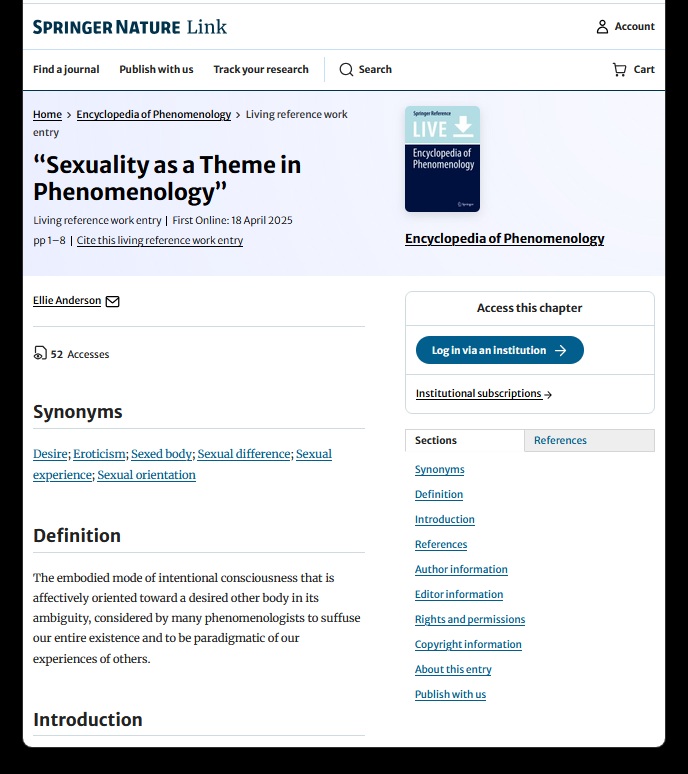
The above "First Online" date — April 18, 2025 —
suggests a post from that date tagged Opening Number.
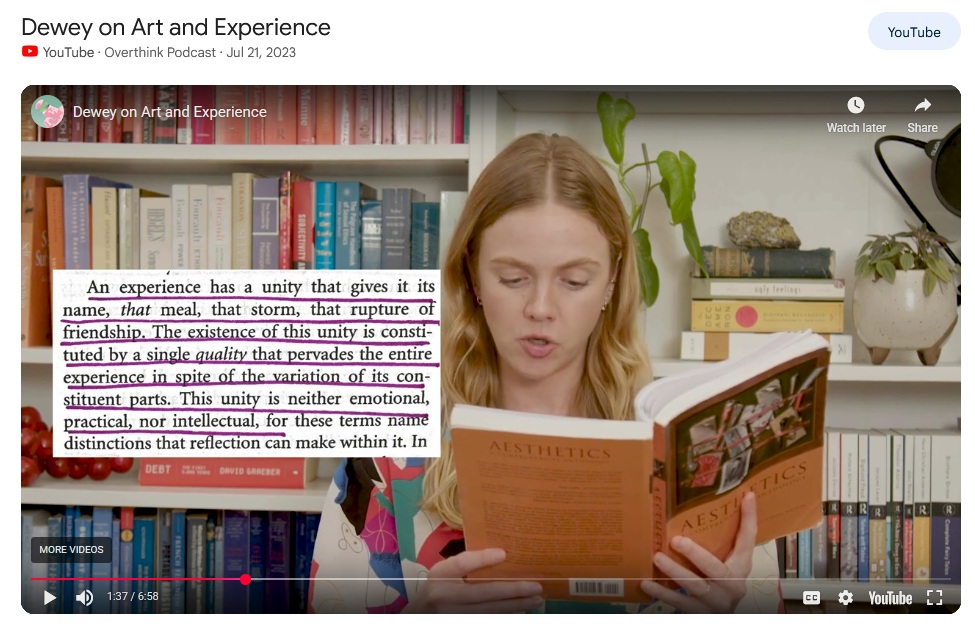
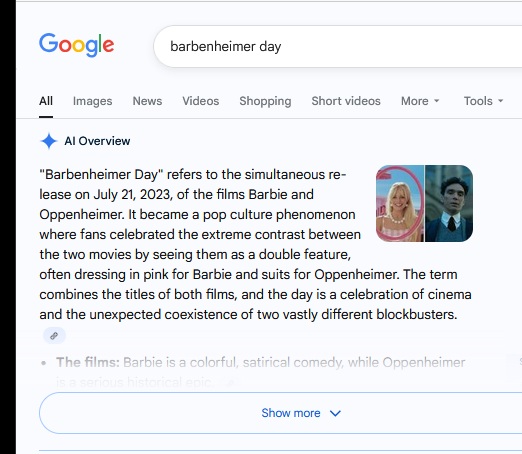
The above YouTube date — July 21, 2023 — was Barbenheimer Day .
"IT: The Widener" Continues.
The trove of documents related to Jeffrey Epstein
that were released on Wednesday was titanic —
more than 20,000 pages.
— Glenn Thrush in The New York Times today


Addendum:


Related horror: Colorful Story.
From a search in this journal for "Roof Beam" —
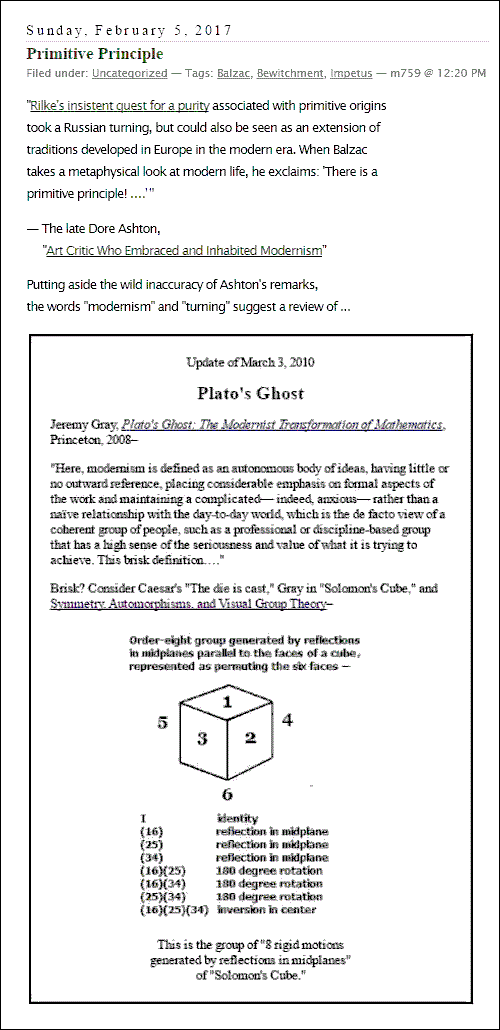
Related reading . . . Gifted Special and
Schlossberg … The Interview.


From a post of June 13, 2008 —

Also on June 13, 2008 —

From yesterday's Happy Birthday post, a Fourth Dimension Ball illustration —


"Yesterday my life was duller
Now everything's Technicolor"
— Hilary Duff song lyric

For the Church of Synchronology, a date check —


"The almond tree flourisheth." — Ecclesiastes 12:5.

A rather different perspective . . . Static Pyramid vs. Dytnamic Array —

Two other views of Whitehead's work . . .


Related images: Parmy Olson herself and "the test of time" on Dec. 11, 2024,
as well as a geometric tomb raider, also on Dec. 11, 2024.

"Does the phrase 'in the pot'
mean anything to you?"
"No? How about 'nine days old'?"

The date — Dec. 28, 2017 — on an arXiv paper suggests
a review of the Log24 posts of December 25-31, 2017.
From Christmas 2017 —
|
"See the remarks today of Harvard philosophy professor Sean D. Kelly
Alexander's "15 properties that create the wholeness and aliveness" —
This is the sort of bullshit that seems to go over well at Harvard. |
* See last night's post on Array Studies.
** See "In Search of Monolithic Tenure," as well as the
meaning in Sanskrit of the name "Kalpana Mahalingam,"
a post on Peter J. Cameron's "Seventh Seal," and
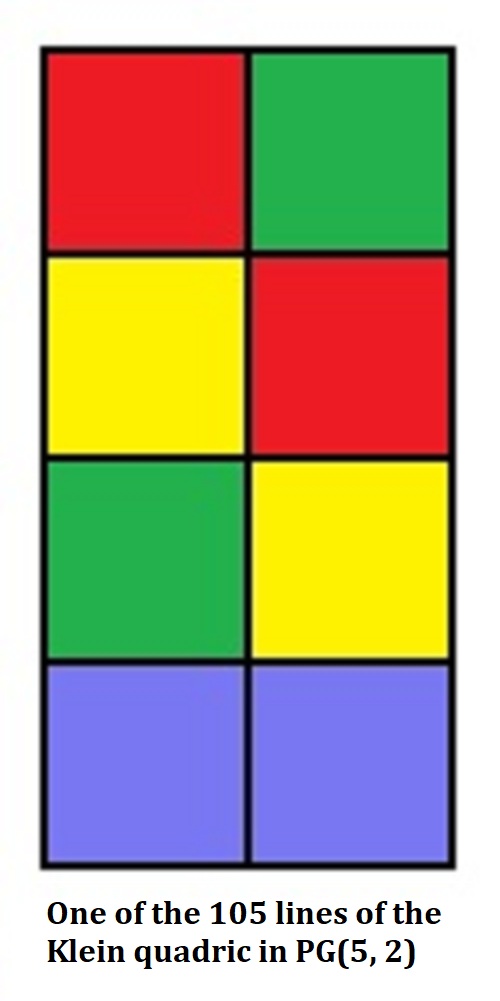
a four-color monolith (one of 105 such structures).
|
The Hunt for the World’s Oldest Story From thunder gods to serpent slayers, scholars are reconstructing myths that vanished millennia ago. How much further can we go—and what might we find? By Manvir Singh in The New Yorker
October 13, 2025 The Reverend Edward Casaubon is Eliot’s grand study in futility: an aging, self-important, faintly ridiculous clergyman who has dedicated his life to an audacious quest. Casaubon is convinced that every mythic system is a decayed remnant of a single original revelation—a claim he plans to substantiate in his magnum opus, “The Key to All Mythologies.” He means to chart the world’s myths, trace their similarities, and produce a codex that, as Eliot puts it, would make “the vast field of mythical constructions . . . intelligible, nay, luminous with the reflected light of correspondences.” The ill-fated project founders between the unruly diversity of cultural traditions and the fantasy of a single source, between the expanse of his material and the impossibility of ever mastering it, between the need for theory and the distortions it introduces. These failures are deepened by Casaubon’s limitations—his pedantic love of minutiae (he “dreams footnotes”) and his refusal to engage with scholarship in languages he doesn’t know (if only he’d learned German).
Casaubon’s quest stands as both an indictment of overreach and a warning about the senselessness of such sweeping comparisons. But is this entirely fair? The patterns are out there. Floods, tricksters, battles with monsters, creation and apocalypse—sometimes the resemblances are uncanny. |
"Before time began . . ." — Optimus Prime


Powered by WordPress