
Thursday, January 1, 2026
Thursday, February 10, 2022
Tech News

Some personal memories triggered by the above —
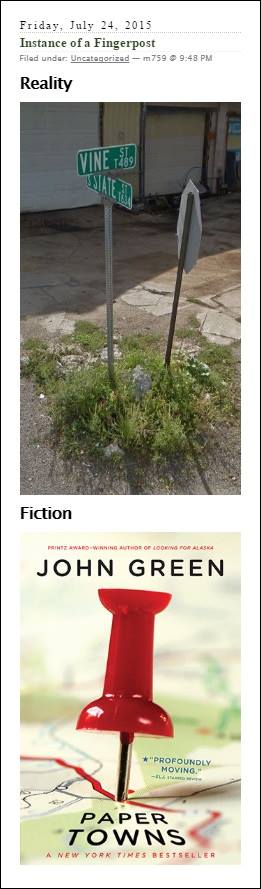
The novel The Lathe of Heaven , the film "Paper Towns," and
the images in Instance of a Fingerpost (Log24, July 24, 2015).
Comments Off on Tech News
Tuesday, July 26, 2016
Pinpoint
"Pinpoint high note"
— Phrase by Margalit Fox in yesterday
morning's online NY Times
For a pinpoint low note, see …
Comments Off on Pinpoint
Friday, July 24, 2015


Sunday, July 17, 2011
Posts
A Sunday meditation continued from Burning Patrick—

For posts of a different sort, see O'Hara's Fingerpost and Cross-Purposes.
(The numbers of these posts were indicated by today's midday NY Lottery.)
See also "Ready when you are, C.B."
Comments Off on Posts
Friday, May 9, 2008
Friday May 9, 2008
Cubist Language Game
"Philosophers ponder the idea
of identity: what it is to give
something a name on Monday
and have it respond to
that name on Friday…."
|
Monday:
From Log24 on
"Perhaps we are meant to |
Related material
for today's anniversay
of the birth of philosopher
Jose Ortega y Gasset:
Cubism as Multispeech
and
Halloween Meditations
(illustrated below)
"Modern art…
will always have
the masses against it."
— Ortega y Gasset, 1925
Comments Off on Friday May 9, 2008
Monday, May 5, 2008
Monday May 5, 2008
Lottery Sermon

"And take upon's
the mystery of things
as if we were God's spies"
— King Lear
From Log24 on Aug. 19, 2003
and on Ash Wednesday, 2004:
a reviewer on
An Instance of the Fingerpost::
"Perhaps we are meant to
see the story as a cubist
retelling of the crucifixion."
From Log24 on
Michaelmas 2007:

Google searches suggested by
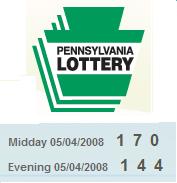
Sunday's PA lottery numbers
(mid-day 170, evening 144)
and by the above
figure of Kate Beckinsale
pointing to an instance of
the number 144 —

Related material:
Beckinsale in another film
(See At the Crossroads,
Log24, Dec. 8, 2006):
"For every kind of vampire,
there is a kind of cross."
— Gravity's Rainbow
There is such a thing
as a tesseract.
"It was only in retrospect
that the silliness
became profound."
— Review of
Faust in Copenhagen
From the conclusion of
Joan Didion's 1970 novel
Play It As It Lays —

"I know what 'nothing' means,
and keep on playing."
From Play It As It Lays,
the paperback edition of 1990
(Farrar, Straus and Giroux) —
|
Page 170:
"By the end of a week she was thinking constantly
170
even one micro-second she would have what she had |
"The page numbers
are generally reliable."
Comments Off on Monday May 5, 2008
Saturday, September 29, 2007
Saturday September 29, 2007
From The New York Times
on the Feast of
St. Michael and All Angels:

Recommended reading in the afterlife
for Rabbi Shapira:
“The Man as Pure as Lucifer,”
by Graham Greene
Recommended viewing in the afterlife
for Dr. Panofsky, son of Erwin Panofsky:
“Pray for the grace of accuracy.”
— Robert Lowell, quoted in
a web page titled
“Is Nothing Sacred?“
“The page numbers are
generally reliable.”
— Steven H. Cullinane,
“Zen and Language Games“
Related material:
Sacred Passion:
The Art of William Schickel,
U. of Notre Dame Press, 1998
Click on the fingerpost
for further details.
Comments Off on Saturday September 29, 2007
Friday, December 8, 2006
Friday December 8, 2006
An Instance
of the Fingerpost

"CRUCIAL (from Lat. crux, a cross),
that which has the form of a cross…
From Francis Bacon's expression
instantia crucis (taken, as he says, from
the finger-post or crux at cross-roads)"
"For every kind of vampire,
there is a kind of cross."
— Gravity's Rainbow
Kate Beckinsale, adapted from
poster for Underworld: Evolution
(DVD release date 6/6/6)
There is such a thing
as a tesseract.
Related material:
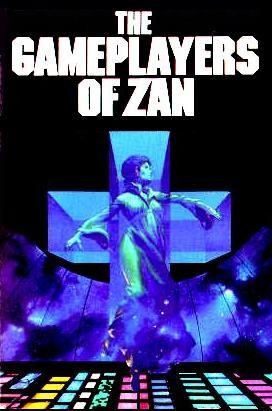
The tesseract on the cover of
The Gameplayers of Zan
(All Hallows' Eve, 2005), and
"Appropriating the Button-molder's
words to Peer Gynt, he would say,
'We'll meet at the next crossroads…
and then we'll see–
I won't say more.'"
Comments Off on Friday December 8, 2006
Monday, December 4, 2006
Monday December 4, 2006
180, 932 –
The Musical!
“You gotta be
true to your code.”
— Sinatra
JSTOR: A Theophany
The Musical!
“You gotta be
true to your code.”
— Sinatra
NY Lottery, 2006:
Dec. 3 Mid-day – 180
Dec. 3 Evening – 932
Yesterday’s entry suggested that
the date, December 3, might be
appropriate for some sort of
Broadway production.
Yesterday evening’s NY lottery
number, 932, suggests*
(via Google) that a visit to
the castle Wildeck
is in order.
This castle is now the home
of the Buchdruck-Museum
honoring Johannes Gutenberg.
For an appropriate Broadway
production, see today’s
New York Times:
Yesterday’s mid-day NY lottery
number, 180, suggests, in the
above context, the German term
Umkehrung. A casual web search
on this term (+ “reversal,”
then, refining the search,
+ “Theocritus”) leads
to the following material,
which I personally find of
much greater interest than
the above Broadway production.
(Such web searches are made
possible by a technological
revolution comparable to that
of Gutenberg… Broadway may
perhaps look forward to…
“Google! The Musical!“)
| Google Search 12/4/06 |
| Results 1 – 2 of about 14 for umkehrung theocritus. (0.07 seconds) |
JSTOR: Theocritus
| I12: on ‘transference’ by Theocritus of refined motifs to uncouth peasants, … is in reality a parody, a devastating ‘Umkehrung‘ of the real thing, … |
JSTOR: A Theophany
in Theocritus
| A THEOPHANY IN THEOCRITUS IN a masterly study of the language and motifs of … epithet I The completeness and precision of the Umkehrung (for this term cf. … |
* “ZSCHOPAU, a town in the kingdom of Saxony, on the left bank of the Zschopau…. It contains… a castle (Wildeck), built by the Emperor Henry I in 932.” —From the classic 11th edition of the Encyclopaedia Britannica (1911)
(The date 932 may or may not be accurate, but still serves nicely as what has been called elsewhere “an instance of the fingerpost.”)
Comments Off on Monday December 4, 2006
Friday, December 1, 2006
Friday December 1, 2006
From the Online Etymology Dictionary:
crucial – 1706, from Fr. crucial… from L. crux (gen. crucis) “cross.” The meaning “decisive, critical” is extended from a logical term, Instantias Crucis, adopted by Francis Bacon (1620); the notion is of cross fingerboard signposts* at forking roads, thus a requirement to choose.
“… given the nature of our intellectual commerce with works of art, to lack a persuasive theory is to lack something crucial— the means by which our experience of individual works is joined to our understanding of the values they signify.”
— Hilton Kramer in The New York Times, April 28, 1974
“I realized that without making the slightest effort I had come upon one of those utterances in search of which psychoanalysts and State Department monitors of the Moscow or Belgrade press are willing to endure a lifetime of tedium: namely, the seemingly innocuous obiter dicta, the words in passing, that give the game away.
What I saw before me was the critic-in-chief of The New York Times saying: In looking at a painting today, ‘to lack a persuasive theory is to lack something crucial.’ I read it again. It didn’t say ‘something helpful’ or ‘enriching’ or even ‘extremely valuable.’ No, the word was crucial….
The more industrious scholars will derive considerable pleasure from describing how the art-history professors and journalists of the period 1945-75, along with so many students, intellectuals, and art tourists of every sort, actually struggled to see the paintings directly, in the old pre-World War II way, like Plato’s cave dwellers watching the shadows, without knowing what had projected them, which was the Word.”
— Tom Wolfe, The Painted Word
For some related material from the next 30 years, 1976-2006, see Art Wars.
* “Note that in the original Latin, the term is not by any means ‘fingerpost’ but simply ‘cross’ (Latin Crux, crucis) – a root term giving deeper meaning to the ‘crucial’ decision as to which if any of the narratives are ‘true,’ and echoing the decisive ‘crucifixion’ revealed in the story.”
Comments Off on Friday December 1, 2006
Sunday, November 12, 2006
Sunday November 12, 2006
Instance
From a review by Adam White Scoville of Iain Pears's novel titled An Instance of the Fingerpost:
"Perhaps we are meant to see the story as a cubist retelling of the crucifixion, as Pilate, Barabbas, Caiaphas, and Mary Magdalene might have told it. If so, it is sublimely done so that the realization gradually and unexpectedly dawns upon the reader. The title, taken from Sir Francis Bacon, suggests that at certain times, 'understanding stands suspended' and in that moment of clarity (somewhat like Wordsworth's 'spots of time,' I think), the answer will become apparent as if a fingerpost were pointing at the way."
Another instance:
The film "Barabbas" (1962) shown on Turner Classic Movies at 8 PM Friday, Nov. 10.
Compare and contrast–
- Barabbas emerging from prison as if from Plato's cave, and Barabbas's vision of Christ in blinding sunlight: "Flung into the sunlight, he stands blinking at a young man in white robes; is it merely the unaccustomed light that dazzles his eyes, or does he really see a radiance streaming from the young man's face?" —TIME Magazine, 1962
- 1 Peter 2 on Christ as the "living stone"
- The cover of the novel Stone 588 shown in Friday's 11:20 PM entry
The film is based on the novel by Par Lagerkvist, winner of the Nobel Prize in Literature.
The Lagerkvist novel may be of more enduring interest than Stone 588, but, as Friday's lottery numbers indicate, even lesser stories have their place.
Thursday, February 23, 2006
Thursday February 23, 2006
Cubist Epiphany
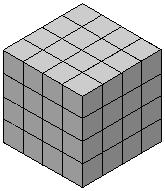
“In The Painted Word, a rumination on the state of American painting in the 1970s, Tom Wolfe described an epiphany….”
— Peter Berkowitz, “Literature in Theory”
“I had an epiphany.”
— Apostolos Doxiadis, organizer of last summer’s conference on mathematics and narrative. See the Log24 entry of 1:06 PM last August 23 and the four entries that preceded it.
“… das Durchleuchten des ewigen Glanzes des ‘Einen’ durch die materielle Erscheinung“
— A definition of beauty from Plotinus, via Werner Heisenberg
“By groping toward the light we are made to realize how deep the darkness is around us.”
— Arthur Koestler, The Call Girls: A Tragi-Comedy, Random House, 1973, page 118, quoted in The Shining of May 29
“Perhaps we are meant to see the story as a cubist retelling of the crucifixion….”
— Adam White Scoville, quoted in Cubist Crucifixion, on Iain Pears’s novel, An Instance of the Fingerpost
Comments Off on Thursday February 23, 2006
Friday, December 30, 2005
Friday December 30, 2005
“Fairy tales can come true,
it can happen to you.”
— Sinatra
it can happen to you.”
— Sinatra
404 – Page Not Found
From Elfwood
Related material:
“An Instance of
the Fingerpost”
at Log24
Comments Off on Friday December 30, 2005
Thursday, November 24, 2005
Thursday November 24, 2005
Crossroads
In memory of Diego Rivera,
who died on this date in 1957
"… the socialist muralist Diego Rivera, hired by Nelson Rockefeller to paint a fresco for the newly constructed Rockefeller Center in New York, inserted a likeness of Lenin's head into the fresco. Rockefeller insisted that the head be replaced or removed, and when Rivera refused the fresco was destroyed…. The event… is captured with great wit in E.B. White's poem…."
I Paint What I See
[A Ballad of Artistic Integrity]
by E.B. White
The New Yorker, 20 May 1933
"'What do you paint, when you paint on a wall?'
Said John D.'s grandson Nelson.
'Do you paint just anything there at all?
'Will there be any doves, or a tree in fall?
'Or a hunting scene, like an English hall?'
'I paint what I see,' said Rivera.
'What are the colors you use when you paint?'
Said John D.'s grandson Nelson.
'Do you use any red in the beard of a saint?
'If you do, is it terribly red, or faint?
'Do you use any blue? Is it Prussian?'
'I paint what I paint,' said Rivera.
'Whose is that head that I see on the wall?'
Said John D.'s grandson Nelson.
'Is it anyone's head whom we know, at all?
'A Rensselaer, or a Saltonstall?
'Is it Franklin D.? Is it Mordaunt Hall?
Or is it the head of a Russian?
'I paint what I think,' said Rivera.
'I paint what I paint, I paint what I see,
'I paint what I think,' said Rivera,
'And the thing that is dearest in life to me
'In a bourgeois hall is Integrity;
'However . . .
'I'll take out a couple of people drinkin'
'And put in a picture of Abraham Lincoln;
'I could even give you McCormick's reaper
'And still not make my art much cheaper.
'But the head of Lenin has got to stay
'Or my friends will give the bird today,
'The bird, the bird, forever.'
'It's not good taste in a man like me,'
Said John D.'s grandson Nelson,
'To question an artist's integrity
'Or mention a practical thing like a fee,
'But I know what I like to a large degree,
'Though art I hate to hamper;
'For twenty-one thousand conservative bucks
'You painted a radical. I say shucks,
'I never could rent the offices—–
'The capitalistic offices.
'For this, as you know, is a public hall
'And people want doves, or a tree in fall
'And though your art I dislike to hamper,
'I owe a little to God and Gramper,
'And after all,
'It's my wall . . .'
'We'll see if it is,' said Rivera.
Related material:
Pictures of the Rockefeller Center mural,
"Man at the Crossroads," and
Rivera's re-creation of the mural,
"Man, Controller of the Universe."
See also another treatment of the "Man at the Crossroads" theme–
The Concrete Gospel
of Donald E. Knuth:
of Donald E. Knuth:
(from Feb. 18),
continued —

This holy icon
appeared at
N37°25.638'
W122°09.574'
on August 22, 2003,
at the Stanford campus.
Comments Off on Thursday November 24, 2005
Saturday, April 30, 2005
Saturday April 30, 2005
Nine is a Vine,
continued
Larry Gelbart on the film
Up Close and Personal:
“A Brenda Starr is Born.”
continued
Larry Gelbart on the film
Up Close and Personal:
“A Brenda Starr is Born.”
Related material:
O’Hara’s Fingerpost,
Eight is a Gate,
Art Wars,
In the Details,
and the words
“White Christmas.”
Comments Off on Saturday April 30, 2005
Wednesday, February 25, 2004
Wednesday February 25, 2004
Modernism as a Religion
In light of the controversy over Mel Gibson's bloody passion play that opens today, some more restrained theological remarks seem in order. Fortunately, Yale University Press has provided a
From a review by Adam White Scoville of Iain Pears's novel titled An Instance of the Fingerpost:
"Perhaps we are meant to see the story as a cubist retelling of the crucifixion, as Pilate, Barabbas, Caiaphas, and Mary Magdalene might have told it. If so, it is sublimely done so that the realization gradually and unexpectedly dawns upon the reader. The title, taken from Sir Francis Bacon, suggests that at certain times, 'understanding stands suspended' and in that moment of clarity (somewhat like Wordsworth's 'spots of time,' I think), the answer will become apparent as if a fingerpost were pointing at the way."
Recommended related
By others:
Inside Modernism: Relativity Theory, Cubism, Narrative, Thomas Vargish and Delo E. Mook, Yale University Press, 1999
Signifying Nothing: The Fourth Dimension in Modernist Art and Literature
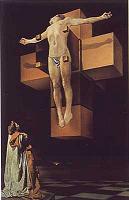
Corpus Hypercubus,
by Dali. Not cubist,
perhaps "hypercubist."
By myself:
The Crucifixion of John O'Hara
The Da Vinci Code and Symbology at Harvard
Material that is related, though not
Tuesday, August 19, 2003
Tuesday August 19, 2003
O'Hara's Fingerpost
In The New York Times Book Review of next Sunday (August 24, 2003), Book Review editor Charles McGrath writes that author John O'Hara
"… discovered a kind of story… in which a line of dialogue or even a single observed detail indicates that something crucial has changed."
From the Online Etymology Dictionary:
crucial – 1706, from Fr. crucial… from L. crux (gen. crucis) "cross." The meaning "decisive, critical" is extended from a logical term, Instantias Crucis, adopted by Francis Bacon (1620); the notion is of cross fingerboard signposts at forking roads, thus a requirement to choose.
The remainder of this note deals with the "single observed detail" 162.
|
|


Instantias Crucis
Francis Bacon says
"Among Prerogative Instances I will put in the fourteenth place Instances of the Fingerpost, borrowing the term from the fingerposts which are set up where roads part, to indicate the several directions. These I also call Decisive and Judicial, and in some cases, Oracular and Commanding Instances. I explain them thus. When in the investigation of any nature the understanding is so balanced as to be uncertain to which of two or more natures the cause of the nature in question should be assigned on account of the frequent and ordinary concurrence of many natures, instances of the fingerpost show the union of one of the natures with the nature in question to be sure and indissoluble, of the other to be varied and separable; and thus the question is decided, and the former nature is admitted as the cause, while the latter is dismissed and rejected. Such instances afford very great light and are of high authority, the course of interpretation sometimes ending in them and being completed. Sometimes these instances of the fingerpost meet us accidentally among those already noticed, but for the most part they are new, and are expressly and designedly sought for and applied, and discovered only by earnest and active diligence."
Inter praerogativas instantiarum, ponemus loco decimo quarto Instantias Crucis; translato vocabulo a Crucibus, quae erectae in biviis indicant et signant viarum separationes. Has etiam Instantias Decisorias et Judiciales, et in casibus nonnullis Instantias Oraculi et Mandati, appellare consuevimus. Earum ratio talis est. Cum in inquisitione naturae alicujus intellectus ponitur tanquam in aequilibrio, ut incertus sit utri naturarum e duabus, vel quandoque pluribus, causa naturae inquisitae attribui aut assignari debeat, propter complurium naturarum concursum frequentem et ordinarium, instantiae crucis ostendunt consortium unius ex naturis (quoad naturam inquisitam) fidum et indissolubile, alterius autem varium et separabile ; unde terminatur quaestio, et recipitur natura illa prior pro causa, missa altera et repudiata. Itaque hujusmodi instantiae sunt maximae lucis, et quasi magnae authoritatis; ita ut curriculum interpretationis quandoque in illas desinat, et per illas perficiatur. Interdum autem Instantiae Crucis illae occurrunt et inveniuntur inter jampridem notatas; at ut plurimum novae sunt, et de industria atque ex composito quaesitae et applicatae, et diligentia sedula et acri tandem erutae.
— Francis Bacon, Novum Organum, Book Two, "Aphorisms," Section XXXVI
A Cubist Crucifixion
An alternate translation:
"When in a Search of any Nature the Understanding stands suspended, the Instances of the Fingerpost shew the true and inviolable Way in which the Question is to be decided. These Instances afford great Light…"
From a review by Adam White Scoville of Iain Pears's novel titled An Instance of the Fingerpost:
"The picture, viewed as a whole, is a cubist description, where each portrait looks strikingly different; the failings of each character's vision are obvious. However, in a cubist painting the viewer often can envision the subject in reality. Here, even after turning the last page, we still have a fuzzy view of what actually transpired. Perhaps we are meant to see the story as a cubist retelling of the crucifixion, as Pilate, Barabbas, Caiaphas, and Mary Magdalene might have told it. If so, it is sublimely done so that the realization gradually and unexpectedly dawns upon the reader. The title, taken from Sir Francis Bacon, suggests that at certain times, 'understanding stands suspended' and in that moment of clarity (somewhat like Wordsworth's 'spots of time,' I think), the answer will become apparent as if a fingerpost were pointing at the way. The final narrative is also titled An Instance of the Fingerpost, perhaps implying that we are to see truth and clarity in this version. But the biggest mystery of this book is that we have actually have no reason to credit the final narrative more than the previous three and so the story remains an enigma, its truth still uncertain."
For the "162" enigma, see
The Matthias Defense, and
The Still Point and the Wheel.
See also the December 2001 Esquire and

the conclusion of my previous entry.
Comments Off on Tuesday August 19, 2003